
Pulmonology Department at Vivekananda Hospital, Begumpet
Breathing problems that do not go away with a course of antibiotics and an inhaler from your GP need a pulmonologist. A cough that has lasted 6 weeks, breathlessness that is getting worse month by month, asthma that flares up despite regular medication, a chest X-ray that shows something the GP cannot explain, snoring so bad that your partner sleeps in another room. These are the situations where a lung specialist makes the difference between guessing and knowing. Dr. G.V.M. Srikar is a Consultant Interventional Pulmonologist at Vivekananda Hospital with an MD in Pulmonology and a Fellowship in Interventional Pulmonology from Yashoda Hospital. He does not just prescribe inhalers and cough medicines. He performs bronchoscopy to look inside the airways, runs PFT to measure how well the lungs are working, and conducts sleep studies to diagnose sleep apnoea. Having these diagnostics on site at a hospital in Begumpet means patients in the Ameerpet, Somajiguda, and Punjagutta area do not need to go to a large corporate hospital for these tests.
Pulmonology (Yashoda)
Pulmonology at Vivekananda Hospital
Pulmonology deals with diseases of the lungs and the respiratory system. That includes common conditions like asthma and COPD that millions of people live with, and serious conditions like tuberculosis, pneumonia, interstitial lung disease, lung cancer, and respiratory failure that need hospital-level management. Most of the time, patients with breathing problems go to a general physician first, and that is fine for straightforward cases. But when the cough does not go away, when the inhaler stops working, when the X-ray shows something unexpected, or when the breathlessness is getting progressively worse, a pulmonologist is who you need.
Dr. G.V.M. Srikar is the Consultant Interventional Pulmonologist at Vivekananda Hospital. He completed his MBBS from Sri Devaraj Urs Medical College in Kolar and his MD in Pulmonology from SGT University in Gurugram. He then did a Fellowship in Interventional Pulmonology at Yashoda Hospital, Hyderabad, which is one of the busiest pulmonology training centres in the city. That fellowship trained him in procedures that go beyond prescribing medicines: bronchoscopy (inserting a camera into the airways to see what is happening), taking biopsies from suspicious areas in the lungs, draining fluid collections from around the lungs, and performing other procedures that a general physician or even a non-interventional pulmonologist cannot do.
The department at Vivekananda Hospital has three diagnostic capabilities that most hospitals this size do not have. First, bronchoscopy is done on site, so if a patient needs an airway examination or a biopsy, it happens here without a referral to a larger hospital. Second, PFT (Pulmonary Function Testing) is available on site, which is the standard test for diagnosing and monitoring asthma, COPD, and other conditions that affect how much air the lungs can move. Third, sleep studies are conducted at the hospital for patients with suspected sleep apnoea or other sleep-related breathing disorders. Having all three on site means the entire diagnostic workup for a lung problem can happen in one place.
For patients who need ICU-level care for severe respiratory failure, pneumonia, or ARDS, the ICU is in the same building with ventilators and round-the-clock monitoring. For patients with lung cancer who need chemotherapy, the oncology department (Dr. R.V. Rao) is available. For patients with TB who also have diabetes or kidney disease, the internal medicine and nephrology teams manage those conditions simultaneously. Dr. Srikar is available six evenings a week (5 to 8 PM), which makes him accessible to working patients who cannot take time off during the day.
Respiratory and Lung Conditions
Airway and Obstructive Diseases
Infections
Interstitial and Pleural Diseases
Sleep, Cancer, and Other Conditions
Pulmonology Diagnostics and Treatment
Diagnostic Procedures
Bronchoscopy
A thin, flexible tube with a camera is passed through the nose or mouth into the airways. It allows Dr. Srikar to directly see the inside of the bronchial tubes, identify abnormalities like tumours, infections, or bleeding sources, and take tissue biopsies for laboratory analysis. Bronchoscopy is also used therapeutically to remove foreign bodies, clear mucus plugs, and treat airway obstructions. The procedure is done on site under sedation and typically takes 15 to 30 minutes.
Pulmonary Function Testing (PFT / Spirometry)
PFT measures lung capacity and airflow. The patient breathes into a machine that records how much air the lungs can hold, how fast the air can be blown out, and how efficiently oxygen transfers from the lungs to the blood. It is the standard diagnostic test for asthma (showing reversible airflow obstruction), COPD (showing fixed obstruction), and restrictive lung diseases (showing reduced lung volumes). It is also used to monitor whether treatment is working.
Sleep Studies (Polysomnography)
An overnight monitoring test that records brain activity, eye movements, heart rate, blood oxygen levels, airflow through the nose, chest movement, and snoring while you sleep. It diagnoses obstructive sleep apnoea (where the throat muscles relax and block the airway during sleep), which is a condition far more common than most people realise. Untreated sleep apnoea causes daytime sleepiness, increases the risk of road accidents, and contributes to high blood pressure, heart disease, and stroke.
Pleural Procedures
Fluid that collects around the lungs (pleural effusion) needs to be drained for both diagnosis and relief of breathlessness. Dr. Srikar performs thoracentesis (needle drainage of pleural fluid) and, when needed, intercostal tube drainage for larger collections. The fluid is sent for analysis to determine whether it is caused by infection, cancer, heart failure, or other conditions.
Treatment Services
Asthma and COPD Management
Asthma and COPD are the two most common chronic lung conditions. Dr. Srikar assesses severity using PFT, identifies triggers, prescribes the right combination of inhalers (controller and reliever), teaches proper inhaler technique (which most patients get wrong), and creates an action plan for flare-ups. For severe asthma or COPD that does not respond to standard inhalers, he evaluates for add-on therapies and manages acute exacerbations that need hospitalisation.
Tuberculosis Diagnosis and Treatment
TB remains common in Hyderabad. Dr. Srikar diagnoses pulmonary TB using sputum tests, chest X-ray, CT scan, and when needed, bronchoscopy with BAL (bronchoalveolar lavage) for cases where sputum tests are negative but TB is suspected. He manages the full course of anti-TB treatment, monitors for drug side effects (especially liver function), and handles drug-resistant TB cases that need modified regimens.
Interstitial Lung Disease (ILD) Evaluation
ILD is a group of conditions where the lung tissue gets scarred and stiff, making it progressively harder to breathe. Diagnosis requires high-resolution CT scan, PFT, and sometimes bronchoscopy with biopsy. Dr. Srikar evaluates the type of ILD, determines whether it is treatable (some types respond to medication) or progressive (requiring supportive care and oxygen therapy), and coordinates with rheumatology if the ILD is linked to an autoimmune condition.
Sleep Apnoea Treatment (CPAP/BiPAP)
Once sleep apnoea is diagnosed, treatment usually involves a CPAP or BiPAP machine that delivers continuous air pressure through a mask during sleep, keeping the airway open. Dr. Srikar prescribes the appropriate device, sets the pressure based on the sleep study results, helps the patient adjust to using the machine, and follows up to ensure the treatment is working. Weight loss counselling is also part of the management since obesity is the biggest risk factor for sleep apnoea.
Lung Cancer Workup and Coordination
When a CT scan shows a suspicious mass in the lung, Dr. Srikar performs bronchoscopy with biopsy to get tissue for diagnosis. Once the biopsy confirms cancer, he coordinates with the oncology department (Dr. R.V. Rao for chemotherapy, Dr. Ramasubba Reddy for surgical oncology) for the treatment plan. He also manages the respiratory complications that cancer patients face during and after treatment.
Respiratory Failure and ICU Support
Severe pneumonia, ARDS, acute COPD exacerbation, and other conditions that cause respiratory failure need ICU admission with ventilator support. Dr. Srikar works with the ICU team to manage these critically ill patients, adjusting ventilator settings, deciding when to intubate and when to wean, and managing the underlying infection or inflammation that caused the failure.
Meet Your Pulmonologist
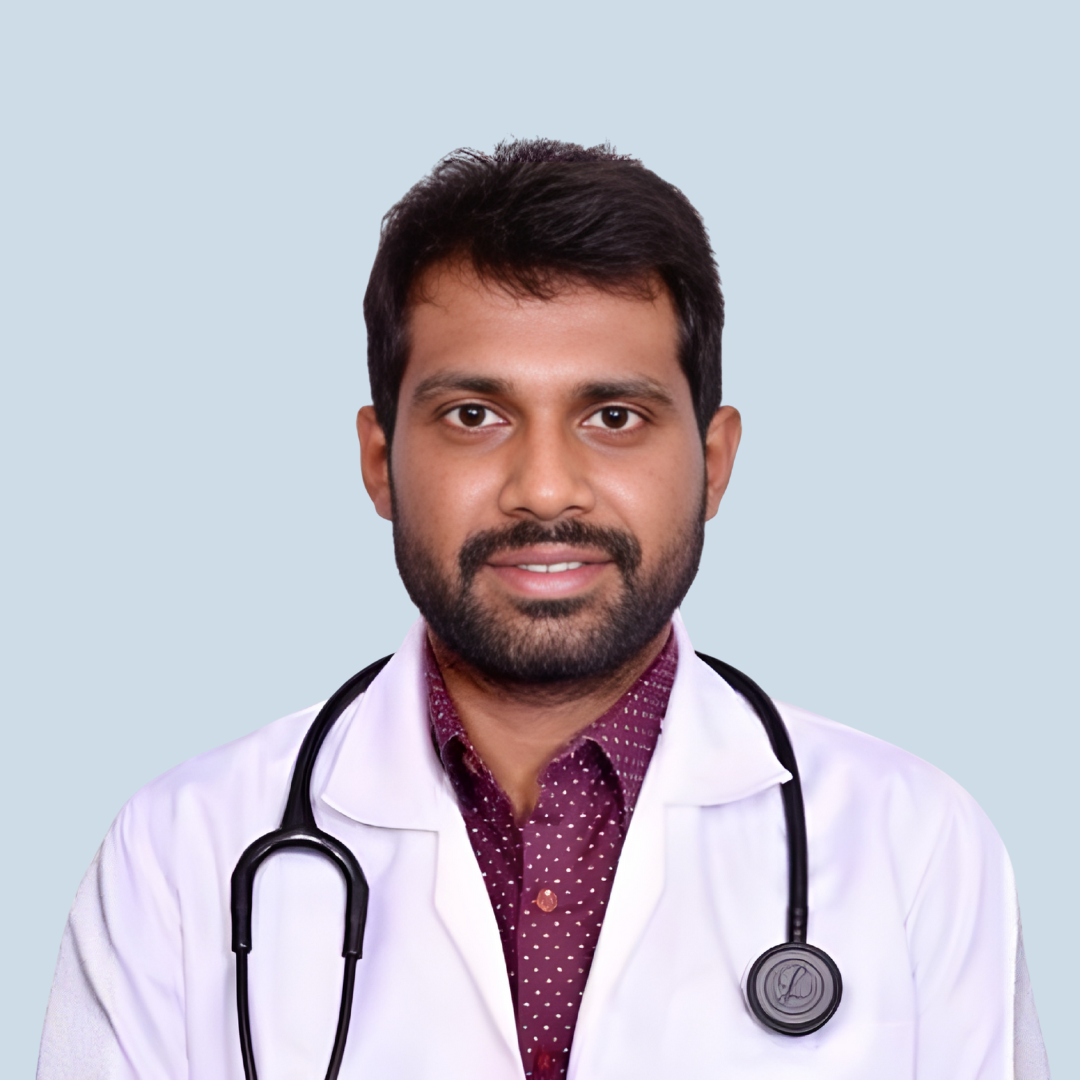
Dr. G.V.M. Srikar
Dr. Srikar is a Consultant Interventional Pulmonologist at Vivekananda Hospital. The word "interventional" in his title matters because it means he does not just diagnose lung problems and prescribe medicines. He performs procedures: putting a bronchoscope into the airways to see and biopsy what is causing the problem, draining fluid from around the lungs, and conducting sleep studies to diagnose conditions that most GPs guess at but do not confirm with data. His Fellowship in Interventional Pulmonology from Yashoda Hospital, Hyderabad, gave him hands-on training in these procedures at one of the highest-volume pulmonology departments in the city. He holds a 97% patient rating on HexaHealth. He sees patients six evenings a week, which makes him one of the few pulmonologists in the Begumpet area with an evening OPD slot. Patients who work during the day and cannot take leave for a doctor visit can see him after 5 PM.
Why Choose Us for Lung and Respiratory Care
Interventional Pulmonologist, Not Just a Chest Physician
A general chest physician prescribes medicines. An interventional pulmonologist does procedures. Bronchoscopy, pleural drainage, and tissue biopsy are the procedures that give definitive answers when medicines and X-rays are not enough. Dr. Srikar's fellowship from Yashoda Hospital trained him in these procedures, and he performs them on site at Vivekananda Hospital.
Bronchoscopy, PFT, and Sleep Studies On Site
Three diagnostics that most hospitals in the Begumpet area do not have. Bronchoscopy lets the doctor see inside the airways. PFT measures lung function with numbers. Sleep studies confirm sleep apnoea with data. All three happen at Vivekananda Hospital. No referral to a diagnostic centre across the city. No carrying reports between places.
Evening OPD: 5 to 8 PM, Six Days a Week
Most pulmonologists in the area offer morning or afternoon slots that conflict with work hours. Dr. Srikar's evening OPD from 5 to 8 PM means IT professionals, office workers, and shopkeepers in Begumpet, Ameerpet, and Somajiguda can see a lung specialist after work without taking a half day off.
ICU Backup for Respiratory Emergencies
Severe asthma attacks, COPD exacerbations, pneumonia with respiratory failure, and ARDS need ventilator support. The ICU is in the same building with ventilators and 24/7 monitoring. Dr. Srikar works with the ICU team to manage critically ill respiratory patients without needing a transfer.
Multispecialty Backup for Complex Cases
Lung cancer needs an oncologist. TB with kidney disease needs a nephrologist to adjust drug doses. Sleep apnoea with heart failure needs a cardiologist. All these specialists are in the same hospital. Complex respiratory patients get coordinated care instead of being sent to 3 different hospitals for 3 different specialists.
CGHS and Insurance Cashless
Pulmonology consultations, bronchoscopy, PFT, sleep studies, and ICU care are available on cashless basis for CGHS, ESI, and over 25 private insurance companies. Chronic conditions like asthma and COPD need regular follow-ups, and insurance coverage makes consistent treatment financially sustainable.
Frequently Asked Questions
Consult Dr. G.V.M. Srikar
Contact
Call: +91 7207904418
WhatsApp: +91 7207904418
6-3-871/A, Greenlands Road, Beside CM Camp Office, Begumpet, Hyderabad 500016