
Menu
Home/Dr. K.V.V. Rajashekhar
Home|Dr. K.V.V. Rajashekhar
Best neurosurgeon in begumpet

Book Appointment

Online appointment process makes it easy for you to book for any one of our services.

Home|Dr. K.V.V. Rajashekhar

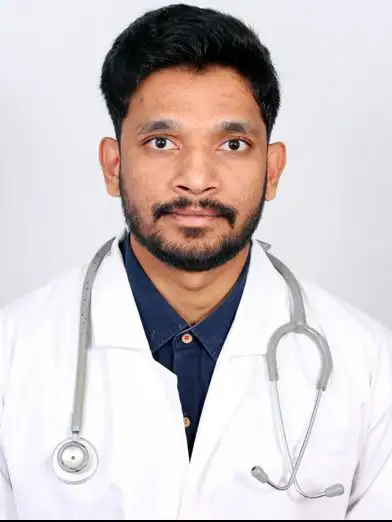
Dr. K.V.V. Rajashekhar

MBBS MS General Surgery MRCS (England) MCh Neurosurgery
Endoscopic Spine Neuro-Trauma Brain & Spine Surgery 24/7 Emergency Cover
Brain or spine emergency? Call now.

Dr. Rajashekhar is on call 24 hours a day for neurosurgical emergencies at Vivekananda Hospital. For head injuries, brain bleeds, sudden weakness, severe sudden headache or spinal trauma, call +91 72079 04418 immediately. The hospital ICU is staffed continuously and the operating theatre is available round the clock.

24/7
Emergency Cover
UK
MRCS England
MCh
Neurosurgery
OPD at Vivekananda Hospital

By appointment

Emergency neurosurgical cases attended 24 hours a day, 7 days a week
About

Neurosurgeon with UK and Indian surgical training

Dr. K.V.V. Rajashekhar is a Consultant Neurosurgeon at Vivekananda Hospital, Begumpet, with formal training in both the UK and Indian surgical systems. He holds an MBBS, MS in General Surgery, MRCS (Membership of the Royal College of Surgeons of England), and MCh in Neurosurgery. The MRCS is a UK postgraduate surgical qualification recognised internationally, and his combined credentials reflect exposure to both Western and Indian surgical training standards.

His clinical focus is on neurosurgical emergencies and minimally invasive spine surgery. He is on call 24 hours a day for head injuries, brain haemorrhages, spinal trauma, and other time-sensitive neurosurgical conditions presenting at Vivekananda Hospital. The hospital's ICU operates continuously with anaesthesia cover and the operating theatre is equipped for emergency cranial and spinal surgery, which means a patient brought in with a brain bleed at 2 AM can be assessed, scanned and operated on without transfer to another facility.

On the planned-surgery side, his procedural focus is on endoscopic and minimally invasive spine surgery. Endoscopic spine surgery uses a small camera and specialised instruments to remove a herniated disc through an incision smaller than one centimetre. For appropriately selected patients, this means less post-operative pain, shorter hospital stay, and faster return to work compared to traditional open spine surgery. Not every spinal condition is endoscopy-suitable, and he discusses the trade-offs honestly during consultation.

He works alongside Dr. Venkatesh Yeddula, the senior Visiting Consultant Neurosurgeon at Vivekananda Hospital, who covers complex brain tumour resection, deep brain stimulation, paediatric neurosurgery, and major neurovascular work. Between them, the neurosurgery service covers the full breadth of brain and spine cases, with Dr. Rajashekhar providing day-to-day clinical cover and emergency response, and Dr. Venkatesh providing senior consultation on complex elective cases.

The best surgery is the one that is truly necessary. I believe in exhausting all medical options first, and when surgery is needed, executing it with international safety standards.

Dr. K.V.V. Rajashekhar

Education and Training

  • MBBS
  • MS General Surgery
  • MRCS, Royal College of Surgeons of England
  • MCh Neurosurgery
Surgical Procedures

What Dr. Rajashekhar performs at Vivekananda Hospital

Spinal and cranial surgery with a focus on minimally invasive technique and emergency response. Complex tumour cases and elective neurovascular work are managed in coordination with Dr. Venkatesh Yeddula.

Endoscopic and MIS Spine

  • Endoscopic discectomy
  • Microscopic discectomy
  • Cervical and lumbar disc surgery
  • Laminectomy and decompression
  • Selected day-care spine procedures

Spinal Stabilisation

  • Anterior Cervical Discectomy and Fusion (ACDF)
  • Pedicle screw fixation
  • Lateral mass fixation
  • Cervical plating
  • Spinal fracture stabilisation

Neuro-Trauma and Emergency

  • Traumatic brain injury surgery
  • Subdural haematoma (SDH) evacuation
  • Extradural haematoma (EDH) evacuation
  • Skull fracture surgery
  • Spinal trauma stabilisation
  • Hemorrhagic stroke surgery

Brain and Infection

  • Brain tumour surgery (selected cases)
  • Brain abscess drainage
  • Spinal tuberculosis (TB spine) surgery
  • CSF shunt placement
  • Hydrocephalus management
Symptoms that need urgent neurosurgical evaluation:
  • Severe sudden headache (worst of your life)
  • Sudden weakness or numbness on one side of the body
  • Persistent back or neck pain radiating to arms or legs
  • Seizures or sudden loss of consciousness
  • Difficulty walking or sudden loss of balance
  • Loss of bladder or bowel control with back pain
  • Head injury with vomiting, confusion or unconsciousness

Any of these symptoms warrant immediate medical attention. Call +91 72079 04418 or come directly to the Vivekananda Hospital emergency department.

Patient Questions

Frequently asked questions

How is Dr. Rajashekhar available for emergencies?
Dr. Rajashekhar is on call 24 hours a day, 7 days a week. He is contactable from home and arrives at Vivekananda Hospital within 30 to 60 minutes of an emergency call. The hospital ICU and operating theatre are staffed continuously, so initial assessment, CT scanning and stabilisation begin immediately on arrival of a trauma case, with the surgical decision made as soon as he is on site.
What are his qualifications?
MBBS, MS in General Surgery, MRCS from the Royal College of Surgeons of England, and MCh in Neurosurgery. The MRCS qualification involved UK-based postgraduate surgical examination, and the MCh is the standard Indian super-specialty qualification for neurosurgery.
What is endoscopic spine surgery and is it right for me?
Endoscopic spine surgery uses a small camera and specialised instruments to remove a herniated disc through an incision smaller than one centimetre. Compared to traditional open spine surgery, endoscopic technique typically results in less post-operative pain, shorter hospital stay (often same-day or next-day discharge), and faster return to routine activity. Eligibility depends on the location, size and type of disc herniation, presence of spinal instability, and other factors. Dr. Rajashekhar evaluates the MRI and discusses whether endoscopic, microscopic or open approach is most appropriate for your specific case.
I have severe back pain. Do I need spine surgery?
Most back pain does not need surgery. Dr. Rajashekhar's first step is to evaluate whether the pain is structural (caused by a disc, nerve compression, or spinal instability that surgery can fix) or non-structural (muscular, postural, or related to other conditions). For non-structural pain, conservative management with physiotherapy, medication and lifestyle adjustment is the first line. Surgery is recommended only when the cause is structural and conservative measures have failed, or when there is progressive neurological deficit such as weakness or loss of bladder control.
Do you treat stroke patients?
Yes. Both ischemic stroke (clot-related) and haemorrhagic stroke (brain bleed) are managed at Vivekananda Hospital with neurology and neurosurgery coordination. Haemorrhagic stroke may require emergency surgery to evacuate the clot and relieve pressure on the brain, which Dr. Rajashekhar performs. Ischemic stroke is managed primarily with the medical and neurology team. Time is critical for both. If stroke symptoms (sudden weakness, slurred speech, facial droop) are recognised, bring the patient to the hospital immediately.
What is the difference between Dr. Rajashekhar and Dr. Venkatesh Yeddula?
Both are neurosurgeons at Vivekananda Hospital. Dr. Rajashekhar provides day-to-day clinical neurosurgical cover and 24-hour emergency response, with focus on minimally invasive spine surgery and neuro-trauma. Dr. Venkatesh Yeddula is a Visiting Senior Consultant from CARE Hospitals with 31+ years of experience, who handles complex brain tumour resections, deep brain stimulation, paediatric neurosurgery and major neurovascular work. Patients are seen by whichever neurosurgeon is most appropriate for their condition, with cross-consultation between the two for complex cases.
What is ACDF surgery?
ACDF stands for Anterior Cervical Discectomy and Fusion. It is a surgery for neck pain and arm pain caused by a damaged or herniated cervical disc pressing on a nerve. Dr. Rajashekhar removes the damaged disc through a small incision at the front of the neck and fuses the bones together using a small titanium plate. ACDF has high success rates for relieving radicular arm pain, numbness and weakness when the cause is a cervical disc problem.
How long does spine surgery recovery take?
Recovery depends on the procedure. Endoscopic and microscopic discectomy patients typically walk the same evening or next day and are discharged within 24 to 48 hours, with return to desk work in 1 to 2 weeks. ACDF patients are discharged in 2 to 3 days with return to normal activity in 4 to 6 weeks. Major fixation surgery may need 3 to 5 days of hospital stay with phased return to activity over 8 to 12 weeks. Specific timelines are discussed pre-operatively based on your individual case.
Can spinal TB be cured with surgery?
Spinal tuberculosis is primarily treated with anti-tubercular medication. Surgery is needed only when there is a collection of pus (abscess) pressing on the spinal cord, when the spine is collapsing due to bone destruction, or when neurological deficit (weakness, paralysis) is developing. The surgical procedure is debridement (clearing the infection) combined with stabilisation (fusion or fixation) to prevent further collapse and protect the spinal cord. Long-term medication continues after surgery for 12 to 18 months.
How do I book an appointment?
Call +91 72079 04418 or WhatsApp the same number. Dr. Rajashekhar consults by appointment for non-emergency cases. For emergencies, no appointment is needed, come directly to the hospital or call ahead so the team can be ready. Bring any previous MRI, CT scans, prior neurology reports and a list of current medications to your first visit.

Book a consultation with Dr. K.V.V. Rajashekhar

Non-emergency consultations by appointment. Emergency neurosurgical cover 24/7.

Frequently Asked Questions (FAQs)

What is "Endoscopic Spine Surgery," and do you perform it?

Education & Experience

Field of expertise

-

Years of practice

-

Working Shifts

Doctor's Quote

The best surgery is the one that is truly necessary. I believe in exhausting all medical options first, but when surgery is needed, I execute it with international safety standards to ensure you return to a pain-free life.

WhatsApp Us