
Psychiatry Department at Vivekananda Hospital, Begumpet
Finding a psychiatrist is hard enough. Finding one who does not just hand you a prescription and send you out in ten minutes is harder. Most psychiatry consultations in Hyderabad follow a pattern: listen briefly, diagnose quickly, prescribe medication, come back in two weeks. Dr. Boppana Sridhar does it differently. He is a neuropsychiatrist with an MD in Psychiatry who spent over 4 years working in disability and community rehabilitation in Australia before specialising. That experience shaped his approach. He uses the bio-psycho-social model: understanding not just what is happening in the brain chemistry, but what is happening in the person's life, relationships, work, and thinking patterns. He is trained in CBT (Cognitive Behavioural Therapy) and DBT (Dialectical Behavioural Therapy), which means he can teach you how to manage your thoughts and reactions, not just suppress them with pills. When medication is needed, he prescribes it. When therapy alone is enough, he does that instead. Most patients get a combination of both.
Psychiatry at Vivekananda Hospital
Mental health problems are common. Depression, anxiety, panic attacks, OCD, insomnia, and burnout are conditions that people in the Begumpet, Ameerpet, and Somajiguda area deal with every day, often for months or years before seeing a doctor. The stigma around psychiatry keeps people away. The fear of being "put on medication for life" keeps them away. The belief that they should be able to handle it on their own keeps them away. By the time they finally walk into a psychiatrist's office, the condition has usually become worse than it needed to be.
Dr. Boppana Sridhar leads the psychiatry department at Vivekananda Hospital. He completed his MBBS from the College of Medical Sciences in Bharatpur and his MD in Psychiatry from Mamata Medical College, Khammam (NTR University of Health Sciences). But what makes his clinical perspective different from most psychiatrists in Hyderabad is what he did before his MD. He spent over 4 years in Australia working in disability and community rehabilitation. During that time, he was exposed to the Australian mental health system, which operates on a bio-psycho-social model. That model looks at a mental health problem from three angles: the biological (what is happening in the brain's chemistry), the psychological (what thought patterns, beliefs, and coping mechanisms are in play), and the social (what is happening in the person's relationships, work, family, and environment). Most psychiatry training in India focuses heavily on the biological angle, which is why most consultations end with a prescription. Dr. Sridhar's Australia experience made him approach things differently.
He is trained in CBT (Cognitive Behavioural Therapy) and DBT (Dialectical Behavioural Therapy). CBT is a structured therapy that helps patients identify and change negative thought patterns that drive anxiety, depression, and OCD. DBT was originally developed for patients with intense emotions and self-destructive behaviours, and is now used for borderline personality, emotional regulation problems, and chronic stress. These are not casual conversations. They are structured, goal-oriented therapy sessions with techniques the patient practises between visits.
His approach is to evaluate each patient individually and decide whether they need medication, therapy, or both. For mild to moderate depression and anxiety, therapy alone is often enough. For severe depression, bipolar disorder, schizophrenia, or psychosis, medication is necessary and therapy supports the overall treatment. He does not over-medicate, and he does not dismiss the value of medication when it is genuinely needed. The goal is always to get the patient to a point where they are functioning well in their daily life, with the minimum intervention required.
Mental Health Conditions
Mood and Anxiety Disorders
OCD, PTSD, and Phobias
Sleep, Stress, and Behavioural Problems
Severe Psychiatric Disorders
Treatment Approach
Psychotherapy (Talk Therapy)
Cognitive Behavioural Therapy (CBT)
CBT is a structured therapy where the patient and doctor work together to identify specific thought patterns that are causing distress. A person with anxiety might automatically assume the worst in every situation. A person with depression might dismiss anything positive that happens. CBT teaches the patient to catch these automatic thoughts, examine the evidence for and against them, and develop more balanced thinking. It is not vague advice like "think positive." It is a step-by-step process with worksheets, thought records, and behavioural experiments that the patient practises between sessions. CBT is one of the most researched therapies in psychiatry and has strong evidence for depression, anxiety, OCD, insomnia, and panic disorder.
Dialectical Behavioural Therapy (DBT)
DBT was developed for people who experience emotions very intensely and have difficulty regulating them. It teaches four sets of skills: mindfulness (staying present instead of spiralling into worry or regret), distress tolerance (getting through a crisis without making it worse), emotion regulation (understanding and managing intense feelings), and interpersonal effectiveness (communicating needs without damaging relationships). DBT is used for borderline personality disorder, chronic emotional instability, self-harm tendencies, and people who feel overwhelmed by their own reactions to everyday situations.
Supportive Psychotherapy
Not every patient needs structured CBT or DBT. Some patients benefit from a safe space to talk through what is happening in their life with a professional who listens, asks the right questions, and helps them see their situation more clearly. Dr. Sridhar's 4+ years of community rehabilitation work in Australia trained him in this type of patient-centred conversation. For grief, relationship distress, life transitions, and adjustment problems, supportive therapy is often what is needed.
Medication Management
Antidepressant and Anxiolytic Prescribing
When depression or anxiety is severe enough that therapy alone is not working fast enough, or when the patient is unable to function at work or home, medication provides the chemical support the brain needs to stabilise. Dr. Sridhar uses evidence-based medication protocols, starts at the lowest effective dose, monitors side effects, and adjusts over time. The goal is not lifelong medication. It is stabilisation, followed by therapy to build coping skills, followed by gradual tapering when the patient is ready.
Management of Severe Psychiatric Conditions
Schizophrenia, bipolar disorder, and psychosis need medication as the primary treatment. Antipsychotics, mood stabilisers, and other psychiatric medications are prescribed and closely monitored. Dr. Sridhar manages these patients with regular follow-ups to track symptom control, side effects, and overall functioning. For bipolar patients, mood charting helps identify patterns. For schizophrenia, family psychoeducation is provided so caregivers understand the condition and the treatment plan.
Sleep Disorder Treatment
Insomnia is one of the most common reasons people see a psychiatrist. Dr. Sridhar first evaluates whether the sleep problem is standalone or a symptom of an underlying condition like depression, anxiety, or bipolar disorder. For primary insomnia, CBT for insomnia (CBT-I) is the first-line treatment, which involves sleep hygiene education, stimulus control, and sleep restriction. Sleeping pills are used only short-term and only when absolutely necessary, because long-term use creates dependency.
Meet Your Psychiatrist
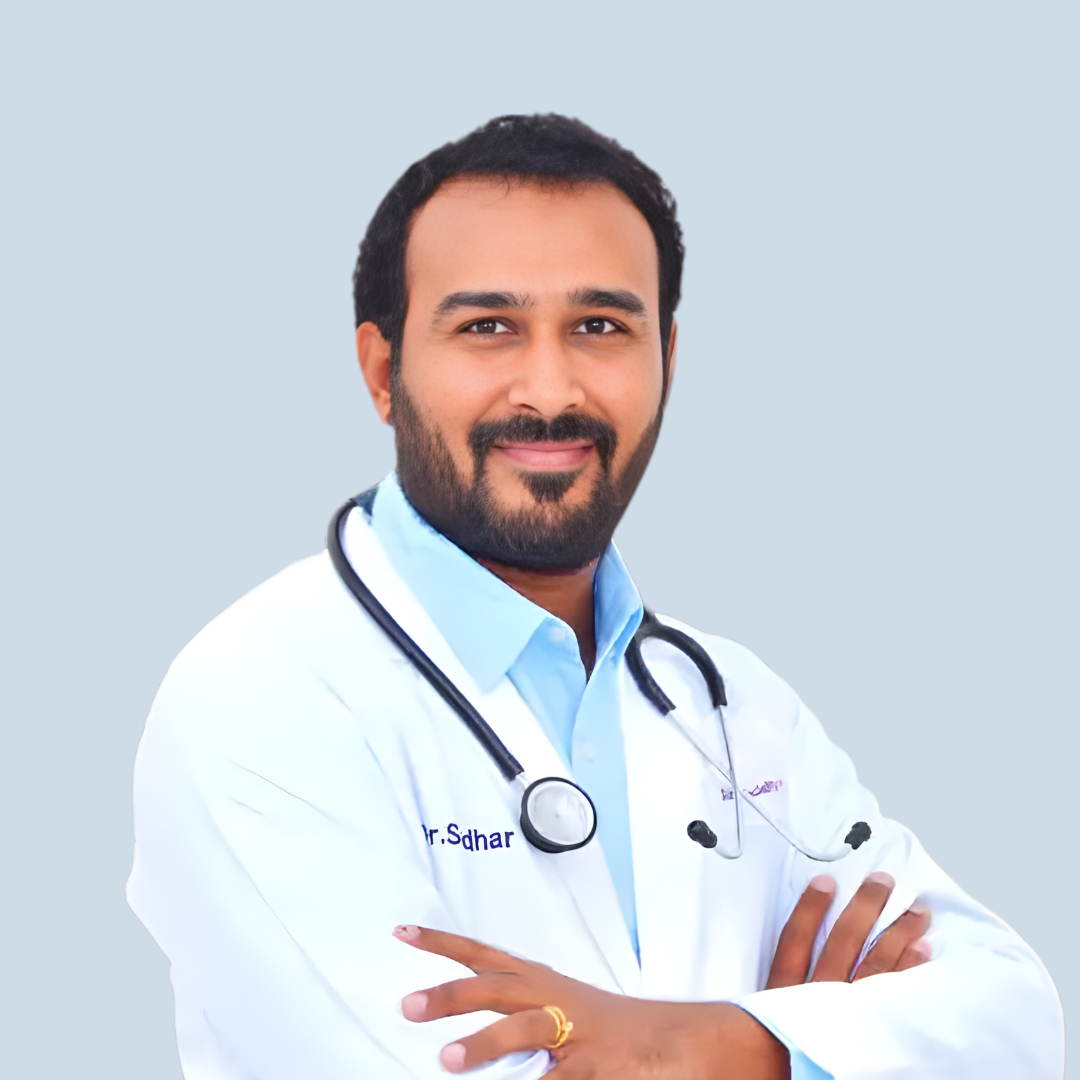
Dr. Boppana Sridhar
Dr. Sridhar's path to psychiatry was not the usual one. After completing his MBBS, he went to Australia and spent over 4 years working in disability and community rehabilitation. That is where he first saw how mental health care works when it is done properly: with a team approach, with therapy given equal importance to medication, and with patients treated as people with lives and contexts, not just diagnoses. He came back to India and completed his MD in Psychiatry from Mamata Medical College (NTR University). He then trained in CBT and DBT, which are structured psychotherapy techniques that have strong research evidence behind them. He consults at Vivekananda Hospital in Begumpet and also at Med9 Health Care in Banjara Hills. He speaks English, Telugu, Hindi, and Urdu, which matters because psychiatry requires the patient to express difficult feelings in a language they are comfortable with. His patient reviews consistently mention two things: he listens properly, and he explains the diagnosis and treatment plan in terms the patient can understand.
Why Choose Us for Mental Health Care
Medication + Therapy, Not Just Medication
Most psychiatrists in Hyderabad prescribe medication and schedule a follow-up in two weeks. Dr. Sridhar offers structured psychotherapy (CBT and DBT) alongside medication when needed. For many patients with anxiety, mild depression, OCD, and insomnia, therapy alone produces lasting results without any medication at all. That option is rarely offered at other clinics.
Australia-Trained in Bio-Psycho-Social Care
Four years in Australia's disability and community rehabilitation system gave Dr. Sridhar a clinical perspective that goes beyond symptoms and prescriptions. He looks at the biological, psychological, and social factors together. A patient with depression who also has a toxic work environment and no social support network needs more than an antidepressant. He addresses all three layers.
Hospital-Based Psychiatry with Multispecialty Backup
Some psychiatric conditions have physical components. Thyroid disorders cause depression. Heart conditions cause panic-like symptoms. Neurological problems present as psychiatric symptoms. At Vivekananda Hospital, the internal medicine team, cardiologist, and neurologist are in the same building. If Dr. Sridhar suspects a physical cause behind a psychiatric presentation, the relevant specialist is a referral away, not a trip across the city.
Confidential, Private Consultations
The stigma around seeing a psychiatrist is real, and we acknowledge that. Consultations happen in a private room. You can book by phone and come directly to the consultation without going through a general queue. No details about your visit are shared without your consent.
Multilingual: English, Telugu, Hindi, Urdu
Psychiatry is about communication. Expressing feelings, describing thoughts, and understanding the doctor's explanations all need to happen in a language the patient is comfortable with. Dr. Sridhar speaks four languages fluently, which means he can connect with patients from different backgrounds without a language barrier getting in the way of treatment.
CGHS and Insurance Cashless
Psychiatry consultations are available on cashless basis for CGHS, ESI, and over 25 private insurance companies. Mental health treatment often requires regular follow-up visits over weeks or months. Insurance coverage removes the financial barrier that prevents many patients from completing their treatment course.
Frequently Asked Questions
Consult Dr. Boppana Sridhar
Contact
Call: +91 7207904418
WhatsApp: +91 7207904418
6-3-871/A, Greenlands Road, Beside CM Camp Office, Begumpet, Hyderabad 500016