
Laparoscopic Gallbladder Surgery Cost in Hyderabad: ₹40,000–₹85,000 Complete Guide (2026)
Advanced Stone Removal, Rapid Recovery & Transparent Pricing at Vivekananda Hospital.
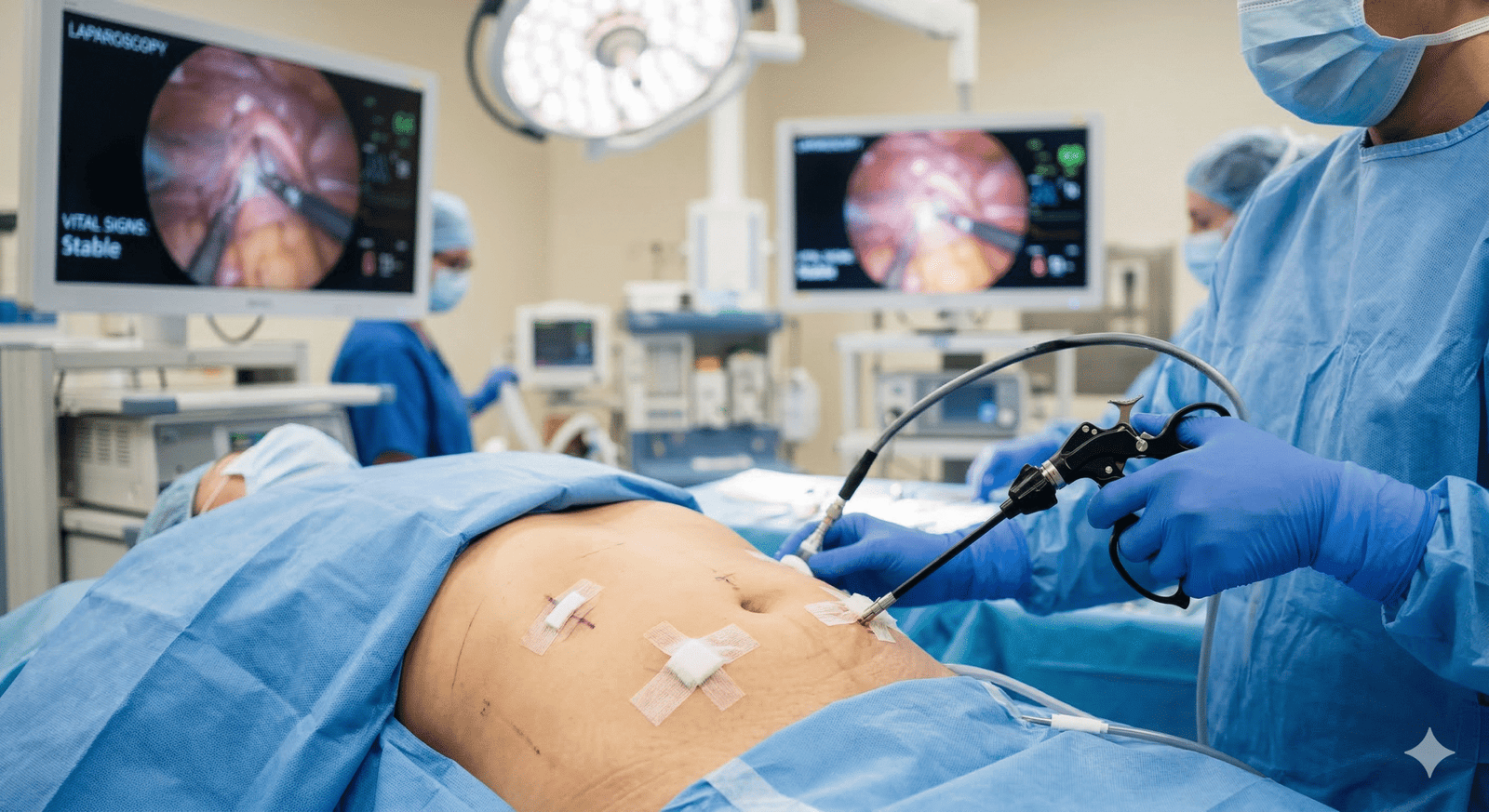
Pain in the upper right side of your abdomen after a heavy meal is one of the most common reasons patients visit our emergency at Begumpet. In most cases, gallstones are responsible. At Vivekananda Hospital we have been performing laparoscopic gallbladder surgery in Hyderabad for over two decades and our patients walk out the same day they come in. This guide gives you everything you need to know before making a decision from what gallstones actually are, to the exact cost of surgery, insurance coverage, and what your recovery will look like week by week.
At a Glance Laparoscopic Gallbladder Surgery at Vivekananda Hospital, Hyderabad
- Surgery cost: Rs.40,000 to Rs.85,000 depending on package
- Surgeon: Dr. Deeraj Jaliwar, MS (General Surgery), DMAS, 15 years of experience
- Procedure time: 45 to 60 minutes under general anaesthesia
- Discharge: Same day for most patients, 1 to 2 nights for complex cases
- Insurance accepted: CGHS, Arogya Bhadratha, RBI, TSGENCO, EHS, Star Health, HDFC Ergo and all major TPA networks
- EMI: Zero percent EMI through GMoney and Bajaj Finserv
- Free consultation: OPD fee fully waived when you book your surgery with us
- Location: 6-3-871/A, Greenlands Road, Beside CM Camp Office, Begumpet, Hyderabad 500016
- Call us: +91 7207904418
What This Guide Covers
- What is laparoscopic gallbladder surgery and when is it needed
- Gallbladder stone symptoms and when to go to emergency
- How gallstones are diagnosed at Vivekananda Hospital
- Can gallstones be treated without surgery
- The laparoscopic cholecystectomy procedure step by step
- Laparoscopic gallbladder surgery cost in Hyderabad Rs.40,000 to Rs.85,000
- Recovery timeline and diet after surgery
- Frequently asked questions
- Why patients in Hyderabad choose Vivekananda Hospital
What is Laparoscopic Gallbladder Surgery and When is it Needed?
Laparoscopic gallbladder surgery, or laparoscopic cholecystectomy, is a minimally invasive procedure to remove a diseased gallbladder. Instead of a large open cut, the surgeon makes three or four small holes each less than one centimetre and removes the gallbladder using a tiny camera and surgical instruments. Patients are usually home the same evening. At Vivekananda Hospital in Begumpet we perform this as a day care procedure for the majority of patients.
What Does the Gallbladder Do?
The gallbladder is a small pear-shaped pouch sitting just under your liver on the right side of your abdomen. Its job is to store bile, a digestive fluid made by the liver, and release it into the small intestine after meals to help digest fat. It is not an essential organ. Once the gallbladder is removed, the liver simply releases bile continuously into the intestine and your digestion carries on completely normally. Most patients notice no difference in their digestion after two to three months.
What Are Gallstones?
Gallstones form when the chemical balance of bile inside the gallbladder is disrupted. When bile has too much cholesterol or too much bilirubin, it slowly crystallises and hardens into stones over months or years. These stones can be as small as a grain of sand or as large as a golf ball. Some patients have one large stone, others have dozens of small ones scattered throughout the gallbladder.
Cholesterol Stones Versus Pigment Stones
Around 80 percent of all gallstone cases involve cholesterol stones, which are yellow-green in colour and form because of excess undissolved cholesterol in the bile. They are strongly linked to high fat diets, obesity, rapid weight loss, and a family history of gallstones. Pigment stones are smaller, dark brown or black, and form mainly in patients with liver disease, chronic infections of the bile ducts, or sickle cell disease. The treatment laparoscopic cholecystectomy is the same for both types.
Gallbladder Stone Symptoms: When Do You Need Surgery?
A large number of people have gallstones and never know it. These silent stones are often found during an ultrasound done for a completely different reason. Surgery is needed only when stones become symptomatic that is, when they block the flow of bile and cause pain, infection, or other complications.
Common Symptoms of Gallstones
The most recognisable symptom is a sudden cramping pain in the upper right side of the abdomen, usually starting 30 to 60 minutes after eating a fatty or oily meal. This pain often spreads to the right shoulder blade or upper back. Other symptoms patients commonly report to us include:
- Nausea and vomiting after heavy meals, particularly biryani, fried foods, or mutton curries
- Persistent bloating and indigestion that does not respond to antacids
- A feeling of fullness even after a small meal
- Excessive belching and gas, especially in the evenings
- Intolerance to fatty foods that was not present before
A gallbladder attack, medically called biliary colic, tends to hit suddenly often late at night or in the early hours of the morning. The pain builds quickly, peaks, and can last anywhere from 30 minutes to several hours before easing. Importantly, this pain does not get better with antacids, passing gas, or changing your position which is one of the key differences from ordinary gas pain.
Warning Signs That Require Emergency Care
- Intense pain in the upper right abdomen lasting more than two hours without any relief
- Fever above 38.5 degrees with shivering or chills
- Yellowing of the skin or whites of the eyes (jaundice)
- Dark tea-coloured urine or pale, clay-like stools
- Abdomen that feels rigid or board-like to the touch
- Rapid heartbeat combined with severe abdominal pain
How to Tell the Difference Between Gas Pain and Gallbladder Pain
This is one of the most common questions patients ask us. Gas pain typically travels around the abdomen, comes and goes within minutes, and disappears after passing gas or belching. Gallbladder pain sits specifically in the upper right abdomen, radiates toward the right shoulder, lasts well beyond 30 minutes, and is not relieved by gas or antacids. If the pain you are experiencing matches the gallbladder pattern, please call us at +91 7207904418 for a same-day consultation at our Begumpet facility. Early diagnosis makes a significant difference to both your treatment options and your surgical cost.
How Are Gallstones Diagnosed? Tests Done at Vivekananda Hospital, Hyderabad
Getting the diagnosis right before surgery matters enormously. A proper scan tells the surgeon exactly where the stones are, how many there are, whether any have escaped into the bile duct, and whether the gallbladder itself is already inflamed or infected. At Vivekananda Hospital our diagnostic team uses a step-by-step approach starting simple and only moving to advanced imaging when the clinical picture requires it.
Abdominal Ultrasound for Gallstones What to Expect
An abdominal ultrasound is the first and most important test for gallstones. It is completely painless, takes about 15 to 20 minutes, and requires only 4 to 6 hours of fasting beforehand. The ultrasound clearly shows stone size, number, position, and gallbladder wall thickness giving our surgeons everything they need for straightforward cases. The large majority of our patients are diagnosed and cleared for surgery based on the ultrasound alone without needing any further imaging.
Blood Tests Required Before Gallbladder Surgery
Before your laparoscopic cholecystectomy we run a set of blood tests to make sure you are safe for surgery and anaesthesia. These include a complete blood count (CBC), liver function test (LFT), kidney function test (KFT), blood sugar levels which is particularly important for diabetic patients and a clotting profile to check your bleeding time. All tests are processed at our in-house NABL-accredited laboratory with results ready within four to six hours. Basic pre-operative blood work is included in our Standard and Comprehensive packages at no extra charge.
When Is an MRI or CT Scan Needed?
For the large majority of gallstone patients, an ultrasound is all that is needed before surgery. An MRCP (a specialised MRI of the bile ducts) or CT scan is only added when stones are suspected to have moved into the common bile duct, when there is a history of jaundice, when the ultrasound result is inconclusive, or when a prior abdominal surgery may have created adhesions that complicate the surgical approach. Please do not spend money on advanced scans before your consultation with Dr. Deeraj Jaliwar he will tell you exactly what is needed based on your specific situation.
Additional Diagnostic Tests We Use
- Liver function tests (LFT): Elevated bilirubin or liver enzymes suggest a stone may be actively blocking the common bile duct and needs attention before laparoscopic surgery
- MRCP: A non-invasive MRI technique that produces a detailed map of the bile duct system ordered when common bile duct stones are suspected
- Endoscopic ultrasound (EUS): Used in specific cases where microscopic stones or biliary sludge are strongly suspected but not visible on a standard scan
Can Gallstones Be Treated Without Surgery?
This is the question almost every patient asks us before agreeing to surgery. The honest answer is that there is no reliable, permanent non-surgical treatment for symptomatic gallstones. The gallbladder needs to come out.
Why Home Remedies and Ayurvedic Treatments for Gallstones Are Risky
Many patients try apple cider vinegar, olive oil flushes, or herbal medicines before coming to see us. These approaches have not been validated by any medical evidence, and some of them are genuinely dangerous. When a gallbladder cleanse forces the gallbladder to contract strongly, it can push a large stone into the narrow bile duct. What was a manageable condition requiring a routine day care procedure can become a life-threatening emergency requiring ICU admission. We see these cases regularly in our emergency department.
What Happens if Gallstones Are Left Untreated?
Gallstones that cause symptoms do not resolve on their own. The typical progression is: recurring pain attacks, then acute cholecystitis (the gallbladder becomes infected and inflamed), then empyema (the gallbladder fills with pus), then gangrene, and ultimately perforation of the gallbladder into the abdominal cavity which is a surgical emergency with a very different risk profile from an elective day care operation. Stones can also escape into the main bile duct, causing obstructive jaundice and acute pancreatitis, which is one of the most painful and serious conditions in abdominal medicine.
There are bile acid tablets such as ursodiol that can slowly dissolve very small cholesterol stones over a period of one to two years. However, they have no effect on calcified stones or pigment stones, and the stones typically return once the medication is stopped. Surgery remains the only definitive cure.
Laparoscopic Versus Open Gallbladder Surgery
When patients hear the word surgery, many still picture the large incision and long recovery of traditional open surgery. Laparoscopic cholecystectomy is an entirely different experience. Here is a direct comparison:
| What Changes | Laparoscopic Surgery | Open Surgery |
|---|---|---|
| Incision size | 3 to 4 cuts under 1 cm each | Single 15 cm incision |
| Hospital stay | Same day or 1 night | 3 to 5 days |
| Recovery time | 1 to 2 weeks | 4 to 6 weeks |
| Post-operative pain | Minimal muscle is separated, not cut | Significant large muscle division |
| Visible scarring | 4 tiny marks that fade completely | Large permanent scar |
| Return to work | 7 to 14 days | 4 to 6 weeks |
| When it is necessary | 95 percent of all gallstone cases | Severe infection, prior abdominal surgery, or laparoscopic complications only |
| At Vivekananda Hospital | Standard approach for all routine cases | Reserved for complex cases only |
Open surgery is performed at Vivekananda Hospital only when clinical factors make laparoscopic surgery unsafe for the patient. Dr. Deeraj Jaliwar will advise you which approach is appropriate at your consultation.
Laparoscopic Cholecystectomy Procedure at Vivekananda Hospital, Begumpet
You can live a completely normal life without your gallbladder. Once it is removed, the liver continues producing bile and releases it directly into the small intestine as a steady stream instead of storing it. Digestion of fat is fully maintained and within two to three months most patients report no difference in how they feel after eating.
Step by Step What Happens on the Day of Your Surgery
- Arrival and pre-op: You arrive at Vivekananda Hospital, Begumpet having fasted for 8 hours. Pre-operative blood tests and anaesthesia assessment are completed. An IV line is placed and you are prepared for the OT.
- General anaesthesia: You are put completely to sleep. You feel nothing throughout the procedure and have no awareness of what is happening.
- Incision creation: Dr. Deeraj Jaliwar makes three to four tiny punctures on the abdomen, each under one centimetre in size.
- Creating working space: Carbon dioxide gas is introduced into the abdominal cavity to gently push the organs apart and create a clear working field for the surgeon.
- 4K camera insertion: A laparoscope carrying a high-definition 4K camera is inserted through one puncture, projecting a magnified live view onto a large surgical monitor in the OT.
- Gallbladder dissection: Specialised instruments are used to carefully separate the cystic duct and cystic artery from the gallbladder. Both are clipped securely and divided.
- Gallbladder removal: The freed gallbladder with all its stones inside is pulled out cleanly through one of the small punctures.
- Wound closure: The incisions are closed with absorbable sutures or surgical glue. In most cases there are no stitches to be removed at your follow-up visit.
- Recovery room: You are monitored for one to two hours. Most patients are able to sit up, take fluids, and walk within three hours of the procedure.
How Long Does Laparoscopic Gallbladder Surgery Take?
A straightforward laparoscopic cholecystectomy takes between 45 and 60 minutes from the first incision to wound closure. When you include anaesthesia preparation, OT time, and the recovery room monitoring period, most day care patients are ready to go home within six to eight hours of arriving at the hospital. Cases involving acute cholecystitis, stones in the bile duct, or adhesions from previous abdominal surgery may take longer and require an overnight stay.
Your Surgeon Dr. Deeraj Jaliwar, Laparoscopic Specialist, Hyderabad
Dr. Deeraj Jaliwar
MBBS, MS (General Surgery), DMAS
Senior Consultant, Laparoscopic and General Surgery, Vivekananda Hospital, Begumpet
Dr. Jaliwar brings 15 years of hands-on experience in advanced laparoscopic surgery to every procedure. He holds a Diploma in Minimal Access Surgery (DMAS) from the World Association of Laparoscopic Surgeons, an internationally recognised qualification in minimally invasive techniques. He operates exclusively in our Laminar Air Flow operation theatres which maintain the highest sterility standards. For appointments call +91 7207904418.
What to Do Before Your Surgery Pre-Operative Instructions
- Fasting: Do not eat or drink anything including water for 8 hours before your scheduled surgery time. This is mandatory for safe anaesthesia administration.
- Blood thinners: If you take aspirin, clopidogrel, warfarin or any other blood thinning medication, let our team know at the time of consultation. These need to be paused 5 to 7 days before the operation.
- Diabetes medicines: Insulin doses and oral hypoglycaemic tablets need adjustment on the day of surgery. Inform the anaesthesia team of all your diabetes medications.
- Bring an attendant: Because surgery is performed under general anaesthesia, you cannot drive yourself home. A family member or attendant must be present and take you home after discharge.
- Clothing and jewellery: Wear loose comfortable clothes. Remove all jewellery, remove nail polish, and take out contact lenses before coming to the hospital.
Laparoscopic Gallbladder Surgery Cost in Hyderabad: Rs.40,000 to Rs.85,000
One of the first things patients want to know when they come to us is how much the surgery will cost. We understand that cost is a real concern, and we believe in being completely upfront about our pricing before you agree to anything. The laparoscopic gallbladder surgery cost in Hyderabad at Vivekananda Hospital starts from Rs.40,000 and goes up to Rs.85,000 depending on the package you choose. A written cost estimate is given to every patient before surgery you will never receive a surprise bill.
Laparoscopic Gallbladder Surgery Cost in Hyderabad
Vivekananda Hospital, Begumpet Transparent Pricing
Rs.40,000 to Rs.85,000*
*Final cost depends on package selected, room type, and clinical complexity
EMI Available
GMoney and Bajaj Finserv
3-Hour Cashless Approval
Fast-track TPA processing
Free Surgical Consultation
OPD fee waived on booking
Package-wise Cost Breakdown Day Care, Standard and Comprehensive
We offer three surgery packages to suit different clinical needs and budget preferences. All packages include the surgeon's fee, anaesthesia, and OT charges there are no surprise add-ons for the core procedure.
| Package | Cost (Rs.) | What is Included | Best For |
|---|---|---|---|
| Day Care Package | Rs.40,000 to Rs.55,000 | Surgery, general anaesthesia, same-day discharge, post-op medications for 3 days | Simple gallstones, no complications, otherwise healthy adults |
| Standard Package | Rs.55,000 to Rs.72,000 | Surgery, 1-night stay, basic pre-op blood tests, post-op nursing care, one follow-up visit with surgeon | Mild cholecystitis, patients who live far from the hospital |
| Comprehensive Package | Rs.72,000 to Rs.85,000 | Surgery, 2-night stay, full pre-op workup including ultrasound, LFT and CBC, dietician consultation, two follow-up visits | Chronic cholecystitis, elderly patients, diabetics, patients with hypertension or other conditions |
All packages include Laminar Air Flow OT, 4K laparoscopic equipment, and 24/7 post-operative nursing care. Written cost estimate provided before surgery with no hidden charges.
What is Included in the Package and What Costs Extra?
We want you to walk in knowing exactly what is covered. Here is a clear breakdown so there are no surprises:
| Item | Included in Package? | Approximate Charge if Separate |
|---|---|---|
| Surgeon's fee (Dr. Deeraj Jaliwar) | Included | — |
| General anaesthesia charges | Included | — |
| Operation theatre charges (Laminar Air Flow) | Included | — |
| 4K laparoscopic equipment | Included | — |
| Basic pre-op blood tests (CBC, clotting profile) | Included | — |
| Post-op medications for 3 days | Included | — |
| Initial OPD surgical consultation | Free when surgery is booked | — |
| Abdominal ultrasound (if not done previously) | Not included in Day Care | Rs.800 to Rs.1,200 |
| Liver function test (LFT) | Not included in Day Care | Rs.600 to Rs.900 |
| Dietician consultation | Comprehensive package only | Rs.300 to Rs.500 |
| ICU admission (only if clinically required) | Not included | Rs.7,500 to Rs.15,000 per day |
| Attendant bed | Not included | Rs.500 to Rs.800 per day |
Our billing team will walk you through a complete written estimate before you sign any consent form. To get a cost estimate over the phone call +91 7207904418.
Laparoscopic Gallbladder Surgery Cost Comparison Across Hyderabad Hospitals (2026)
Patients researching gallbladder surgery costs in Hyderabad often look at several hospitals before deciding. The table below gives you an honest comparison based on publicly available pricing information:
| Hospital | Price Range | Location | Cashless Insurance | Free Consultation |
|---|---|---|---|---|
| Vivekananda Hospital Best Value | Rs.40,000 to Rs.85,000 | Begumpet, Central Hyderabad | Yes, 3-hour approval | Yes, free on booking |
| Yashoda Hospitals | Rs.40,000 to Rs.1,60,000 | Secunderabad, Somajiguda | Yes | No |
| CARE Hospitals | Rs.50,000 to Rs.1,80,000 | Banjara Hills, Hitech City | Yes | No |
| Medicover Hospitals | Rs.50,000 to Rs.1,50,000 | Hitech City, Ameerpet | Yes | No |
| Continental Hospitals | Rs.60,000 to Rs.1,80,000 | Gachibowli | Yes | No |
Competitor pricing sourced from publicly available information as of 2026. Our maximum package cost of Rs.85,000 is well below the upper range charged by larger hospital chains for the same laparoscopic procedure in Hyderabad.
Factors That Affect the Cost of Gallbladder Surgery in Hyderabad
If you call two hospitals and get two different price quotes for the same procedure, here is why that happens. Four main factors drive the variation in laparoscopic gallbladder surgery cost in Hyderabad:
- Room type: A general ward bed costs less per night than a semi-deluxe or private room. The surgical procedure itself costs the same regardless of room category.
- Elective versus emergency surgery: A planned, elective procedure scheduled in advance costs less than an emergency case requiring immediate OT access and intensive post-operative monitoring.
- Complexity of the case: Straightforward gallstones in a day care setting cost considerably less than a case involving acute cholecystitis, bile duct stones, or extensive adhesions from prior abdominal surgery.
- Pre-operative workup needed: Patients with diabetes, hypertension, or heart conditions require additional tests and sometimes specialist clearances before surgery, which adds to the overall cost.
Insurance and Cashless Coverage CGHS, Arogya Bhadratha, RBI, TSGENCO Empanelled
Vivekananda Hospital is empanelled with the major government health schemes covering Hyderabad's central government, state government, and public sector employees. Our dedicated TPA insurance desk handles pre-authorisation on your behalf patients do not need to run around for approvals. We process cashless clearances within 3 hours for all empanelled schemes.
| Insurance Type | Cashless Available? | Approval Time | EMI Option | Contact |
|---|---|---|---|---|
| CGHS (Central Government Health Scheme) | Yes Empanelled | 3 hours | Not applicable | Internal TPA Desk |
| Arogya Bhadratha (Telangana Govt. Health Scheme) | Yes Empanelled | 3 hours | Not applicable | Internal TPA Desk |
| RBI Staff Insurance (Reserve Bank of India) | Yes Empanelled | 3 hours | Not applicable | Internal TPA Desk |
| TSGENCO (Telangana State Power Utility Employees) | Yes Empanelled | 3 hours | Not applicable | Internal TPA Desk |
| Health insurance (Star Health, HDFC Ergo, New India, United India etc.) | Yes Cashless | 3 hours fast-track TPA | Not applicable | Internal TPA Desk |
| Corporate insurance (Bajaj Finserv, GMoney) | Yes EMI | Same day | EMI available | Front Desk |
| ESI Emplyees (Employee State Insurance) | Verify at admission | 24 to 48 hours | Not applicable | +91 7207904418 |
| Self-pay (no insurance) | Not applicable | Instant | EMI via GMoney and Bajaj Finserv | Front Desk |
To check whether your specific insurance plan is accepted at Vivekananda Hospital, call our TPA desk at +91 7207904418 before your admission date.
EMI for Gallbladder Surgery at Vivekananda Hospital
If you do not have insurance coverage, or if you simply prefer to split the cost into smaller monthly payments, we offer zero percent interest EMI through GMoney and Bajaj Finserv. Tenures of 3, 6, 9, and 12 months are available. To apply, come to our billing desk at Begumpet with your Aadhaar card and PAN card the EMI plan is set up the same day. There is no processing fee and no interest added to your total bill.
Recovery After Laparoscopic Gallbladder Surgery: Day by Day
One of the biggest advantages of laparoscopic surgery over the traditional open procedure is how quickly patients recover. Most people who have their gallbladder removed through keyhole surgery are back to their normal daily routine within one to two weeks. The first few days do require some care, but the discomfort is manageable and most patients are surprised by how straightforward the recovery actually is.
Day by Day Recovery Timeline After Laparoscopic Gallbladder Surgery
| Time Period | How You Will Feel | Activity Level | Diet |
|---|---|---|---|
| Day of Surgery | Walking within 3 hours of the procedure. Some bloating from CO2 gas which resolves by next morning. Small dressings on incision sites. | Rest at home, short walks inside the house only | Clear liquids only water, coconut water, clear soup, nimbu pani |
| Days 1 to 3 | Mild soreness at the incision sites. Some shoulder tip pain from residual CO2 gas is common and normal. Fatigue and tiredness are expected. | Light movement around the house, no lifting of any weight | Soft foods plain idli, watery dal, rice porridge, ripe banana |
| Days 4 to 7 | Pain reducing noticeably. Incisions beginning to heal. Energy levels returning gradually. | Light desk work at home is possible. Short walks outdoors are fine. | Low-fat solids plain chapati, steamed vegetables, boiled egg white, low-fat curd |
| Week 2 | Most patients feel close to normal. Incision soreness largely gone. | Return to office or desk work | Normal home food with reduced oil content |
| Weeks 3 to 4 | Full normal energy. No movement restrictions. | All regular daily activities | Gradual reintroduction of all foods |
| Month 1 Review | Follow-up visit with Dr. Deeraj Jaliwar. Full surgical clearance. | Exercise including gym workouts cleared | Normal diet no long-term restrictions for the large majority of patients |
What to Eat After Gallbladder Removal Diet Guide From Week 1 to Month 3
After surgery your liver still produces bile but now releases it continuously into the intestine rather than in timed bursts. For the first few weeks your digestive system needs time to adjust to this change. Eating very oily or very heavy meals during this period can cause loose stools or cramping. The key is to eat smaller meals more frequently rather than two or three large ones.
| Period | Good to Eat | Avoid These |
|---|---|---|
| Days 1 to 3 | Clear soup, coconut water, rice water, nimbu pani, plain khichdi | All solids, milk, tea, coffee, spicy food, anything with oil |
| Days 4 to 14 | Plain idli, soft chapati, boiled vegetables, ripe banana, low-fat curd, boiled egg white, steamed fish | Fried foods, paneer, mutton, egg yolk, full-fat milk, ghee, butter |
| Weeks 3 to 6 | Normal home-cooked food with reduced oil, dal, oats, fruits, steamed dishes | Deep fried snacks, very heavy curries, alcohol, carbonated drinks |
| Month 2 Onwards | Normal balanced diet for the large majority of patients | Avoid eating one very large oily meal split into smaller portions throughout the day |
Patients with diabetes or other metabolic conditions receive a personalised diet chart from our dietician at the post-operative follow-up visit.
Activities to Avoid After Laparoscopic Cholecystectomy
- First 2 weeks: Do not lift anything heavier than 5 kg, do not drive (anaesthesia affects your reflexes for 24 to 48 hours after surgery), do not swim or submerge the incision sites in water
- Week 3: Light walking and gentle stretching are fine to resume
- Weeks 4 to 6: Gradually resume normal physical activity with your surgeon's guidance
- Month 2 onwards: Full physical activity including gym workouts and sports are permitted once surgical clearance is given
Your Follow-up Appointment at Vivekananda Hospital, Begumpet
We schedule your first post-operative follow-up with Dr. Deeraj Jaliwar 7 days after surgery. At this appointment your incision sites are checked, any non-dissolving sutures are removed if needed, and your diet and activity progress is reviewed. A second follow-up at 30 days completes your surgical clearance for full physical activity. To book your post-surgery follow-up or if you have any concerns during your recovery, call +91 7207904418 at any time our team is available around the clock.
Frequently Asked Questions About Laparoscopic Gallbladder Surgery Cost in Hyderabad
Why Patients in Hyderabad Choose Vivekananda Hospital for Gallbladder Surgery
Choosing where to have your gallbladder surgery comes down to three things: the surgeon's experience, the safety of the facility, and whether the cost is transparent and fair. We believe Vivekananda Hospital covers all three and our patients across 30 years of practice would agree.
NABH Accredited Hospital in Begumpet Serving Hyderabad Since 1995
Vivekananda Hospital has been operating in Begumpet since 1995 more than three decades of continuous surgical care in central Hyderabad. We are a NABH accredited multispecialty hospital, which means our operation theatres, ICU, and infection control procedures meet the highest national patient safety standards. Our 100-bed facility has served over 10 lakh families across the city. We are not a new name or a chain operation we are a hospital with deep roots in this community.
Centrally Located for Begumpet, Ameerpet, Punjagutta, Somajiguda and Lakdikapul Patients
Our Begumpet location means that patients from some of Hyderabad's busiest residential and commercial areas Ameerpet, Punjagutta, Somajiguda, Prakashnagar, Secunderabad, and Lakdikapul are within 10 to 15 minutes of the hospital. For a day care surgery where you return home the same evening, being close to the hospital matters. It means a more comfortable journey back, easier access if you have a concern during recovery, and convenient parking for family members accompanying you.
Phone: +91 7207904418
Emergency: +91 7207904418 (24/7)
Email: info@vivekanandahospital.in
Book Your Free Gallbladder Surgery Consultation in Hyderabad
Your first consultation with Dr. Deeraj Jaliwar is completely free when you book your laparoscopic gallbladder surgery with us. During this appointment we will review your ultrasound reports, confirm whether you are suitable for the day care laparoscopic procedure, give you a written cost estimate, and answer every question you have before you make any decision. There is no pressure and no commitment at the consultation stage.
Ready to Speak to Our Surgical Team?
Vivekananda Hospital, Begumpet, Hyderabad | Rs.40,000 to Rs.85,000 | CGHS, Arogya Bhadratha, RBI, TSGENCO Empanelled | EMI Available
Book Appointment Call +91 7207904418Medically reviewed by Dr. Deeraj Jaliwar, MS (General Surgery), DMAS Vivekananda Hospital, Begumpet | Last updated: March 2026
If our content helps you, tell Google to show you more of it. Add vivekanandahospital.in as a preferred source.