
Medically verified by: Dr. Shalini B, MBBS (Gold Medal), DGO, DNB (OB-GYN), Fellowship in Minimal Access Surgery
Senior Consultant Obstetrician & Gynaecologist, Vivekananda Hospital, Begumpet | 5,000+ deliveries | 1,000+ laparoscopic surgeries
📍 Serving families from Ameerpet, Somajiguda, Punjagutta, Secunderabad, Banjara Hills, and Khairathabad
Endometriosis Laparoscopy: How It Diagnoses and Treats the Condition
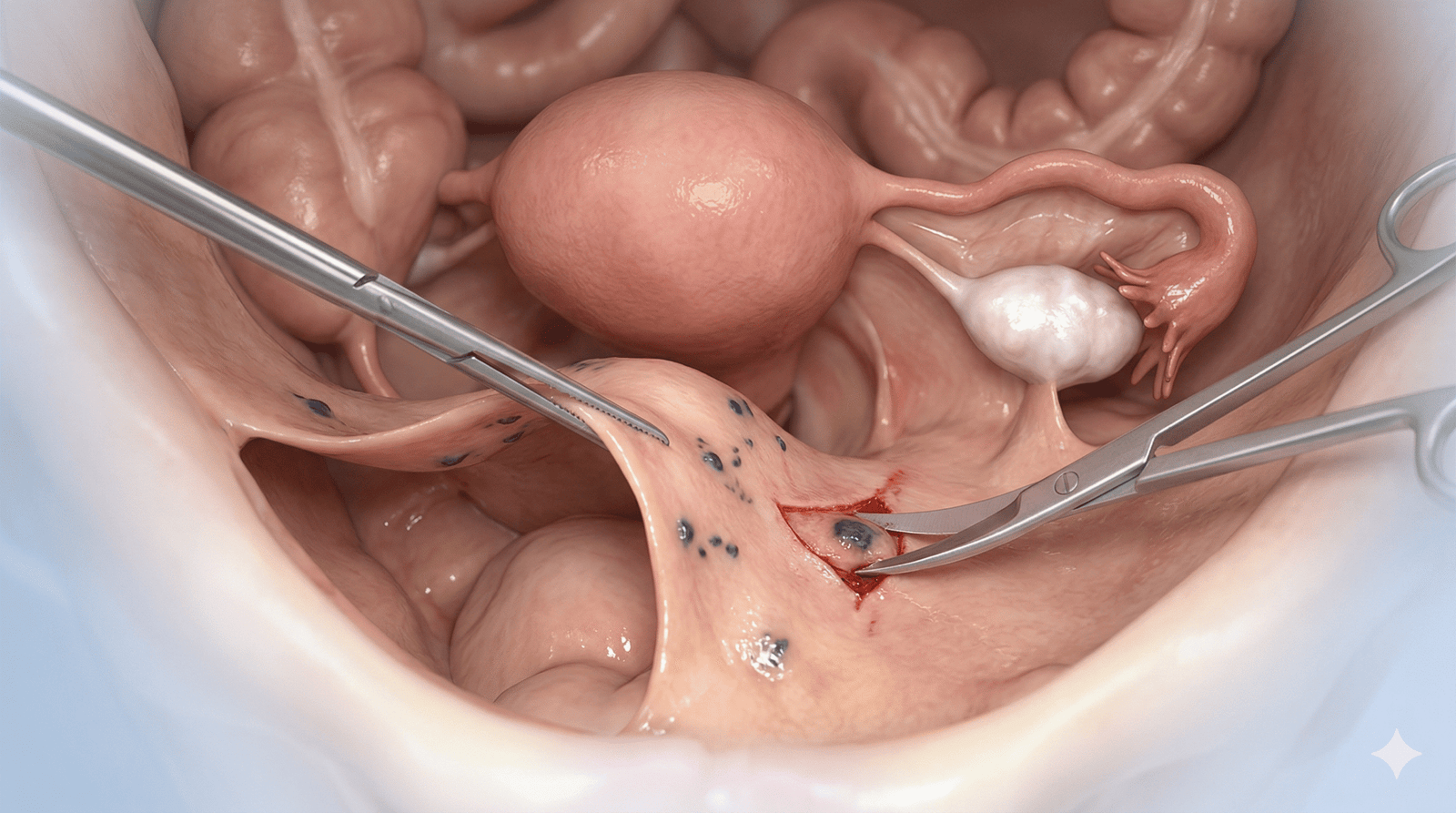
Endometriosis is a condition where tissue similar to the lining of the uterus grows outside the uterus, causing chronic pelvic pain, painful periods, and infertility. It affects millions of women worldwide, yet many suffer for years without a proper diagnosis. Laparoscopy is the gold standard for both diagnosing and treating endometriosis allowing precise removal of endometrial implants while preserving fertility.
Dr. Shalini B, a fellowship-trained minimal access surgeon, has extensive experience in laparoscopic excision of endometriosis at Vivekananda Hospital, Begumpet. This guide explains what endometriosis is, why laparoscopy is essential, what the procedure involves, and how it can help manage symptoms and improve fertility.
📌 Quick Facts: Endometriosis affects 1 in 10 women of reproductive age. Laparoscopy allows direct visualisation of the pelvis, accurate diagnosis, and removal (excision) of endometrial tissue. It is the only definitive way to diagnose endometriosis.
What is Endometriosis?
Endometriosis occurs when tissue similar to the endometrium (the lining of the uterus) grows outside the uterus. Common sites include the ovaries, fallopian tubes, the outer surface of the uterus, the bowel, and the lining of the pelvic cavity. This misplaced tissue responds to hormonal cycles, thickening, breaking down, and bleeding each month. However, unlike normal menstrual blood, it has no way to exit the body, leading to inflammation, scar tissue (adhesions), and cysts (endometriomas).
Symptoms of Endometriosis
- Chronic pelvic pain: Often worse during menstruation or intercourse.
- Painful periods (dysmenorrhea): Severe cramping that may start before the period and last for days.
- Pain during or after sex (dyspareunia).
- Infertility: Endometriosis is found in up to 50 percent of women with unexplained infertility.
- Heavy or irregular bleeding.
- Bowel or bladder symptoms: Pain with urination or bowel movements, especially during menstruation.
- Fatigue, bloating, nausea.
Symptoms vary widely; some women have severe disease with few symptoms, while others have minimal disease but debilitating pain.
Why Laparoscopy is the Gold Standard
Imaging like ultrasound or MRI can suggest endometriosis (e.g., endometriomas, deep infiltrating nodules), but they cannot definitively diagnose it. Laparoscopy allows direct visualisation of the pelvis and biopsy of suspicious tissue, making it the only reliable method for diagnosis. Moreover, it is therapeutic: during the same procedure, the surgeon can excise (cut out) endometrial implants, remove cysts, and divide adhesions to restore normal anatomy.
Laparoscopic Excision of Endometriosis: How It Works
The procedure is performed under general anaesthesia. Steps:
- Small incisions: 3-4 tiny cuts (0.5-1 cm) in the abdomen.
- Camera insertion: A high-definition laparoscope provides a magnified view of the pelvis.
- Diagnostic inspection: The surgeon identifies all endometrial implants, endometriomas, and adhesions.
- Excision (not ablation): Using specialised scissors and energy devices, the surgeon cuts out the diseased tissue completely, rather than just burning the surface. Excision has lower recurrence rates.
- Adhesiolysis: Adhesions (scar tissue) are carefully divided to free up ovaries, tubes, and bowel.
- Specimen removal: Tissue is removed through the incisions and sent for pathology.
- Closure: Incisions are closed with absorbable stitches or skin glue.
The procedure typically takes 1-3 hours depending on the extent of disease. Dr. Shalini B uses advanced techniques to minimise damage to healthy tissue and optimise fertility outcomes.
Laparoscopic Excision vs Ablation
| Factor | Laparoscopic Excision | Ablation (Cautery/Laser) |
|---|---|---|
| Method | Complete removal of endometriosis tissue | Burning surface of lesions |
| Recurrence rate | Lower (15-20 percent over 5 years) | Higher (30-40 percent) |
| Pain relief | More durable | May be temporary |
| Fertility improvement | Superior | Less proven |
| Specimen for pathology | Yes (confirm diagnosis) | No |
Dr. Shalini B performs excision whenever possible because it offers the best long-term outcomes.
Recovery After Laparoscopic Endometriosis Surgery
Fertility After Laparoscopic Endometriosis Surgery
For women with endometriosis-related infertility, laparoscopic excision significantly improves pregnancy rates. Studies show:
- Pregnancy rates increase by 30-50 percent after surgical excision of endometriosis.
- Women with minimal to moderate disease often conceive naturally within 6-12 months after surgery.
- For those with severe disease, surgery may still improve outcomes with assisted reproduction (IVF).
- Excision of endometriomas (chocolate cysts) can preserve ovarian function and improve egg quality.
Dr. Shalini B works with you to plan the optimal timing for conception after surgery, usually 1-3 months for natural conception, or coordinating with fertility specialists if needed.
Risks and Considerations
Laparoscopic endometriosis surgery is safe, but potential risks include:
- Bleeding (rare, usually minimal)
- Infection (low due to small incisions)
- Injury to bowel, bladder, or ureters (rare, less than 1 percent, especially with deep infiltrating disease)
- Recurrence of endometriosis (up to 20-30 percent over 5 years, depending on severity)
- In rare cases, conversion to open surgery if anatomy is severely distorted
Dr. Shalini B discusses these risks during pre-operative consultation and takes all precautions to minimise them.
Why Choose Vivekananda Hospital for Endometriosis Laparoscopy?
- Expert surgeon: Dr. Shalini B has performed over 1,000 laparoscopic procedures, including complex endometriosis excision. She is trained in advanced techniques to remove deep infiltrating disease safely.
- Excision approach: We prioritise complete excision of endometriosis (not ablation) for better long-term outcomes.
- Fertility preservation: Meticulous dissection to protect ovaries, tubes, and healthy tissue.
- Multidisciplinary care: Collaboration with fertility specialists if needed.
- Affordable & transparent: All-inclusive packages; cashless insurance available.
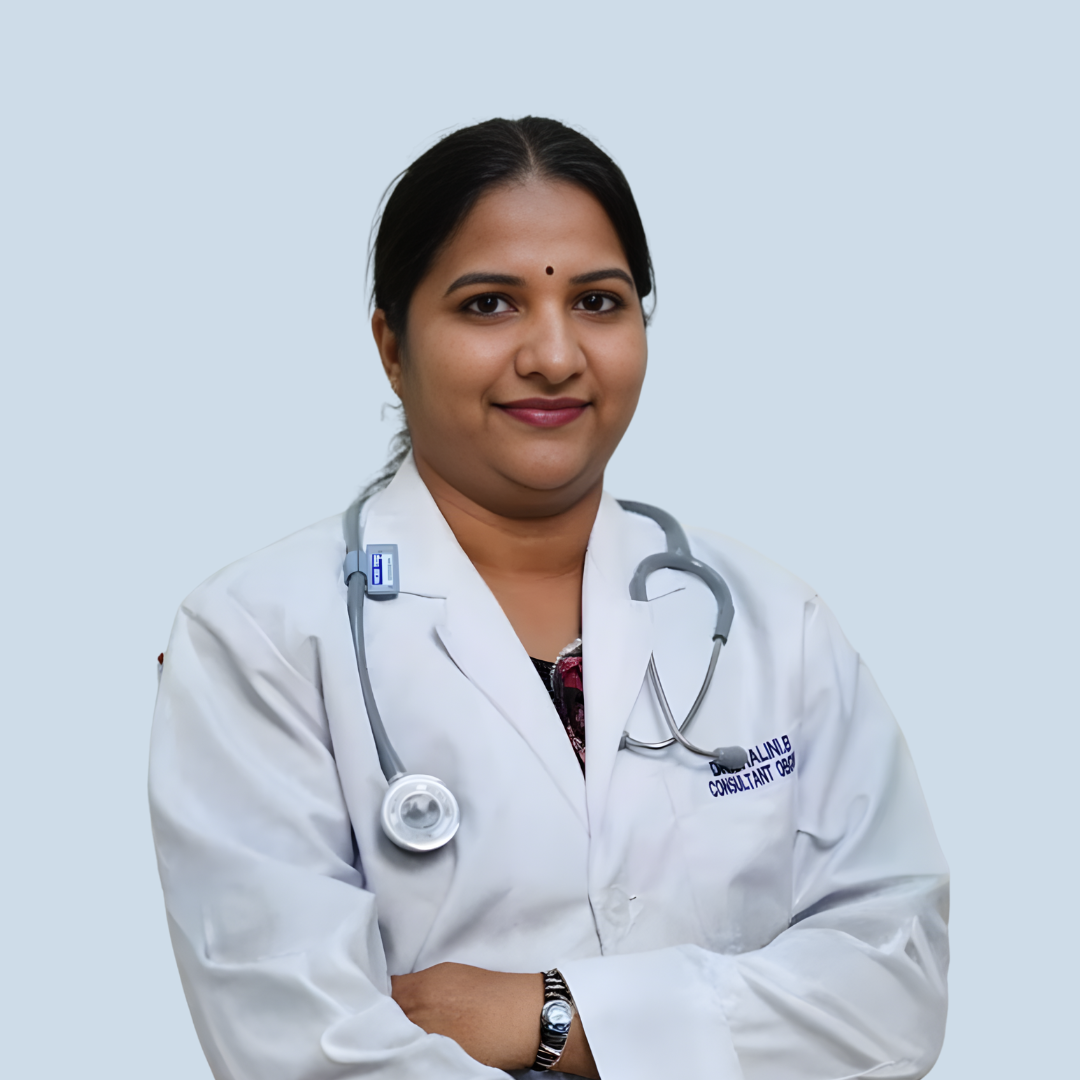
Dr. Shalini B
MBBS (Gold Medal), DGO, DNB (OB-GYN), Fellowship in Minimal Access Surgery
Senior Consultant Obstetrician & Gynaecologist | 5,000+ deliveries | 1,000+ laparoscopic surgeries
OPD: Monday-Saturday, 11:00 AM - 2:00 PM | Consultation: Rs. 750
Frequently Asked Questions About Endometriosis and Laparoscopy
You May Also Like
Suffering from endometriosis symptoms? Consult Dr. Shalini B for a personalised evaluation.
📞 Call Now 💬 WhatsApp© 2026 Vivekananda Hospital, Begumpet, Hyderabad. For educational purposes only. Always consult your doctor for personal medical advice.
If our content helps you, tell Google to show you more of it. Add vivekanandahospital.in as a preferred source.