
Thrombosed Piles: Symptoms, Pain Relief and Treatment
A thrombosed pile is an external haemorrhoid in which a blood clot has formed, causing a sudden, hard, painful lump at the anus. It is not usually dangerous, but the pain can be severe. The key point is timing: seen within the first 48 to 72 hours, a quick minor procedure removes the clot and relieves the pain almost immediately. Left alone, most settle on their own over one to two weeks.
A thrombosed pile is the most painful form piles take, and the sudden, sharp lump often frightens people into thinking something serious has happened. In most cases it is not an emergency, but it is time-sensitive. This guide explains the symptoms, how to relieve the pain, and when a procedure gives the fastest relief.
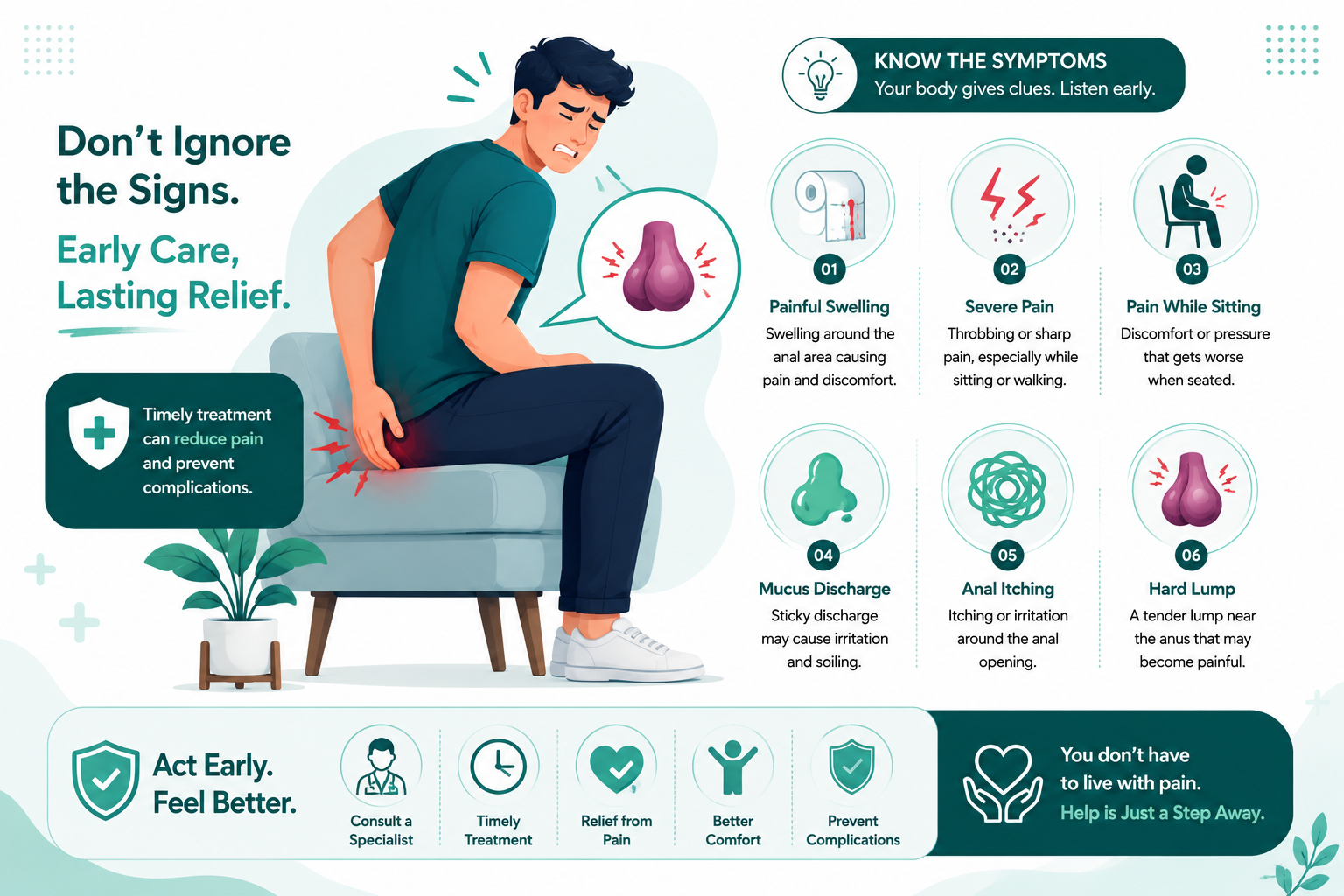
What Is a Thrombosed Pile?
A thrombosed pile, or thrombosed external haemorrhoid, is an external pile in which the blood inside has clotted. The clot makes the pile swell suddenly into a firm lump under the skin at the edge of the anus. Because external piles sit in an area rich in pain nerves, the clot causes sharp pain, unlike ordinary internal piles, which are usually painless. It is a common and treatable problem, not a sign of anything sinister.
Symptoms of a Thrombosed Pile
- A sudden hard lump at the anus, appearing over hours
- Sharp or throbbing pain, often worst when sitting, walking or passing stool
- A bluish or purple tinge to the lump, from the clot underneath
- Tenderness and swelling around the lump
- Sometimes bleeding, if the pile bursts and releases the clot
The pain is typically at its peak in the first two to three days and then begins to ease.
What Causes a Thrombosed Pile?
A thrombosed pile forms when blood pools and clots inside an external pile. The usual triggers are the same pressures that cause piles in the first place: straining, constipation or hard stools, a bout of diarrhoea, heavy lifting, long periods of sitting, and pregnancy. Often it appears after a single episode of hard straining. If you already have external piles, you are more likely to develop a thrombosis.
Is a Thrombosed Pile Dangerous?
In almost all cases, no. A thrombosed pile is painful but not life-threatening, and the clot does not travel elsewhere in the body the way clots in deep veins can. The reason to act quickly is comfort, not danger: the pain responds far faster to a minor procedure done early than to waiting it out. Occasionally the lump bursts and bleeds, which is usually harmless but can be alarming and needs a check to rule out infection.
Home Pain Relief
While you arrange to be seen, these measures ease the pain:
- Warm sitz baths: sit in warm water for 10 to 15 minutes, several times a day.
- Cold pack: a wrapped ice pack for short periods numbs the area and reduces swelling.
- Pain relief: a simple painkiller as advised.
- Soft stools: fibre and plenty of water so passing stool does not aggravate the lump.
- Avoid long sitting and do not strain.
These control symptoms but do not remove the clot. For the fastest relief, be seen within the first two to three days.
Medical Treatment
| When | Treatment | Result |
|---|---|---|
| Within 48 to 72 hours | Minor procedure under local anaesthesia to remove the clot | Immediate, dramatic pain relief |
| After 3 days | Conservative care: sitz baths, pain relief, stool softeners | Pain settles over 1 to 2 weeks as the clot reabsorbs |
| Recurrent thrombosed piles | Laser piles surgery for the underlying piles | Lasting solution, stops the cycle |
If thrombosed piles keep coming back, the real fix is treating the underlying external piles. See the full options and cost in our piles treatment and laser surgery guide.
When to See a Doctor Urgently
Seek care quickly if you have
- A sudden, severe, painful anal lump, ideally within 48 to 72 hours for fastest relief
- Heavy bleeding, or bleeding that does not stop
- Fever, spreading redness, or increasing pain, which can signal infection
- Thrombosed piles that keep recurring
Call +91 7207904418 for a same-day consultation at our Begumpet facility.
Painful anal lump right now?
See Dr. Deeraj Jaliwar at Vivekananda Hospital, Begumpet. Same-day consultation, fast relief when treated early. OPD Monday to Saturday, 10 AM to 2 PM.
Frequently Asked Questions
How long does a thrombosed pile last?
Left alone, the pain of a thrombosed pile is usually worst in the first 48 to 72 hours and then eases over the following one to two weeks as the body reabsorbs the clot. The lump itself can take a few weeks to fully settle, and a small skin tag sometimes remains. If the clot is removed by a minor procedure within the first 2 to 3 days, the severe pain is relieved almost immediately.
Is a thrombosed pile an emergency?
A thrombosed pile is not usually a medical emergency and is not life-threatening, but the pain can be severe. It is time-sensitive rather than dangerous: seen within the first 48 to 72 hours, a minor procedure gives fast relief, which is the main reason to be examined quickly. Seek urgent care if there is heavy bleeding, fever, spreading redness or severe worsening pain.
Does a thrombosed pile burst on its own?
Sometimes a thrombosed pile bursts on its own, releasing the clot and some blood, which often relieves the pain. This is not dangerous in itself, but the bleeding can be alarming and the area can become sore or infected. If a thrombosed pile bursts, keep the area clean, use warm sitz baths, and see a doctor to check healing, especially if bleeding is heavy or does not stop.
Will a thrombosed pile go away without treatment?
Yes, most thrombosed piles settle on their own over one to two weeks as the clot is reabsorbed, and the pain fades after the first few days. Treatment is not always essential, but it is offered because it relieves severe pain far faster. If thrombosed piles keep coming back, the underlying piles usually need definitive treatment such as laser surgery to stop the cycle.
How do I relieve thrombosed pile pain at home?
For a thrombosed pile, warm sitz baths for 10 to 15 minutes several times a day ease pain and swelling, and a wrapped cold pack for short periods can numb the area. Take a simple painkiller as advised, keep stools soft with fibre and water to avoid straining, and do not sit for long stretches. These help while you arrange to be seen, but they do not remove the clot. See a doctor within the first 2 to 3 days for the fastest relief.
Does a thrombosed pile need surgery?
A single thrombosed pile does not usually need major surgery. Within the first 48 to 72 hours, a quick minor procedure under local anaesthesia can remove the clot and relieve pain immediately. If thrombosed piles keep recurring, or there are advanced underlying piles, laser piles surgery offers a lasting solution. Dr. Deeraj Jaliwar at Vivekananda Hospital, Begumpet can advise which is right. Call +91 7207904418.
Medically reviewed by Dr. Deeraj Jaliwar, MS (General Surgery), DMAS, Vivekananda Hospital, Begumpet. Last updated July 2026. For educational purposes only. Always consult your doctor for personal medical advice. Not for medical emergencies; for urgent help call +91 7207904418.
If our content helps you, tell Google to show you more of it. Add vivekanandahospital.in as a preferred source.