
Bleeding Piles: How to Stop It and When It Is Serious
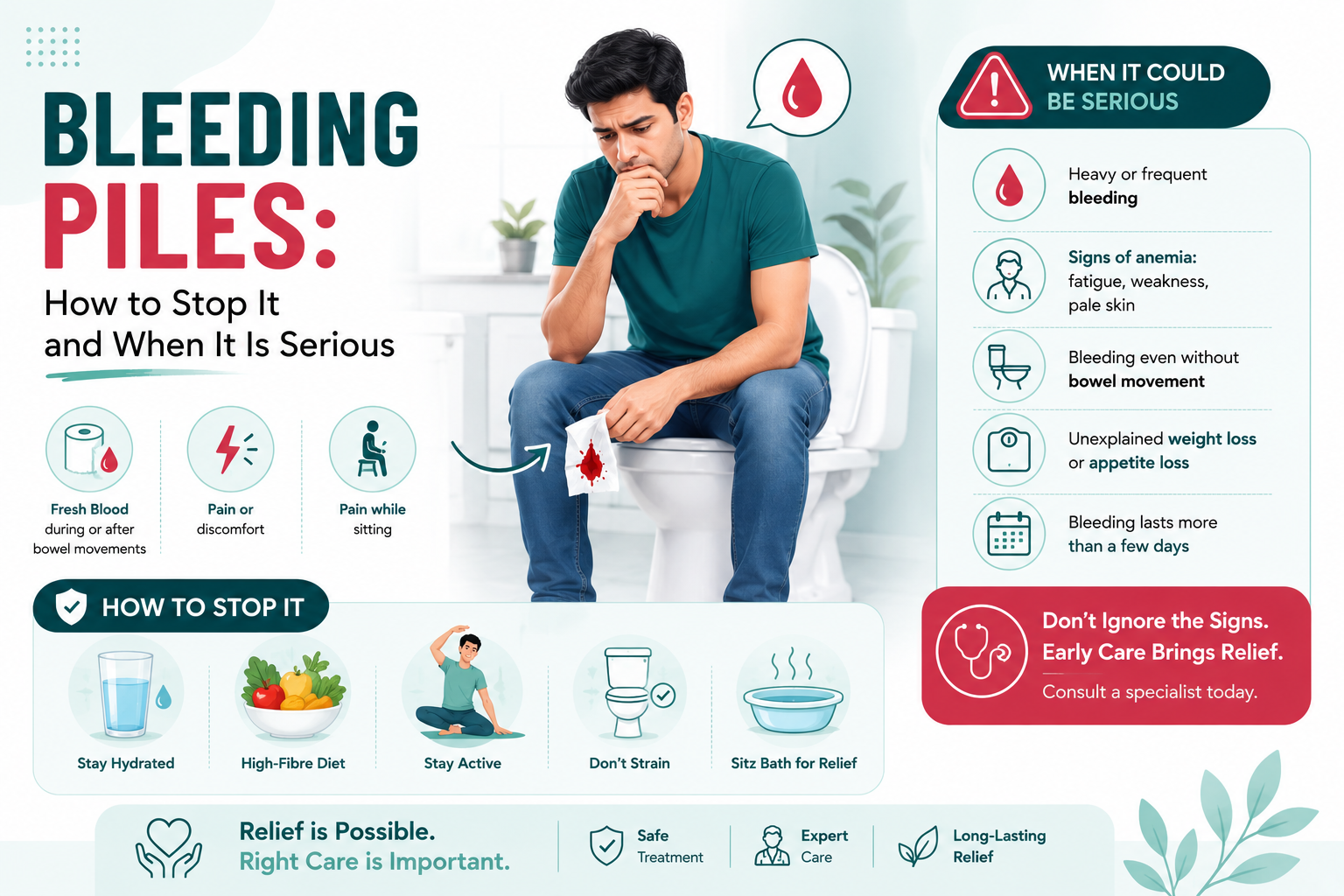
Bleeding is the most common sign of piles, and it is usually bright red, painless, and seen during or after a bowel movement. To reduce it, keep stools soft with fibre and water, avoid straining, and use warm sitz baths. Light, occasional bleeding is rarely dangerous, but heavy, frequent or ongoing bleeding needs a doctor, and any bleeding with a change in bowel habit or weight loss must be examined to rule out other causes.
Seeing blood when you go to the toilet is frightening, but with piles it is the usual first symptom rather than a sign of disaster. This guide explains how to stop the bleeding, how much is normal, when bleeding is a warning sign, and the treatments that stop chronic bleeding for good.
Is Bleeding Normal With Piles?
Bleeding is the single most common symptom of piles, so in that sense it is expected rather than unusual. Pile bleeding is typically bright red, painless, and appears on the toilet paper, dripping into the pan, or streaking the stool. It happens because the swollen blood vessels are fragile and get grazed as stool passes. Normal, though, does not mean you should ignore it. The same symptom can occasionally come from more serious causes, so persistent bleeding always deserves a check.
How to Stop Piles Bleeding
For mild bleeding, the aim is to stop irritating the piles and let them settle:
- Soften stools: a high-fibre diet and 2 to 3 litres of water a day, so stool passes without grazing the piles.
- Do not strain and do not sit long on the toilet.
- Warm sitz baths: 10 to 15 minutes, a few times a day, to calm the area.
- Topical relief: a short course of a suitable product can reduce irritation.
- Stay active to keep bowels regular.
These settle mild, occasional bleeding. They do not remove the underlying pile, so if bleeding is heavy or keeps returning, treatment is needed rather than repeated home measures.
When Bleeding Is a Warning Sign
Light bleeding now and then is rarely a problem. Bleeding becomes a concern when it is heavy, frequent or continuous, because steady loss over weeks and months can lead to anaemia, leaving you tired and breathless. Passing clots, repeatedly turning the toilet water deep red, or feeling faint are all signals to be seen quickly rather than waiting.
When It May Not Be Piles
Piles are the commonest cause of painless rectal bleeding, but not the only one. Bleeding that is dark rather than bright red, mixed through the stool rather than on its surface, or that comes with a change in bowel habit, weight loss, or starts new after age 40, needs proper evaluation. A short examination, and a colonoscopy where advised, distinguishes piles from other conditions. This is why no one should simply assume all rectal bleeding is piles. If you are unsure whether your symptoms fit piles, see our piles symptoms guide.
Treatment to Stop Bleeding for Good
| Grade | Approach | Effect on bleeding |
|---|---|---|
| Grade 1 to 2 | Diet, lifestyle, banding | Often stops mild bleeding |
| Grade 3 to 4 | Laser piles surgery | Shrinks piles stitchlessly, stops bleeding at the source |
| Recurrent bleeding | Full assessment first, then targeted treatment | Lasting solution once the cause is confirmed |
When bleeding will not settle with diet and lifestyle, laser piles surgery gives a stitchless, day-care cure. See the full options and cost in our piles treatment and laser surgery guide, or try conservative steps first in our home remedies guide.
When to See a Doctor
See a doctor if you have
- Heavy bleeding, clots, or bleeding that does not stop
- Bleeding that keeps returning despite diet and lifestyle changes
- Tiredness, breathlessness or dizziness, which can signal blood loss
- Dark blood, blood mixed into the stool, a change in bowel habit or weight loss
- New rectal bleeding after age 40
Bleeding that keeps coming back?
Get it diagnosed and treated by Dr. Deeraj Jaliwar at Vivekananda Hospital, Begumpet. Consultation Rs. 750, OPD Monday to Saturday, 10 AM to 2 PM.
Frequently Asked Questions
Is it normal for piles to bleed?
Bleeding is the most common symptom of piles, so bright red blood on the toilet paper, in the pan, or on the stool is a typical sign of piles rather than something unusual. It is usually painless. That said, normal does not mean it should be ignored, because the same symptom can occasionally come from more serious conditions. Any rectal bleeding that persists beyond a few days should be examined to confirm it is piles.
How do I stop piles bleeding immediately?
To reduce piles bleeding quickly, avoid straining, do not sit long on the toilet, and keep stools soft with a high-fibre diet and 2 to 3 litres of water a day. Warm sitz baths for 10 to 15 minutes several times a day calm the area, and a short course of a topical product may help. These settle mild bleeding, but they do not treat the underlying pile. Bleeding that is heavy, or that keeps returning, needs medical treatment rather than home measures alone.
Are bleeding piles dangerous?
Occasional light bleeding from piles is common and rarely dangerous. It becomes a concern when it is heavy, frequent or ongoing, because steady blood loss over time can cause anaemia, with tiredness and breathlessness. Bleeding is also a warning sign when it comes with a change in bowel habit, weight loss, or is dark or mixed into the stool, as these can point to other causes. Persistent bleeding should always be checked.
How much bleeding from piles is too much?
A few streaks or drops of bright red blood now and then is typical of piles. See a doctor promptly if you pass clots, if the toilet water turns deep red repeatedly, if bleeding lasts more than a few days, or if you feel dizzy, tired or breathless, which can signal blood loss. Heavy or continuous bleeding needs same-day assessment.
When is rectal bleeding not piles?
Piles are the commonest cause of painless bright red rectal bleeding, but not the only one. Bleeding that is dark or mixed through the stool, or that comes with a change in bowel habit, weight loss, or new bleeding after age 40, needs proper evaluation to rule out other causes. A quick clinic examination, and a colonoscopy if advised, tells piles apart from other conditions. Do not assume all rectal bleeding is piles.
What treatment stops bleeding piles permanently?
For piles that keep bleeding despite diet and lifestyle measures, procedures give a lasting solution. Grade 1 and 2 piles can be treated with banding, while grade 3 and 4 piles respond best to laser piles surgery, which shrinks the piles stitchlessly and stops the bleeding at its source. At Vivekananda Hospital, Begumpet, Dr. Deeraj Jaliwar advises the right option after examination. Call +91 7207904418.
Medically reviewed by Dr. Deeraj Jaliwar, MS (General Surgery), DMAS, Vivekananda Hospital, Begumpet. Last updated July 2026. For educational purposes only. Always consult your doctor for personal medical advice. Not for medical emergencies; for urgent help call +91 7207904418.
If our content helps you, tell Google to show you more of it. Add vivekanandahospital.in as a preferred source.