
Chikungunya Joint Pain: How Long It Lasts and How to Manage It
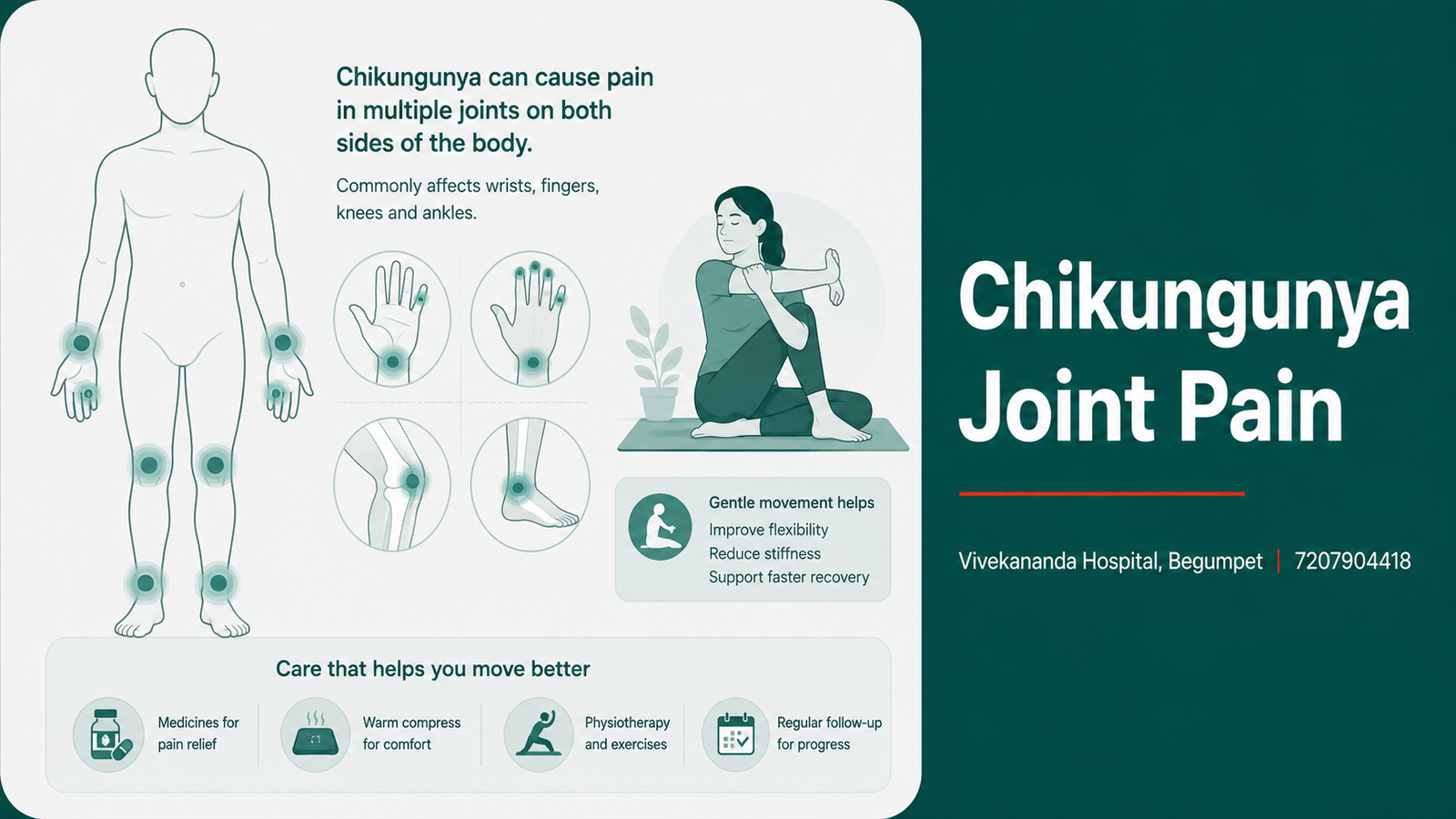
Joint pain is the defining feature of chikungunya, and the part that lingers. It is usually felt in several joints at once, often symmetrically in the hands, wrists, ankles and knees, and it can outlast the fever. Most people ease within one to two weeks, but in some the pain and stiffness continue for weeks or months. Management starts with rest, fluids and paracetamol, with anti-inflammatory medicine added only once dengue is ruled out, plus gentle movement and physiotherapy rather than staying still. For pain that lingers, see a doctor. Call +91 7207904418.
Why Chikungunya Causes Joint Pain
The chikungunya virus provokes inflammation in and around the joints, which is what produces the pain and stiffness the illness is known for. It typically affects several joints at once and usually on both sides of the body, which is why it can be so disabling in the first days. The fever settles within a few days, but the joint inflammation, and the pain from it, can take longer to fade.
How Long Does Chikungunya Joint Pain Last?
The honest answer is that it varies a lot from person to person.
| Phase | What tends to happen |
|---|---|
| Acute, first 1 to 2 weeks | Severe joint pain with the fever, worst early, then slowly easing in most people |
| Weeks to a few months | In some, pain and stiffness come and go in the same joints, often worse in the morning |
| Longer, a minority | A smaller number have joint symptoms that persist for many months and need ongoing care |
Most people make a full recovery. Persistent joint pain is the most common lasting effect, and it responds to proper management rather than being something to simply wait out.
Which Joints Are Affected
Chikungunya tends to target the smaller joints, the hands, wrists, fingers, ankles and feet, and often the knees, usually symmetrically. Many people notice the pain and stiffness are worse in the morning or after resting, and ease a little with movement through the day. Swelling can accompany the pain in some joints.
How to Manage Chikungunya Joint Pain
- Start with paracetamol. It is the safe first choice for pain and fever, and importantly it is safe before dengue is ruled out.
- Hold anti-inflammatory painkillers until dengue is excluded. Aspirin and similar drugs can add to bleeding risk if the illness is actually dengue, so a doctor confirms first.
- Once safe, anti-inflammatory medicine can help. After dengue is ruled out, a doctor may add it for the joint pain.
- Keep moving gently. Prolonged rest stiffens joints. Gentle movement, stretching and warm compresses help, within comfort.
- Physiotherapy for stiffness. For pain and stiffness that linger, structured physiotherapy speeds recovery.
When Chikungunya Joint Pain Persists
In a minority of people, joint pain and stiffness continue well beyond the infection, sometimes behaving like an inflammatory arthritis. This is not a reason to panic, but it is a reason to see a doctor rather than manage alone. Persistent cases are treated with a longer plan that a physician guides, which can include anti-inflammatory or, in some cases, anti-rheumatic medication, alongside physiotherapy and graded exercise. Ignoring long-lasting joint pain, or masking it with repeated self-prescribed painkillers, is the thing to avoid.
When to See a Doctor
See a doctor if joint pain after chikungunya is severe, limits your daily activities, or continues beyond a couple of weeks, so it can be assessed and managed properly. Also seek care during the acute illness for any warning sign, such as bleeding, breathlessness or drowsiness, which can point to dengue rather than chikungunya and needs urgent attention.
Joint pain not settling after chikungunya?
Do not just wait it out or self-medicate. Get assessed and given a proper plan by Dr. Ravi Sishir Reddy at Vivekananda Hospital, Begumpet, with physiotherapy support for lingering joint pain.
Frequently Asked Questions
Why does chikungunya cause joint pain?
Chikungunya virus triggers inflammation in the joints, which is why joint pain is its defining symptom. The pain is usually felt in several joints at once, often on both sides of the body, and tends to affect the hands, wrists, ankles and knees. It can be severe enough to limit movement while the body clears the infection.
How long does chikungunya joint pain last?
For most people the joint pain eases within one to two weeks. In some it continues for weeks or months, coming and going in the same joints, and in a smaller number it can last longer. Persistent joint pain is the most common lasting effect of chikungunya, and it can be managed with the right care.
What is the best way to relieve chikungunya joint pain?
Rest, fluids and paracetamol are the safe starting point, especially before dengue is ruled out, since anti-inflammatory painkillers can add to bleeding risk in dengue. Once dengue is excluded, a doctor may add anti-inflammatory medication, and gentle movement and physiotherapy help more than staying completely still.
Can chikungunya joint pain become permanent?
Lasting joint damage is uncommon. Most people recover fully, though a minority have joint pain and stiffness that persist for months. This lingering pain can usually be managed well with medication, gentle exercise and physiotherapy guided by a doctor, rather than becoming permanent.
Should I rest or move with chikungunya joint pain?
Both, in balance. Rest during the fever, but avoid staying completely still for long, because prolonged immobility makes joints stiffer. Gentle movement, stretching and physiotherapy, within comfort, help the joints recover and reduce stiffness.
What medicine helps chikungunya joint pain?
Paracetamol is the usual first choice and is safe before dengue is ruled out. After that, a doctor may prescribe anti-inflammatory medication, and for pain that lingers, a longer plan that can include physiotherapy. Medicines should be taken on a doctor's advice, not self-prescribed, especially in a monsoon fever.
Reviewed by Dr. Ravi Sishir Reddy, MD (General Medicine), Consultant Physician and ICU lead, Vivekananda Hospital, Begumpet. Last updated 16 Aug 2026. For general information only and not a substitute for medical advice or diagnosis. Do not self-prescribe painkillers for a monsoon fever, especially anti-inflammatory drugs, until a doctor has assessed you. Not for medical emergencies; for urgent help call +91 7207904418.
If our content helps you, tell Google to show you more of it. Add vivekanandahospital.in as a preferred source.