
Life After Gallbladder Removal: Recovery, Diet and What to Expect
You can live a completely normal life without a gallbladder. It only stores bile; your liver keeps making it, and afterwards the bile flows straight into the intestine. Recovery from keyhole surgery is quick, most people are back to desk work in one to two weeks. Eat small, low-fat meals for the first few weeks, then return to normal. Some people have looser stools or fat intolerance for a while, which usually settles.
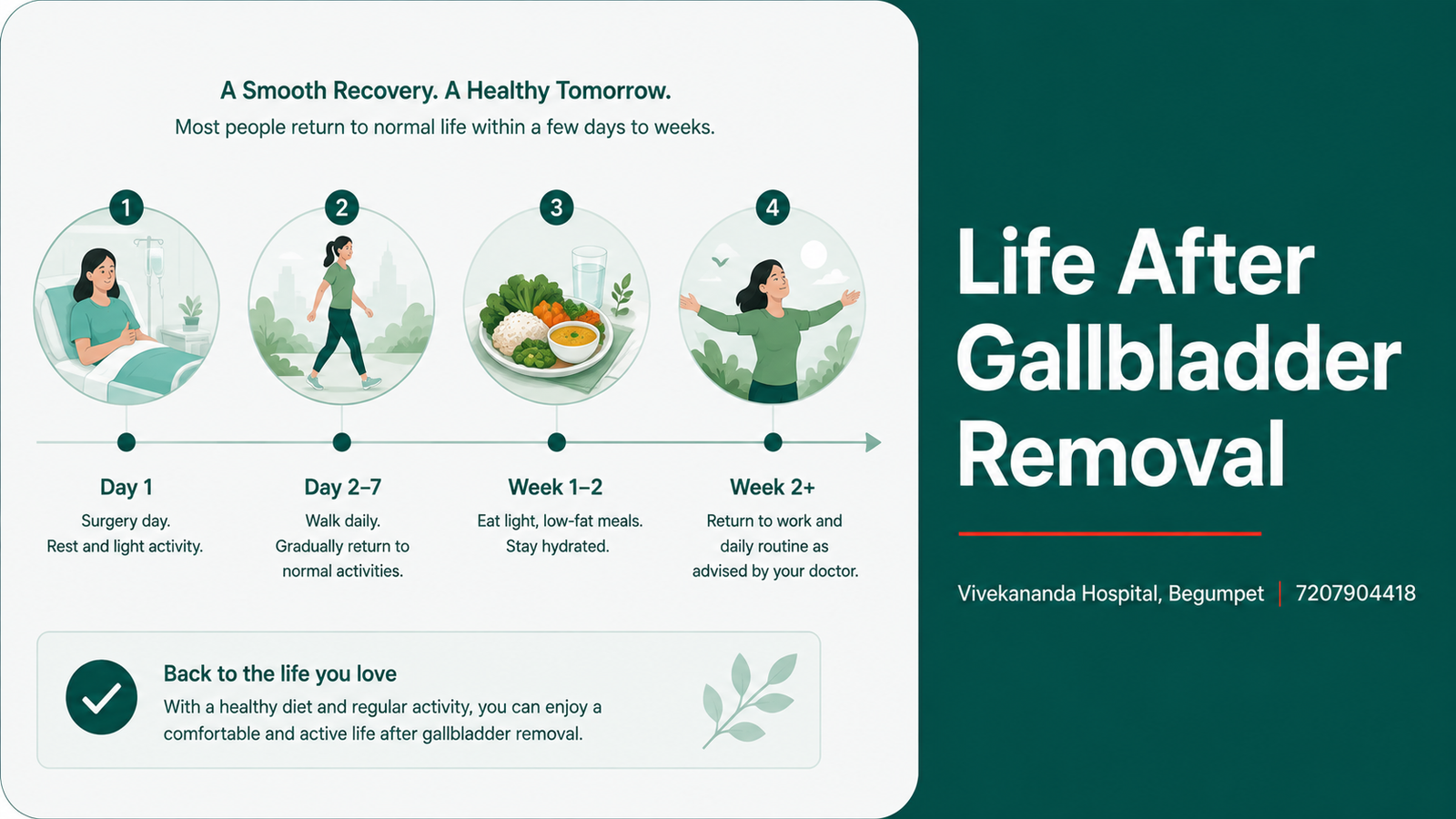
If you are facing gallbladder surgery, or have just had it, the big questions are the same: will life be normal, what can I eat, and how long is recovery. The short answer is reassuring. This guide walks through the recovery timeline, the diet after surgery, the side effects that can happen and how long they last, and the warning signs that need a call to your surgeon. It is general information, not personal medical advice.
Can You Live Normally Without a Gallbladder?
Yes, and this is the reassurance most people need before surgery. The gallbladder is a storage bag, not a factory. Its only job is to hold and concentrate the bile that the liver makes, and release it when you eat fatty food. Once it is removed, the liver carries on making bile exactly as before, and the bile simply drips continuously into the intestine instead of being stored and released in a burst. Digestion continues, and the vast majority of people notice no lasting difference in daily life. You do not need lifelong medicine, and it does not shorten your life.
Recovery Timeline After Gallbladder Removal
Recovery from keyhole (laparoscopic) surgery is quick. Here is the usual pattern, though it varies with age and general health.
| Time | What to expect |
|---|---|
| Day of surgery | Walking within a few hours, home the same day or next morning |
| First few days | Mild pain around the small cuts and the shoulder, controlled with tablets |
| 1 to 2 weeks | Back to desk work and light daily activity, wounds healing |
| 2 to 4 weeks | Return to full activity, exercise and heavy lifting as the surgeon advises |
| Open surgery | Longer, usually 4 to 6 weeks for full recovery |
Light walking from day one actually speeds recovery. The main thing to avoid early is heavy lifting or straining the small wounds.
Diet After Gallbladder Removal
Your diet after surgery is a short adjustment, not a permanent restriction. For roughly the first two to four weeks, eat small, low-fat meals so the continuous bile flow can keep up, then gradually reintroduce normal foods as you tolerate them.
- First few days: light, easy foods, clear soups, rice, khichdi, toast, bananas, boiled vegetables.
- First few weeks: low-fat meals, lean protein, plenty of fibre, small and frequent rather than large heavy meals.
- Then: return to a normal balanced diet, adding fatty and fried foods back slowly and seeing what you tolerate.
- Long term: most people eat everything normally. A minority stay sensitive to very fatty or fried meals and simply keep those modest.
Side Effects and How Long They Last
Most people have no lasting effects. The common temporary ones are:
- Looser or more frequent stools. The most common change, because bile now flows continuously. It usually settles within a few weeks as the body adjusts.
- Bloating or gas after fatty meals in the early weeks, which eases as you rebuild tolerance.
- Shoulder-tip pain for a day or two after keyhole surgery, from the gas used during the operation, which clears on its own.
A small number of people have ongoing loose stools or fat intolerance, known as post-cholecystectomy syndrome. This is usually manageable with simple diet changes, cutting back on very fatty foods and adding soluble fibre, and a doctor can help if it persists.
Long Term: What Is Different?
For most people, very little. You keep your normal diet, activity and lifestyle. Gallstones cannot come back, because there is no gallbladder for them to form in, although rarely stones can form in the bile duct and would be dealt with separately. Living without a gallbladder does not require special supplements or lifelong medicine for the great majority of people.
When to Call Your Doctor After Surgery
Recovery is usually smooth, but call your surgeon or return to hospital if you notice any of these after going home.
Contact your surgeon if you have
- Fever, or increasing redness, swelling or discharge from a wound
- Severe or worsening abdominal pain rather than steadily improving
- Yellowing of the skin or eyes, dark urine or pale stools
- Persistent vomiting, or inability to keep fluids down
- Diarrhoea that does not settle after a few weeks
Call +91 7207904418. Early review keeps small problems small.
Considering gallbladder surgery?
Get your questions answered before you decide. Consult Dr. Deeraj Jaliwar at Vivekananda Hospital, Begumpet, for a clear picture of the surgery and recovery. OPD Monday to Saturday, 10 AM to 1 PM.
Frequently Asked Questions
Can you live a normal life without a gallbladder?
Yes. The gallbladder only stores and concentrates bile; the liver keeps making it, and after removal the bile simply flows straight into the intestine. Most people live a completely normal life with no long-term restrictions once the short recovery period is over.
How long is recovery after gallbladder removal?
After keyhole (laparoscopic) surgery, most people go home the same day or the next, return to desk work in one to two weeks, and to full activity and exercise in about two to four weeks. Open surgery takes longer, usually four to six weeks. Recovery varies with age and general health.
What can I eat after gallbladder removal?
For the first few weeks, keep meals small and low in fat, then gradually return to a normal balanced diet as you tolerate it. Most people are eating normally within a month. A few stay sensitive to very fatty or fried meals and simply limit those foods.
Will I get diarrhoea after gallbladder removal?
Some people have looser or more frequent stools for a few weeks after surgery, because bile now flows continuously into the intestine rather than being stored. This usually settles as the body adjusts. If it continues, a doctor can advise diet changes or medicine; long-term diarrhoea is uncommon.
Are there long-term side effects of removing the gallbladder?
For most people, no. A small number have ongoing loose stools or fat intolerance, called post-cholecystectomy syndrome, which is usually managed with simple diet changes. There is no major long-term health problem from living without a gallbladder, and it does not shorten life or need lifelong medicine for most people.
When can I return to work and exercise after gallbladder surgery?
After keyhole surgery, most people return to desk work in about one to two weeks and to full exercise and heavy lifting in two to four weeks, as advised by their surgeon. Light walking is encouraged early. Avoid straining the wounds with heavy lifting until your surgeon clears you.
Reviewed by Dr. Deeraj Jaliwar, MS (General Surgery), DMAS, Vivekananda Hospital, Begumpet. Last updated 12 Aug 2026. For general information only and not a substitute for medical advice or your surgeon's specific aftercare instructions. Not for medical emergencies; for urgent help call +91 7207904418.
If our content helps you, tell Google to show you more of it. Add vivekanandahospital.in as a preferred source.