
Piles in Pregnancy: Causes, Safe Relief and Treatment
Piles are very common in pregnancy, affecting around 30 to 40 percent of women, especially in the third trimester and after delivery, because the growing uterus presses on the pelvic veins, pregnancy hormones cause constipation, and blood volume rises. They are usually managed safely and conservatively with a high-fibre diet, water, sitz baths and avoiding straining. Most improve on their own after the baby is born, and they do not harm the baby. Surgery is normally avoided during pregnancy. Always check any medicine or cream with your obstetrician first.
If you have developed piles while expecting, you are far from alone, and there is a lot you can do safely to ease them. This guide explains why they happen, which measures are safe in pregnancy, whether they clear after delivery, and when treatment is needed.
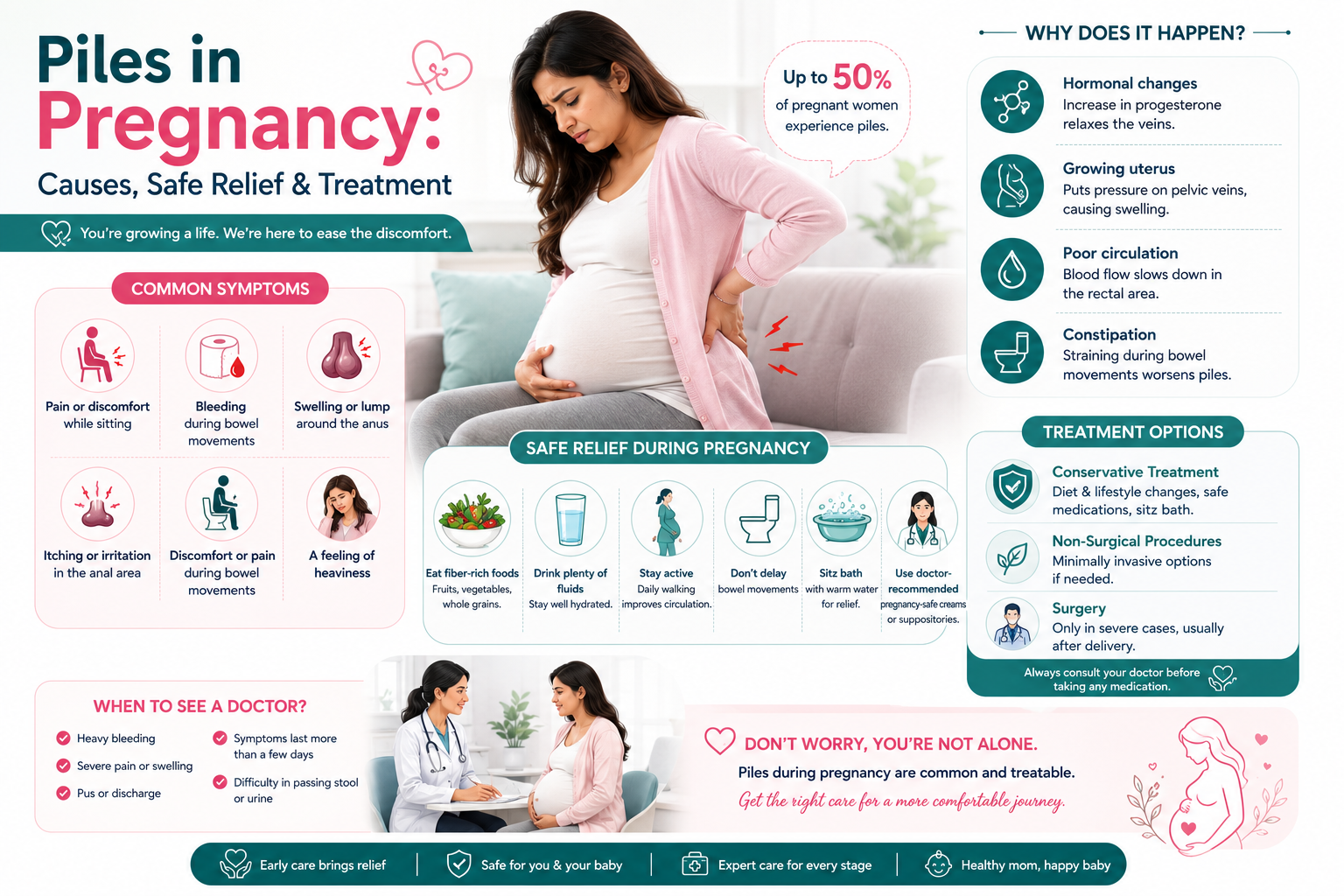
Why Piles Happen in Pregnancy
Three changes of pregnancy combine to cause piles. First, the growing uterus presses down on the large veins of the pelvis, raising pressure in the anal veins. Second, the hormone progesterone relaxes and slows the bowel, which causes constipation, and the straining that comes with it is a major trigger. Third, blood volume rises across pregnancy, adding to the pressure. Put together, these swell the anal cushions into piles. The pushing of labour can bring them on or worsen them too.
When They Appear
Piles most often show up in the third trimester, when the uterus is largest and the pressure highest, and many women first notice them in the days after delivery because of the strain of labour. They can appear earlier if constipation is a problem. For most women it is a temporary phase of pregnancy rather than a lasting condition.
Symptoms
- Bright red, usually painless bleeding on passing stool
- Itching or irritation around the anus
- A soft lump or swelling at the anus
- Discomfort or aching, worse with constipation
- A sudden painful lump, if an external pile clots
Can Piles Affect Your Baby or Your Delivery?
Piles do not harm the baby. They are swollen veins around the anus and do not affect the pregnancy or the developing baby in any way. You can also still have a normal vaginal delivery with piles in almost all cases; piles alone are not a reason for a caesarean. What often happens is the reverse, that the pushing of labour can bring on piles or make existing ones worse for a short time afterwards, and these usually settle within a few weeks of delivery. If you have large or painful piles late in pregnancy, mention them to your obstetrician so your comfort during and after delivery can be planned for.
Safe Relief During Pregnancy
These measures are the safe first line in pregnancy and help most cases:
- High-fibre diet: aim for 25 to 30 grams of fibre a day from fruits, vegetables, whole grains and beans to keep stools soft.
- Water: 8 to 12 cups, roughly 2 to 3 litres, a day to avoid constipation.
- Warm sitz baths: 10 to 15 minutes, a few times a day.
- A footstool on the toilet: raising your knees above your hips relaxes the pelvic floor and reduces straining.
- Do not strain and do not sit or stand for long stretches.
- Gentle hygiene: clean with moist toilet paper and pat rather than rub. A cloth wrung out in iced water held to the area also eases pain.
- Lie on your side and use a cushion when sitting to take pressure off the pelvic veins, and stay gently active.
- Pelvic floor exercises support circulation in the area.
Any oral medicine, laxative or topical cream should be used only after your obstetrician confirms it is safe in pregnancy. Do not self-medicate.
How to Prevent Piles in Pregnancy
You cannot always prevent piles in pregnancy, but you can lower the risk by preventing the constipation that triggers them. Eat fibre-rich food and drink plenty of water from early in pregnancy, stay gently active, do not delay going to the toilet when you feel the urge, and avoid long periods of sitting or standing. Pelvic floor (Kegel) exercises encourage healthy circulation around the anus and rectum. Starting these habits before piles appear is the most effective prevention.
What to Avoid
Do not start creams, ointments or laxatives on your own during pregnancy, because not all are considered safe. Avoid straining, holding stool, and long periods on the toilet. And do not simply assume that any bleeding is piles, since bleeding in pregnancy should always be mentioned to your obstetrician so the cause is confirmed.
After Delivery
The good news is that most pregnancy piles improve on their own within a few weeks of delivery, once the pressure of the uterus is gone and hormones settle. Keeping up a high-fibre diet, good hydration and sitz baths speeds this along. If piles persist beyond a few weeks after delivery, or keep bleeding, they can then be assessed and treated. When treatment is needed, laser piles surgery is a safe, stitchless, day-care option done after pregnancy.
When to See a Doctor
Tell your doctor promptly if you have
- Heavy or persistent rectal bleeding
- A sudden, very painful anal lump (possible thrombosed pile)
- Piles that do not settle in the weeks after delivery
- Feeling faint, very tired or breathless with bleeding
- Any rectal bleeding, which should always be mentioned to your obstetrician
Piles that persist after delivery?
Get them assessed and treated by Dr. Deeraj Jaliwar at Vivekananda Hospital, Begumpet. Consultation Rs. 750, OPD Monday to Saturday, 10 AM to 2 PM.
Frequently Asked Questions
Are piles common in pregnancy?
Yes, piles are very common in pregnancy, especially in the third trimester and just after delivery. They happen because the growing uterus presses on the pelvic veins, pregnancy hormones slow the bowel and cause constipation, and blood volume rises, all of which raise pressure in the anal veins. Many women get piles for the first time during pregnancy, and most of these settle after the baby is born.
Why do you get piles in pregnancy?
Three things combine in pregnancy to cause piles. The growing uterus presses down on the veins of the pelvis and anus, the hormone progesterone relaxes and slows the bowel, leading to constipation and straining, and total blood volume increases. Together these swell the anal veins into piles. Straining from constipation and the pushing of labour are the biggest triggers.
How can I treat piles during pregnancy safely?
Safe first-line measures in pregnancy are a high-fibre diet, drinking plenty of water, warm sitz baths, not straining, and not sitting or standing for long periods. Gentle activity and lying on your side also help. Do not use oral medicines or topical creams without checking with your obstetrician, because not all are considered safe in pregnancy. Speak to your doctor before starting any product.
Will pregnancy piles go away after delivery?
In most cases, yes. Piles that appear during pregnancy usually improve on their own in the weeks after delivery, as the pressure from the uterus is relieved and hormones return to normal. Continuing a high-fibre diet, good hydration and sitz baths helps them settle faster. If piles persist beyond a few weeks after delivery, or keep bleeding, they can then be assessed and treated.
Are piles dangerous during pregnancy?
Piles in pregnancy are uncomfortable but usually not dangerous to you or the baby. They need attention when bleeding is heavy or persistent, when a sudden very painful lump appears, which may be a thrombosed pile, or if you feel faint. Any rectal bleeding in pregnancy should be mentioned to your obstetrician so the cause is confirmed rather than assumed. Most cases are managed simply and safely.
Can I have piles surgery during pregnancy?
Piles surgery is normally avoided during pregnancy and managed conservatively instead, because most pregnancy piles improve after delivery. Surgery is considered during pregnancy only for a severe complication, and even then in coordination with your obstetrician. If piles persist after delivery, laser piles surgery is a safe, stitchless, day-care option. Dr. Deeraj Jaliwar at Vivekananda Hospital, Begumpet can advise after delivery. Call +91 7207904418.
Can piles harm my baby during pregnancy?
No. Piles are swollen veins around the anus and do not affect the baby or the pregnancy in any way. They are uncomfortable for you but not dangerous to the baby. Any rectal bleeding should still be mentioned to your obstetrician so the cause is confirmed, but piles themselves pose no risk to the developing baby.
Can I have a normal delivery if I have piles?
Yes, in almost all cases you can have a normal vaginal delivery with piles. Piles alone are not a reason for a caesarean. The pushing of labour can sometimes bring on piles or make existing ones worse for a short time afterwards, and these usually settle within a few weeks. If you have large or painful piles late in pregnancy, tell your obstetrician so your comfort during and after delivery can be planned.
Medically reviewed by Dr. Deeraj Jaliwar, MS (General Surgery), DMAS, Vivekananda Hospital, Begumpet. Last updated July 2026. References: Poskus T et al, prevention of haemorrhoids in pregnancy, BMC Pregnancy Childbirth 2022; Abramowitz L et al, anal disorders in pregnancy, PMC. For educational purposes only, and not a substitute for advice from your own obstetrician during pregnancy. Not for medical emergencies; for urgent help call +91 7207904418.
If our content helps you, tell Google to show you more of it. Add vivekanandahospital.in as a preferred source.