
Typhoid Fever Treatment in Hyderabad
Typhoid is a bacterial infection from contaminated food or water, so unlike dengue and viral fevers, it is treated with antibiotics, and treated properly it clears well. The two things that matter most are getting the right antibiotic, because drug resistance is rising, and completing the full course, because stopping early causes relapse. Most typhoid is treated at home with oral antibiotics; a prolonged high fever, complications, or the very young and elderly may need admission. At Vivekananda Hospital, Begumpet, Dr. Ravi Sishir Reddy diagnoses and treats typhoid, cashless under insurance and EHS. Call +91 7207904418.
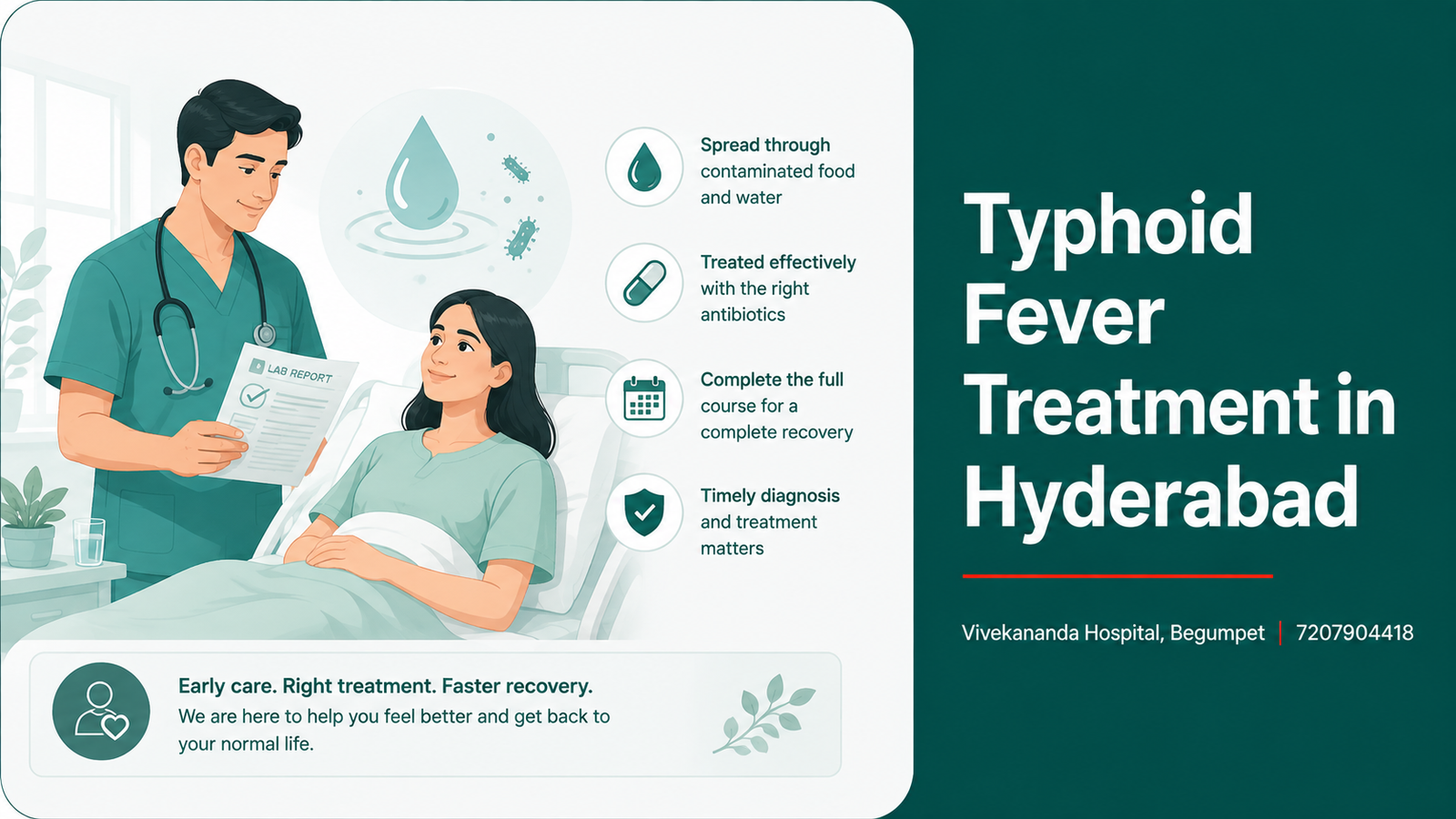
Typhoid, also called enteric fever, is common in Hyderabad through the monsoon, when contaminated food and water spread the bacteria. Globally the World Health Organization estimates typhoid causes around 9 million illnesses and over 100,000 deaths a year, and India is one of the high-burden countries. The good news is that with prompt, correct treatment it is very manageable. This guide to typhoid fever treatment in Hyderabad explains how typhoid is treated, when it needs a hospital, and what care at Vivekananda Hospital involves. It is general information, not a diagnosis.
What Is Typhoid Fever?
Typhoid fever is caused by the bacterium Salmonella Typhi. It spreads through food and water contaminated with the bacteria, which is why it rises in the monsoon when water sources are more easily contaminated. After infection, symptoms usually begin one to two weeks later and build up as a prolonged, steadily rising fever with weakness, headache, abdominal discomfort and poor appetite. Because it is bacterial, not viral, it responds to antibiotics, which is the key difference from dengue.
How Typhoid Is Treated
Typhoid is treated with antibiotics, and the choice of antibiotic matters more than it used to because of rising drug resistance.
- The right antibiotic. The doctor selects an effective antibiotic, sometimes guided by a blood culture and sensitivity test, so treatment is not defeated by a resistant strain.
- Oral or intravenous. Most people take oral antibiotics at home. Severe cases, or those who cannot keep medicine down, need intravenous antibiotics in hospital.
- Supportive care. Fluids, rest, paracetamol for fever, and light, easily digestible food.
- Follow-up. Fever usually settles within a few days of the right antibiotic; the full course still needs completing.
Why Completing the Full Antibiotic Course Matters
This is the single most important thing about typhoid treatment. Fever often improves within a few days, and people are tempted to stop the antibiotics. Stopping early is how typhoid relapses, and it drives antibiotic resistance. A small number of people can also become long-term carriers who continue to carry the bacteria without symptoms. Completing the exact course your doctor prescribes protects you from relapse and protects everyone from resistance.
When Typhoid Needs a Hospital
Most typhoid is managed at home, but some situations need admission and intravenous treatment. Untreated or poorly treated typhoid can cause serious complications, usually in the third week.
Seek hospital care for
- A high fever that persists despite treatment, with severe weakness
- Persistent vomiting, or inability to keep oral medicine and fluids down
- Severe abdominal pain, abdominal swelling, or any bleeding, which can signal intestinal complications
- Confusion or drowsiness
- Typhoid in a very young child, an elderly person, or during pregnancy
Call +91 7207904418 or come to the emergency department.
Typhoid Fever Treatment in Hyderabad at Vivekananda Hospital
Vivekananda Hospital is a 100-bed NABH-accredited multispecialty hospital in Begumpet, central Hyderabad, operating since 1995. For typhoid treatment in Hyderabad, that means diagnosis and the right antibiotic without delay.
- Diagnosis by the general medicine team led by Dr. Ravi Sishir Reddy, MD General Medicine
- In-house lab for the Widal test, blood culture and CBC, so the right antibiotic is chosen quickly
- Oral treatment for most, with admission and intravenous antibiotics for severe cases
- 24/7 monitoring and ICU backup if complications develop
- Cashless under insurance and government schemes, including EHS and NEHS and CGHS
Cashless Treatment and Insurance
If typhoid needs admission, treatment at Vivekananda Hospital is cashless under health insurance and government schemes, so cost is not a barrier to getting treated properly. This includes EHS and NEHS for state employees, CGHS and all major insurers, subject to policy terms and pre-authorisation. See our cashless treatment page, or the insurance desk will confirm your coverage on +91 7207904418.
Areas We Serve
Vivekananda Hospital is in Begumpet, central to much of Hyderabad. We regularly treat patients from Begumpet, Ameerpet, Somajiguda, Punjagutta, Secunderabad, Khairatabad, Lakdikapul, SR Nagar and the surrounding areas.
Prolonged fever? Get tested and treated.
A fever lasting several days with weakness and stomach upset needs testing, not guesswork. Consult Dr. Ravi Sishir Reddy at Vivekananda Hospital, Begumpet. OPD Monday to Saturday, with 24/7 emergency care.
Frequently Asked Questions
Where can I get typhoid treatment in Hyderabad?
At Vivekananda Hospital, Begumpet, typhoid is diagnosed and treated by the general medicine team led by Dr. Ravi Sishir Reddy, with the right antibiotics, lab testing including the Widal test and blood culture, and admission if complications develop. Call +91 7207904418. The hospital is central to Ameerpet, Somajiguda, Punjagutta and Secunderabad.
How is typhoid treated?
Typhoid is a bacterial infection, so unlike viral fevers it is treated with antibiotics. The doctor chooses an effective antibiotic, sometimes guided by a culture sensitivity test because of rising drug resistance, and it is essential to complete the full course. Most people improve within a few days of the right antibiotic, but the full course usually runs one to two weeks.
How long does typhoid take to cure?
With the correct antibiotic, fever usually starts settling within 3 to 5 days, and the full course runs about 7 to 14 days. Energy takes a little longer to return. Untreated, typhoid fever can last three to four weeks and risks serious complications, which is why early treatment matters.
When does typhoid need hospital admission?
Most typhoid is treated with oral antibiotics at home. Admission is needed for a high persistent fever with severe weakness, persistent vomiting or inability to keep oral medicine down, signs of complications such as severe abdominal pain or bleeding, or in very young, elderly or pregnant patients. These need intravenous antibiotics and monitoring.
Is typhoid treatment covered by insurance or EHS?
Yes. If admission is needed, typhoid treatment at Vivekananda Hospital is cashless under health insurance and government schemes including EHS/NEHS and CGHS, subject to policy terms and pre-authorisation, and handled by the insurance desk.
Can typhoid come back after treatment?
Yes, typhoid can relapse, most often when the antibiotic course is stopped early, so completing the full course is important. A small number of people can also become carriers who continue to carry the bacteria. Your doctor will advise on follow-up and, if needed, tests to confirm the infection has cleared.
Reviewed by Dr. Ravi Sishir Reddy, MD (General Medicine), Vivekananda Hospital, Begumpet. Last updated 14 Aug 2026. For general information only and not a substitute for medical advice or diagnosis. Antibiotics for typhoid must be prescribed and supervised by a doctor; do not self-medicate. If you have warning signs, seek care at once. Not for medical emergencies; for urgent help call +91 7207904418.
If our content helps you, tell Google to show you more of it. Add vivekanandahospital.in as a preferred source.