
Dengue Symptoms: Early Signs, Warning Signs and Day by Day
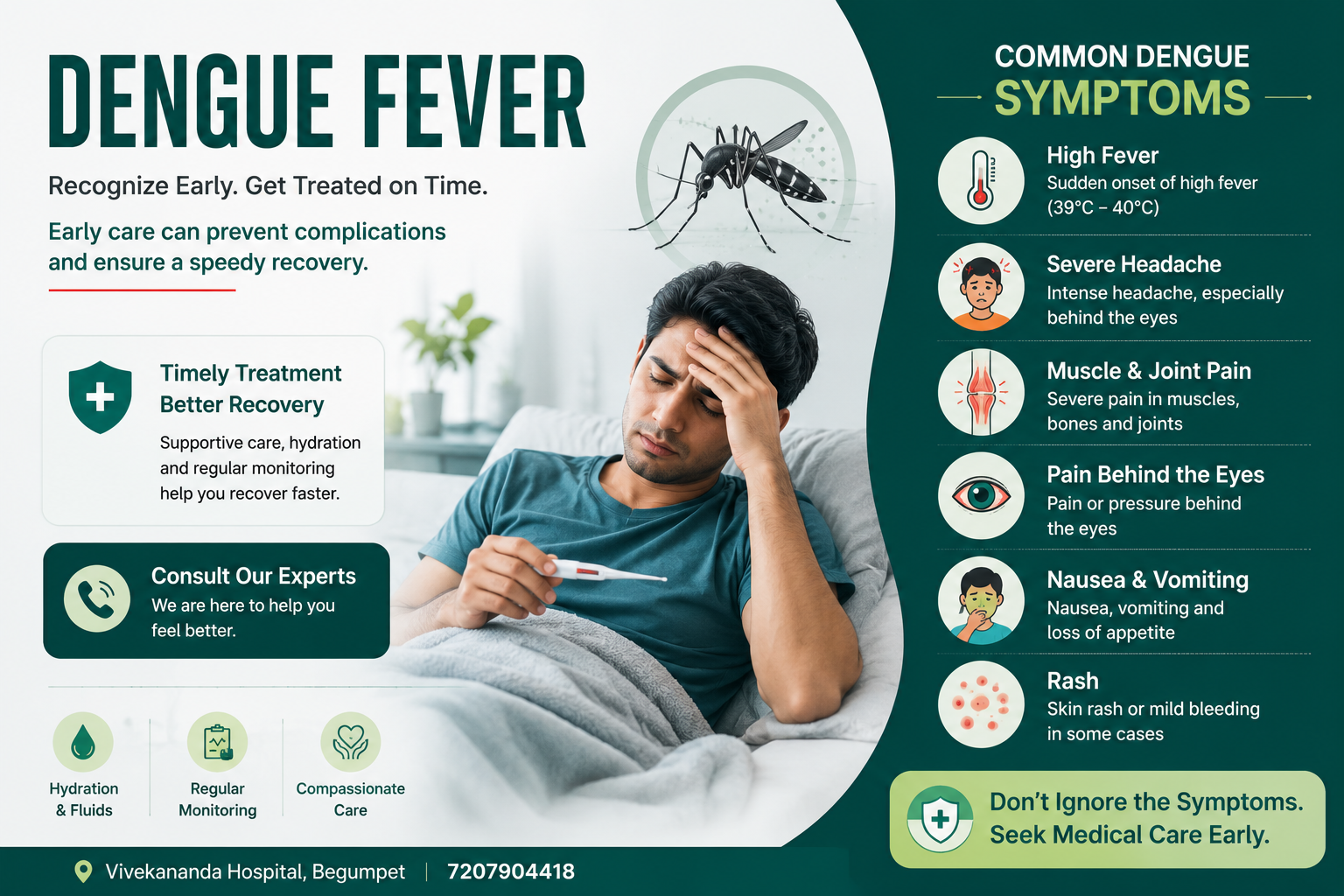
Dengue starts suddenly with a high fever, often up to 40 degrees Celsius, along with a severe headache, pain behind the eyes, and intense muscle and joint pain, which is why it is called breakbone fever. Nausea, vomiting and a rash often follow. Symptoms appear 4 to 10 days after an infected mosquito bite. The key thing to watch is the critical phase, around day 3 to 7 as the fever falls, when warning signs like bleeding or severe abdominal pain can appear and need immediate care.
Telling dengue apart from an ordinary fever early can make a real difference, because the risky window comes just when people think they are getting better. This guide covers the common symptoms, how they progress day by day, the warning signs that mean go to hospital, and how dengue differs from a normal viral fever. It is general information, not a diagnosis.
Common Dengue Symptoms
Dengue symptoms come on suddenly, usually 4 to 10 days after the bite of an infected Aedes mosquito, which bites mostly in the daytime. The classic combination is:
- Sudden high fever, often up to 40 degrees Celsius or 104 Fahrenheit
- Severe headache, typically across the forehead
- Pain behind the eyes, worse on moving them
- Severe muscle and joint pain, the breakbone feeling
- Nausea and vomiting, and loss of appetite
- Skin rash, often appearing a few days in
- Tiredness and general weakness
How Dengue Symptoms Progress, Day by Day
Dengue moves through three phases. Knowing where you are helps you know when to be most alert. For a fuller breakdown, see our guide to the stages of dengue fever.
| Phase | When | What happens |
|---|---|---|
| Febrile | Day 1 to 3 | Sudden high fever, headache, body and eye pain, rash |
| Critical | Day 3 to 7, as fever falls | Most people improve, but a few develop warning signs. The 24 to 48 hours here matter most. |
| Recovery | Day 7 onwards | Fever settles, platelets recover, energy slowly returns over one to two weeks |
The counterintuitive part is that danger often comes as the fever drops, not at its peak. Feeling a little better on day 4 or 5 is not a reason to stop watching for warning signs.
Dengue Warning Signs
These are the signs that dengue may be turning severe. They usually appear in the critical phase. If any occur, do not wait, get to a hospital.
Go to hospital immediately if you have
- Severe abdominal pain or persistent vomiting
- Bleeding from the gums or nose, blood in vomit or stool, or red spots under the skin
- A rapid fall in platelet count
- Breathlessness
- Restlessness, drowsiness, cold clammy skin, or passing very little urine
Call +91 7207904418 or come to the emergency department. See our guide to dengue fever treatment in Hyderabad.
Dengue vs a Normal Viral Fever
Early on they can look similar, but there are useful pointers.
| Feature | Ordinary viral fever | Dengue |
|---|---|---|
| Fever | Mild to moderate, gradual | High and sudden, up to 40 C |
| Pain | Mild body ache | Severe muscle, joint and behind-the-eye pain |
| Cough and cold | Common | Usually absent |
| Rash | Uncommon | Common, after a few days |
| Platelets | Usually normal | Often fall |
One local caution: in Hyderabad many people this season have classic dengue-like symptoms and a falling platelet count yet test negative for dengue. The management and the warning signs are the same either way, so a persistent high fever should be assessed and tested at the right time rather than dismissed. See when to take the dengue test.
Dengue Symptoms in Children
In young children dengue can be harder to spot, because they may not describe the pain. Watch for a sudden high fever with irritability, poor feeding, vomiting, drowsiness, or a rash. Children can move into the critical phase quickly, so any warning sign, especially persistent vomiting, abdominal pain, bleeding or unusual drowsiness, needs urgent medical review.
When to See a Doctor
See a doctor for any high fever lasting more than a couple of days in dengue season, so it can be assessed and tested at the right time. Seek care the same day if you have severe pain, vomiting, any bleeding, or you simply feel much worse as the fever falls. Early assessment does not always mean admission, but it means the critical phase is not missed.
High fever this season? Get it checked.
A persistent high fever in dengue season needs assessment and the right test at the right time. Consult Dr. Ravi Sishir Reddy at Vivekananda Hospital, Begumpet. OPD Monday to Saturday, with 24/7 emergency care.
Frequently Asked Questions
What are the first symptoms of dengue?
The first symptoms are usually a sudden high fever up to 40 degrees Celsius, along with severe headache, pain behind the eyes, and intense muscle and joint pain, which is why dengue is called breakbone fever. Nausea, vomiting and a skin rash often follow. Symptoms usually appear 4 to 10 days after an infected mosquito bite.
How many days does dengue fever last?
The fever usually lasts 2 to 7 days. As it falls, around day 3 to 7, the critical phase begins, a 24 to 48 hour window when warning signs can appear. A recovery phase follows, though tiredness and weakness can linger for one to two weeks afterwards.
What are the warning signs of dengue?
Warning signs include severe abdominal pain, persistent vomiting, bleeding from the gums or nose, blood in vomit or stool, a rapid fall in platelets, breathlessness, and restlessness or drowsiness. They tend to appear as the fever drops, in the critical phase. Any of them needs immediate medical care.
How is dengue different from a normal viral fever?
Dengue fever is typically higher and more sudden, with severe pain behind the eyes and in the muscles and joints, and often a rash, while an ordinary viral fever is usually milder with more cough and cold. They do overlap, and in Hyderabad many dengue-like fevers test negative, so a persistent high fever is better assessed by a doctor than assumed to be minor.
When do dengue symptoms appear after a mosquito bite?
Symptoms usually begin 4 to 10 days after the bite of an infected Aedes mosquito, most often around 4 to 7 days. This gap is the incubation period. Symptoms then tend to come on suddenly rather than building up gradually.
Can dengue have mild or no symptoms?
Yes. Many dengue infections are mild or even without symptoms and are mistaken for a minor viral fever. Even mild cases can occasionally progress, so it is important to watch for the warning signs during the critical phase, especially as the fever falls.
Reviewed by Dr. Ravi Sishir Reddy, MD (General Medicine), Vivekananda Hospital, Begumpet. Last updated 12 Aug 2026. For general information only and not a substitute for medical advice or diagnosis. Dengue can become serious quickly; if you have warning signs, seek care at once. Not for medical emergencies; for urgent help call +91 7207904418.
If our content helps you, tell Google to show you more of it. Add vivekanandahospital.in as a preferred source.