
Chikungunya Treatment in Hyderabad
Chikungunya is a mosquito-borne viral fever, and its hallmark is severe joint pain that can outlast the fever by weeks. There is no specific antiviral, so treatment is supportive: rest, fluids and paracetamol, while a doctor manages the joint pain. One safety point matters early, aspirin and anti-inflammatory painkillers are avoided until dengue is ruled out, because the two look alike and dengue carries a bleeding risk. At Vivekananda Hospital, Begumpet, Dr. Ravi Sishir Reddy tests, treats and manages chikungunya. Call +91 7207904418.
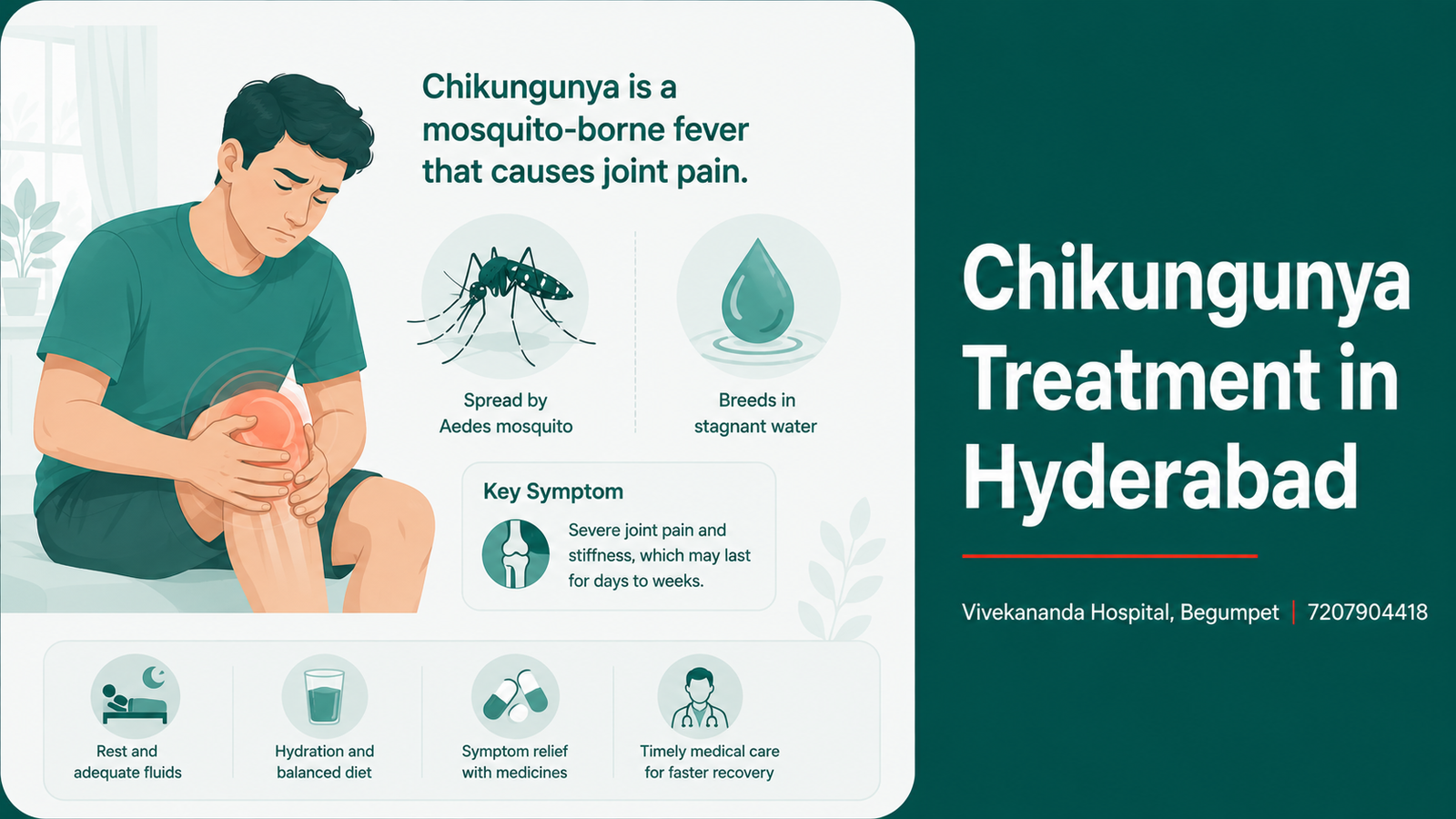
Chikungunya rises through the Hyderabad monsoon alongside dengue, spread by the same Aedes mosquitoes that breed in stagnant rainwater. It is rarely fatal, but the joint pain it causes can be intense and slow to settle, which is what makes it worth treating properly rather than waiting out. This guide explains how chikungunya is treated, how long the joint pain lasts, when it needs a doctor, and how care at Vivekananda Hospital works. It is general information, not a diagnosis.
What Is Chikungunya?
Chikungunya is a viral infection spread by Aedes mosquitoes, which bite mostly in the daytime and breed in clean, standing water around homes. After a bite, symptoms usually begin within three to seven days: a sudden high fever and, above all, severe joint pain, often in the hands, wrists, ankles and knees, and frequently on both sides of the body. Headache, muscle pain, a rash and heavy fatigue are common too. The fever settles within a few days, but the joint pain is what tends to linger.
How Chikungunya Is Treated
There is no medicine that kills the chikungunya virus directly, so care is aimed at easing symptoms and protecting the joints while the body clears the infection.
- Rest and fluids. The body needs both to recover, and dehydration makes fever worse.
- Paracetamol first. For fever and pain, paracetamol is the safe starting choice.
- Avoid aspirin and anti-inflammatory painkillers early. Until a test rules out dengue, these are held back, because dengue can cause bleeding and these drugs add to that risk. This is why testing matters before reaching for common painkillers.
- Joint pain management. Once dengue is excluded, a doctor can add anti-inflammatory relief and, for pain that lingers, guide physiotherapy and a longer plan.
How Long Does Chikungunya Joint Pain Last?
For most people, the joint pain eases within one to two weeks as they recover. In a proportion of patients, though, the pain and stiffness carry on for weeks or months, and occasionally longer, coming and going in the same joints. This lingering joint pain is the most difficult part of chikungunya and the main reason people seek ongoing care. It can usually be managed well with the right combination of medication, gentle movement and physiotherapy, guided by a doctor rather than left to run its course.
When Chikungunya Needs a Doctor
See a doctor for a sudden high fever with severe joint pain in the monsoon, so it can be tested and told apart from dengue. Some situations need urgent care.
Seek care urgently if you have
- Any bleeding from the gums or nose, or easy bruising, which can point to dengue rather than chikungunya
- Persistent vomiting, severe abdominal pain, or breathlessness
- Drowsiness, confusion, or a very unwell, toxic feeling
- Chikungunya in a newborn, an elderly person, or someone with serious health conditions
Call +91 7207904418 or come to the emergency department.
Chikungunya Versus Dengue
Chikungunya and dengue spread together, start suddenly, and share early symptoms, which is why they are so often confused. The difference in emphasis helps: chikungunya is dominated by severe joint pain that can persist, while dengue is marked by pain behind the eyes and a falling platelet count. Because the safe painkiller choice depends on which one you have, testing is not optional. Our monsoon fever guide compares the monsoon fevers side by side.
Chikungunya Treatment at Vivekananda Hospital, Begumpet
Vivekananda Hospital is a 100-bed NABH-accredited multispecialty hospital in Begumpet, central Hyderabad, running since 1995.
- Assessment by the general medicine team led by Dr. Ravi Sishir Reddy, MD General Medicine
- In-house lab to confirm chikungunya and rule out dengue quickly, so pain relief is safe
- Treatment of the fever and a clear plan for joint pain, including physiotherapy for lingering cases
- 24/7 emergency and inpatient care when needed
- Cashless under insurance and government schemes, including EHS and NEHS and CGHS
Preventing Chikungunya
- Remove standing water. Empty pots, coolers, tyres and containers weekly, since Aedes mosquitoes breed in clean, still water.
- Avoid daytime bites. Use repellent and wear covering clothes, because these mosquitoes bite mostly by day.
- Screens and nets. Keep mosquitoes out of the home, especially where someone is already unwell.
Areas We Serve
Vivekananda Hospital is in Begumpet, central to much of Hyderabad. We regularly treat patients from Begumpet, Ameerpet, Somajiguda, Punjagutta, Secunderabad, Khairatabad, Lakdikapul, SR Nagar and the surrounding areas.
Fever with joint pain? Get tested and treated.
Do not guess a monsoon fever or self-medicate the pain. Get assessed and tested by Dr. Ravi Sishir Reddy at Vivekananda Hospital, Begumpet, with in-house lab support and 24/7 emergency care.
Frequently Asked Questions
Where can I get chikungunya treatment in Hyderabad?
At Vivekananda Hospital, Begumpet, chikungunya is managed by the general medicine team led by Dr. Ravi Sishir Reddy, MD General Medicine, with a test to confirm it, supportive treatment for the fever, and care for the joint pain that can follow. Call +91 7207904418. The hospital is central to Ameerpet, Somajiguda, Punjagutta and Secunderabad.
How is chikungunya treated?
There is no specific antiviral for chikungunya, so treatment is supportive: rest, plenty of fluids, and paracetamol for fever and pain. Aspirin and anti-inflammatory painkillers are avoided until dengue has been ruled out, because they can add to bleeding risk. A doctor then guides pain relief, especially for joint pain that lingers.
How long does chikungunya joint pain last?
Most people improve within one to two weeks, but in some the joint pain and stiffness continue for weeks or months, and occasionally longer. This lingering joint pain is the most troublesome part of chikungunya, and a doctor can help manage it with the right approach.
Is chikungunya dangerous?
Chikungunya is rarely fatal and most people recover fully. It can be more serious in newborns, older adults and people with other health conditions, and the prolonged joint pain can affect daily life. Seek care for a high fever with severe joint pain, and urgently for any warning signs such as bleeding, breathlessness or drowsiness.
How is chikungunya different from dengue?
Both are mosquito-borne viral fevers that start suddenly, but chikungunya is dominated by severe joint pain that can persist, while dengue is marked by pain behind the eyes and a falling platelet count. They look alike early and spread at the same time, so a test is needed to tell them apart, which also guides safe pain relief.
Is chikungunya treatment cashless at Vivekananda Hospital?
Consultation and testing are OPD services. If admission is needed, treatment is cashless under health insurance and government schemes including EHS/NEHS and CGHS, subject to policy terms and pre-authorisation, and handled by the hospital's insurance desk.
Reviewed by Dr. Ravi Sishir Reddy, MD (General Medicine), Consultant Physician and ICU lead, Vivekananda Hospital, Begumpet. Last updated 16 Aug 2026. For general information only and not a substitute for medical advice or diagnosis. Do not self-medicate a monsoon fever, especially with aspirin or anti-inflammatory painkillers, until a doctor has assessed you. Not for medical emergencies; for urgent help call +91 7207904418.
If our content helps you, tell Google to show you more of it. Add vivekanandahospital.in as a preferred source.