
Piles Diet: Foods to Avoid and Foods to Eat
The whole point of a piles diet is simple: keep your stool soft so you are not straining. That means more fibre and more water, and less of the low-fibre, spicy, fried, and dehydrating foods that harden stool. Diet controls most early piles and stops them coming back, but it does not cure advanced piles, which need a procedure. Below are the foods to avoid, the foods to eat, and a simple day chart you can follow.
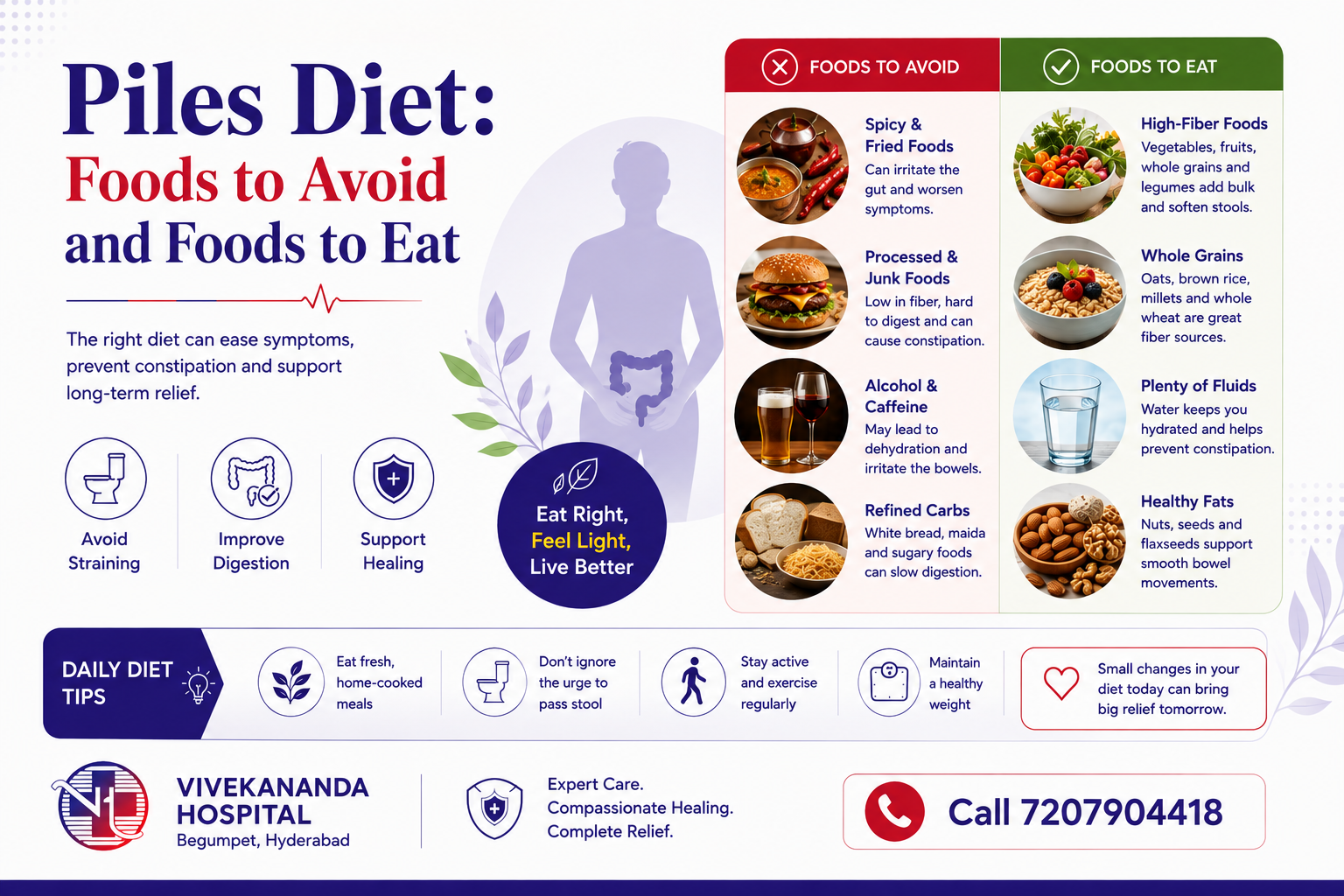
Most people want one clear answer: what should I stop eating, and what helps? This guide gives you both, plus straight answers on the foods people ask about most, curd, milk, tea, coffee, and bananas. It is general guidance, not a personalised plan, and it works best alongside plenty of water and a regular toilet routine.
5 Foods to Avoid With Piles
These are the foods that harden stool, cause straining, or irritate piles. You do not have to be perfect, but cutting back on these makes the biggest difference.
- Refined, low-fibre foods. White bread, maida, biscuits, and too much white rice have little fibre, so stool gets hard. Swap for whole grains.
- Fried and fatty foods. Deep-fried snacks and heavy, oily meals slow the bowel and worsen constipation.
- Spicy food. Chillies and heavy masala do not cause piles, but they can irritate them and make bowel movements more painful during a flare.
- Too much cheese and processed dairy. Large amounts of cheese and processed dairy can be constipating for some people, especially with low fibre.
- Caffeine and alcohol. Excess coffee, strong tea, and alcohol dehydrate you, which hardens stool. Keep them moderate and drink extra water.
Processed and red meat in large amounts belong on the same list, because they are low in fibre and slow digestion. The theme is the same across all of them: anything that hardens stool works against you.
Foods to Eat for Piles
The foods that help are the high-fibre ones that keep stool soft and bulky so it passes without straining. Build your plate around these.
- Whole grains. Whole-wheat roti, oats, brown rice, millets like ragi and jowar.
- Fruit. Papaya, ripe banana, pear, orange, guava, and apple with the skin.
- Vegetables. Leafy greens, beans, carrot, beetroot, and most cooked vegetables.
- Legumes. Dal, chickpeas, rajma, and other pulses, which are high in fibre.
- Curd and buttermilk. The probiotics support digestion and help keep you regular.
- Soaked figs and raisins. A traditional, gentle way to ease constipation.
Increase fibre gradually rather than all at once, and drink more water as you do, or you may feel bloated for a few days while your gut adjusts.
Piles Diet Chart
This is a simple, high-fibre Indian day plan. Treat it as a template, not a strict rule, and adjust portions to your appetite.
| Time | What to have | Why it helps |
|---|---|---|
| Early morning | Warm water, plus soaked figs or raisins, or a fruit | Gets the bowel moving gently |
| Breakfast | Oats, veg poha, or idli with sambar, or whole-wheat toast | Fibre to start the day |
| Mid-morning | A fruit such as papaya, pear, or orange | Soft fibre and water |
| Lunch | Two whole-wheat roti or brown rice, dal, a vegetable, and curd | Balanced fibre and probiotics |
| Evening | Buttermilk, a handful of nuts, or a fruit | Keeps you regular, avoids fried snacks |
| Dinner | Light: roti with a vegetable and a salad | Easy to digest, fibre-rich |
| Through the day | Plenty of water | Keeps stool soft, the other half of fibre |
Curd, Milk, Tea, Coffee and Bananas
These are the foods people ask about most, so here are straight answers.
Is curd good for piles?
Yes. Curd and buttermilk contain probiotics that support digestion and help keep you regular, which is exactly what piles need. They are a good daily addition.
Is milk good for piles?
Milk in normal amounts is fine. The caution is large amounts of cheese and processed dairy, which can be constipating for some people. If dairy tends to block you up, keep it moderate and lean on fibre and water.
Is coffee or tea bad for piles?
In moderation they are fine. The issue is caffeine in excess, which is dehydrating and can harden stool. If you drink several strong cups a day, cut back a little and drink extra water to balance it.
Is banana good for piles?
A ripe banana is good, it is soft, gentle, and adds fibre. An unripe, green banana can do the opposite and firm up stool, so choose ripe ones.
Water and Daily Habits
Diet is only half the answer. Fibre without enough water can actually make constipation worse, so drink through the day. Two habits matter as much as food: do not delay when you feel the urge, and do not sit and strain on the toilet for long. Both raise pressure on the piles.
When Diet Is Not Enough
Diet and water control most grade 1 and grade 2 piles and stop them returning. They do not remove a grade 3 or grade 4 pile that keeps prolapsing or bleeding, which needs a procedure. If bleeding or discomfort continues despite eating well, it is time for an examination.
See a doctor if
- Bleeding continues despite diet and fibre
- A pile stays prolapsed, or a sudden hard painful lump appears
- Pain or symptoms are not improving after two to three weeks
- There is a change in bowel habit or unexplained weight loss with bleeding
Diet not settling it? Get it checked.
If piles keep bleeding despite eating well, a short consultation gives you a clear answer. Consult Dr. Deeraj Jaliwar at Vivekananda Hospital, Begumpet. Consultation Rs. 750, OPD Monday to Saturday, 10 AM to 2 PM.
Frequently Asked Questions
What are the 5 foods to avoid with piles?
The five foods to cut back on with piles are refined low-fibre foods such as white bread and maida, fried and fatty foods, spicy food, large amounts of cheese and processed dairy, and excess caffeine and alcohol. They all harden stool or irritate piles, which leads to straining. Replace them with whole grains, fruit, vegetables, and plenty of water.
Is curd good for piles?
Yes. Curd and buttermilk contain probiotics that support digestion and help keep you regular, which is exactly what piles need. They are a good daily addition to a high-fibre diet. Most people with piles tolerate curd well, unlike large amounts of cheese and processed dairy, which can be constipating for some.
Is coffee or tea bad for piles?
In moderation, coffee and tea are fine. The problem is excess caffeine, which is dehydrating and can harden stool and worsen constipation. If you drink several strong cups a day, cut back a little and drink extra water to make up for it. It is the dehydration, not the drink itself, that works against piles.
Is banana good for piles?
A ripe banana is good for piles. It is soft, gentle on the gut, and adds fibre that helps keep stool moving. An unripe green banana can do the opposite and firm up stool, so always choose ripe ones. Bananas work best as part of a wider high-fibre diet with fruit, vegetables, whole grains, and water.
What should I eat when piles are bleeding?
Keep to soft, high-fibre foods so you are not straining on a hard stool while the piles are irritated: oats, papaya, ripe banana, dal, cooked vegetables, curd, and plenty of water. Avoid spicy, fried, and low-fibre foods during a flare. If bleeding is heavy or keeps returning, do not manage it with diet alone, see a doctor, because bleeding is not always piles.
Can diet cure piles permanently?
Diet and water, with good toilet habits, control most early grade 1 and grade 2 piles and can keep them from returning. They cannot remove an advanced grade 3 or grade 4 pile that keeps prolapsing or bleeding, which needs a procedure such as laser surgery. So diet cures the early ones through better bowel habits and prevents flare-ups, but advanced piles need treatment.
Reviewed by Dr. Deeraj Jaliwar, MS (General Surgery), DMAS, Vivekananda Hospital, Begumpet. Last updated 04 Aug 2026. For general information only and not a substitute for medical advice, diagnosis, or a personalised diet plan. Always consult a qualified doctor about your condition. Not for medical emergencies; for urgent help call +91 7207904418.
If our content helps you, tell Google to show you more of it. Add vivekanandahospital.in as a preferred source.