
Piles Medicine: Tablets, Ointments and What Actually Works
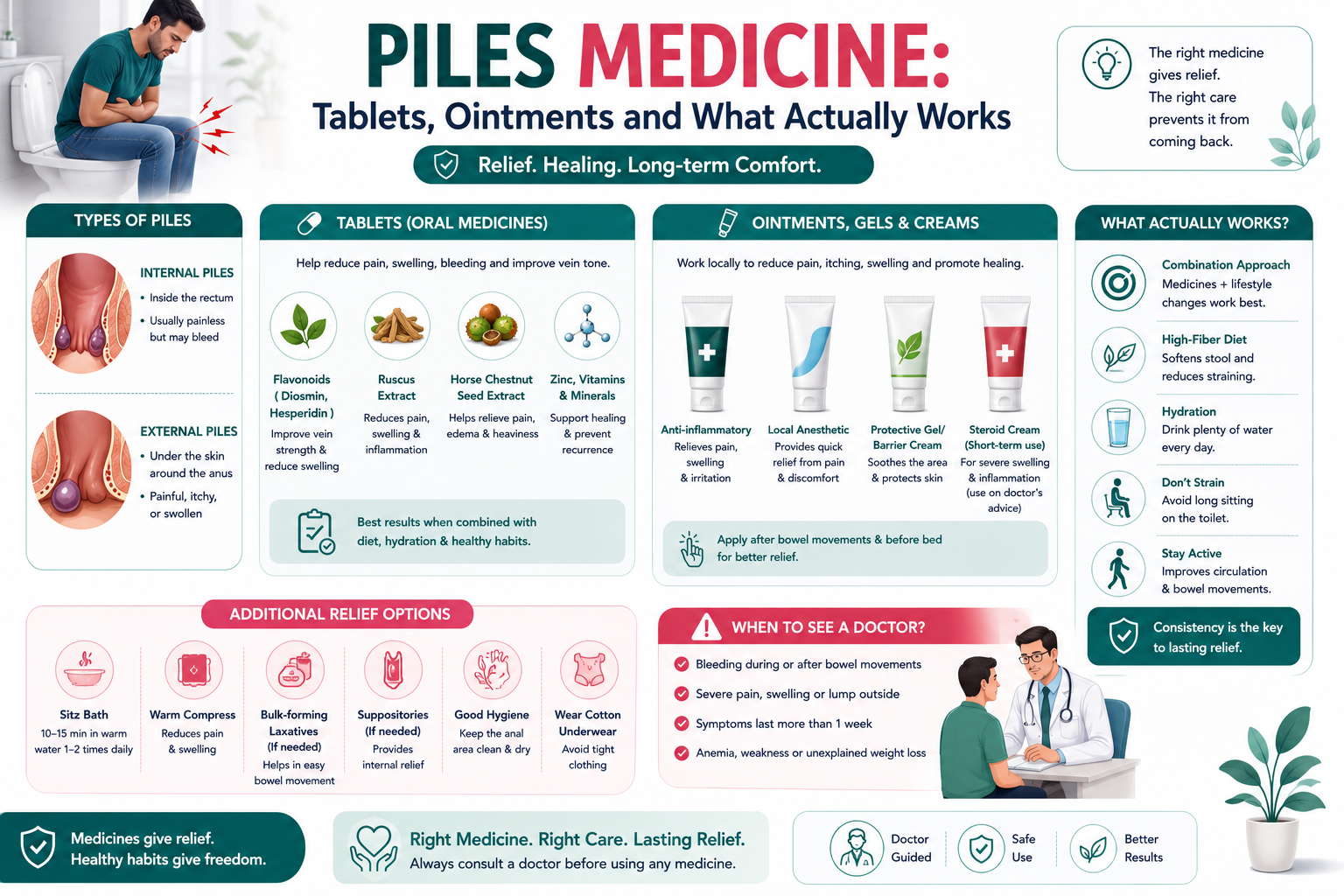
Piles medicines fall into a few types: fibre supplements and stool softeners to reduce straining, oral flavonoid tablets such as diosmin and hesperidin to reduce swelling and bleeding, and topical creams, ointments and suppositories to ease pain and itching. They relieve symptoms and work best for early, grade 1 and grade 2 piles. They do not cure advanced grade 3 and grade 4 piles, which need a procedure. Always use piles medicine on a doctor's advice, not by self-prescribing.
Most people reach for a medicine first, and for early piles that is reasonable. This guide explains the main types of piles medicine, what each one does, when medicine is enough, and when it is not. It is general information, not a prescription. The right medicine for you depends on your grade and symptoms, which only a doctor can judge.
Do Medicines Cure Piles?
Medicine relieves the symptoms of piles and, alongside a high-fibre diet and lifestyle changes, can control grade 1 and many grade 2 piles for the long term. What medicine cannot do is remove a grade 3 or grade 4 pile that keeps prolapsing. Those return once the medicine is stopped, because the underlying swollen tissue is still there. So medicine manages piles and cures the early ones through better bowel habits, but advanced piles need a procedure such as laser surgery for a permanent cure. Setting that expectation early saves months of trying medicine on a pile that was never going to respond to it.
Types of Piles Medicine
| Type | What it does | Best for |
|---|---|---|
| Fibre supplements (bulk-forming) | Soften and bulk the stool so it passes without straining, the root fix | All grades, prevention |
| Stool softeners and osmotic laxatives | Ease constipation short term so passing stool does not aggravate piles | Short-term, with constipation |
| Oral flavonoids (diosmin, hesperidin) | Strengthen vein walls, reduce swelling and bleeding | Grade 1 to 2, bleeding, flare-ups |
| Topical creams and ointments | Local anaesthetic and soothing or mild steroid agents ease pain and itching | Short-term symptom relief |
| Suppositories | Deliver soothing medicine to internal piles inside the anal canal | Internal piles |
| Pain relievers | Ease discomfort, taken as advised by a doctor | Painful external or thrombosed piles |
Most doctors use a combination, for example a fibre supplement plus a flavonoid tablet and a short course of a soothing cream, rather than any single medicine.
How Each Piles Medicine Works
Fibre supplements are the foundation, not a quick fix. Bulk-forming fibre draws water into the stool so it stays soft and passes without straining, which is the single most important thing that lets piles settle and stops them coming back. They are taken daily, long term, and are safe to continue.
Oral flavonoids such as diosmin and hesperidin work on the vein wall itself, tightening it and improving drainage, which reduces the swelling and bleeding of piles. They are usually taken as a short course during a flare-up, and are among the few oral medicines with reasonable evidence for piles.
Topical creams and ointments act locally. A local anaesthetic numbs pain and itching, a soothing agent calms irritation, and a mild steroid, where included, reduces inflammation. These are for short-term relief only, typically a few days to a week, because prolonged use, especially of steroid creams, can thin and damage the delicate skin around the anus.
Suppositories carry the same kinds of soothing medicine higher up, to reach internal piles inside the anal canal that a cream cannot. Stool softeners and osmotic laxatives are a short-term aid to relieve constipation during a flare, not something to rely on every day, since the long-term answer to constipation is fibre and water.
Over the Counter vs Prescription
Some piles products are available over the counter, including fibre supplements, stool softeners and certain soothing creams. Others are better used under medical advice, including steroid-containing creams and prescription flavonoid tablets. The safer route is to have the cause confirmed first, because rectal bleeding is not always piles, and then let a doctor guide which medicine and for how long. Buying a strong cream off the shelf and using it for weeks can do more harm than good.
Ayurvedic and Herbal Options
Many people search for ayurvedic or herbal piles medicine. Some herbal preparations and sitz-bath additives can soothe symptoms, and interest in them is understandable. The evidence for most is limited, quality and ingredients vary between products, and some can interact with other medicines. If you want to try an ayurvedic option, tell your doctor first, especially if you are pregnant, diabetic, or taking other medicines, so it is safe alongside the rest of your care. Herbal products are a complement to proper treatment, not a replacement for it in advanced piles.
Piles Medicine by Situation
For bleeding piles, the usual approach is a fibre supplement to stop straining plus a flavonoid tablet to reduce the bleeding, alongside diet and water. This settles mild bleeding, but heavy or repeated bleeding needs a doctor, not more tablets. See our bleeding piles guide.
For external piles, which are painful and itchy, a soothing cream with a local anaesthetic gives the most relief, used for a short course. A thrombosed external pile, a sudden hard painful lump, needs prompt medical care rather than a cream. See our thrombosed piles guide.
In pregnancy, the first line is diet, water and sitz baths, and no oral medicine or cream should be started without your obstetrician's approval, because not all are safe. See our piles in pregnancy guide.
When Medicine Is Enough, and When It Is Not
Medicine plus diet and lifestyle is usually enough for grade 1 and many grade 2 piles: the bleeding settles, the swelling reduces, and good bowel habits keep them from returning. Medicine is not enough when piles are grade 3 or grade 4, when they keep prolapsing, when bleeding is heavy or keeps coming back despite treatment, or when an external pile thromboses into a painful lump. At that point, continuing to try medicine only delays relief. Laser piles surgery is the stitchless, day-care solution for these cases. See the full options and cost in our piles treatment and laser surgery guide, and the lifestyle side in our home remedies guide.
Medicine vs a Procedure: Which Is Right?
| Factor | Medicine | Laser procedure |
|---|---|---|
| What it does | Relieves symptoms, controls early piles | Removes the pile at its source |
| Best for | Grade 1 to 2 | Grade 3 to 4, recurrent, thrombosed |
| Permanence | Symptoms return if the pile is advanced | Lasting, low recurrence |
| Recovery | None, but ongoing use | Day care, back to work in 1 to 3 days |
| Where it falls short | Advanced or heavily bleeding piles | Rarely, with good aftercare |
The honest rule: try medicine and lifestyle first for early piles, but do not keep cycling through creams and tablets for months on a grade 3 or grade 4 pile that will not respond. See the procedure options and cost in our piles treatment guide.
Side Effects to Watch For
Piles medicines are generally safe when used correctly, but each has cautions. Fibre supplements can cause bloating or gas if increased too fast, so build up gradually with plenty of water. Flavonoid tablets are usually well tolerated but can cause mild stomach upset. The main concern is topical steroid creams: used for more than a week or two they can thin the skin around the anus, so keep to the short course your doctor advises. Overusing laxatives can make the bowel sluggish over time. If any medicine causes a rash, worsening pain or an allergic reaction, stop it and speak to your doctor.
Safety and Cautions
- Do not self-medicate long term. Steroid-containing creams should be used only for a short course under advice, as prolonged use can thin and damage the skin around the anus.
- Do not ignore bleeding. Treating persistent rectal bleeding with tablets while never getting it examined is risky, because other conditions can cause the same symptom.
- In pregnancy, do not start any oral medicine or cream without your obstetrician's approval, as not all are safe.
- Tell your doctor about other conditions and medicines, so piles medicine does not interact with them.
When to See a Doctor
See a doctor if
- Bleeding is heavy, or keeps returning despite medicine and diet
- A pile stays prolapsed or you develop a sudden painful lump
- Symptoms do not improve after two to three weeks of treatment
- You are pregnant and troubled by piles
- There is a change in bowel habit, weight loss, or new bleeding after age 40
Want the right medicine, not guesswork?
Get examined by Dr. Deeraj Jaliwar at Vivekananda Hospital, Begumpet, and get a plan matched to your grade. Consultation Rs. 750, OPD Monday to Saturday, 10 AM to 2 PM.
Frequently Asked Questions
What is the best medicine for piles?
There is no single best medicine for piles, because different medicines do different jobs. Fibre supplements and stool softeners reduce straining, oral flavonoid tablets such as diosmin and hesperidin reduce swelling and bleeding, and topical creams and ointments ease itching and pain. A doctor chooses the combination based on your grade and symptoms. Medicines work best for early, grade 1 and grade 2 piles. Always take piles medicine on a doctor's advice rather than self-prescribing.
Can piles be cured permanently with medicine?
Medicine can relieve symptoms and, together with a high-fibre diet and lifestyle changes, control grade 1 and many grade 2 piles long term. However, medicine does not remove grade 3 or grade 4 piles that keep prolapsing, and these usually return once medicine is stopped. For a permanent cure of advanced piles, a procedure such as laser surgery is needed. Medicine manages piles; it does not cure the advanced ones.
Which ointment is best for piles?
Piles ointments and creams usually combine a soothing agent with a local anaesthetic to numb pain and itching, and some contain a mild steroid to reduce inflammation. They give short-term symptom relief but do not shrink the underlying pile. Steroid-containing creams should only be used for a short course under medical advice, as long-term use can thin and damage the skin. Ask your doctor which ointment suits your case rather than choosing one over the counter.
Are there tablets to stop piles bleeding?
Yes. Oral flavonoid tablets, commonly diosmin and hesperidin, are widely used to reduce the swelling and bleeding of piles by strengthening the vein walls, and they can settle mild bleeding when combined with a high-fibre diet. They help early piles but do not stop the heavy or ongoing bleeding of advanced piles, which needs a procedure. Persistent rectal bleeding should always be examined by a doctor rather than treated with tablets alone.
Can I buy piles medicine without a prescription?
Some piles products, such as fibre supplements, stool softeners and certain soothing creams, are available over the counter. Others, including steroid-containing creams and prescription flavonoid tablets, are best used under medical advice. Self-medicating is risky because rectal bleeding can have causes other than piles, and long-term use of some creams can harm the skin. It is safer to have the cause confirmed and let a doctor guide the medicine.
When is medicine not enough and surgery needed for piles?
Medicine is usually not enough when piles are grade 3 or grade 4, when they keep prolapsing, when bleeding is heavy or keeps returning despite medicine and diet, or when an external pile thromboses into a painful lump. In these cases laser piles surgery gives a lasting, stitchless solution. At Vivekananda Hospital, Begumpet, Dr. Deeraj Jaliwar advises whether medicine or a procedure is right after examination. Call +91 7207904418.
Do piles medicines have side effects?
Piles medicines are generally safe when used correctly. Fibre supplements can cause bloating if increased too quickly, so build up slowly with water. Flavonoid tablets may cause mild stomach upset. The main caution is topical steroid creams, which can thin the skin around the anus if used for more than a week or two, so keep to a short course. Overusing laxatives can make the bowel sluggish. Stop any medicine that causes a rash or worsening symptoms and see your doctor.
What is better for piles, medicine or surgery?
It depends on the grade. For grade 1 and grade 2 piles, medicine with a high-fibre diet and lifestyle changes is usually the better first choice and often enough. For grade 3 and grade 4 piles, or piles that keep bleeding or prolapsing, laser surgery is better because it removes the pile at its source and gives a lasting result, while medicine only manages symptoms. A doctor confirms your grade and advises which is right.
Medically reviewed by Dr. Deeraj Jaliwar, MS (General Surgery), DMAS, Vivekananda Hospital, Begumpet. Last updated July 2026. For educational purposes only and not a prescription or a substitute for medical advice. Do not self-medicate; use any medicine only under a doctor's guidance. Not for medical emergencies; for urgent help call +91 7207904418.
If our content helps you, tell Google to show you more of it. Add vivekanandahospital.in as a preferred source.