
Piles Treatment in Hyderabad: Symptoms, Grades, Laser Surgery and Cost 2026
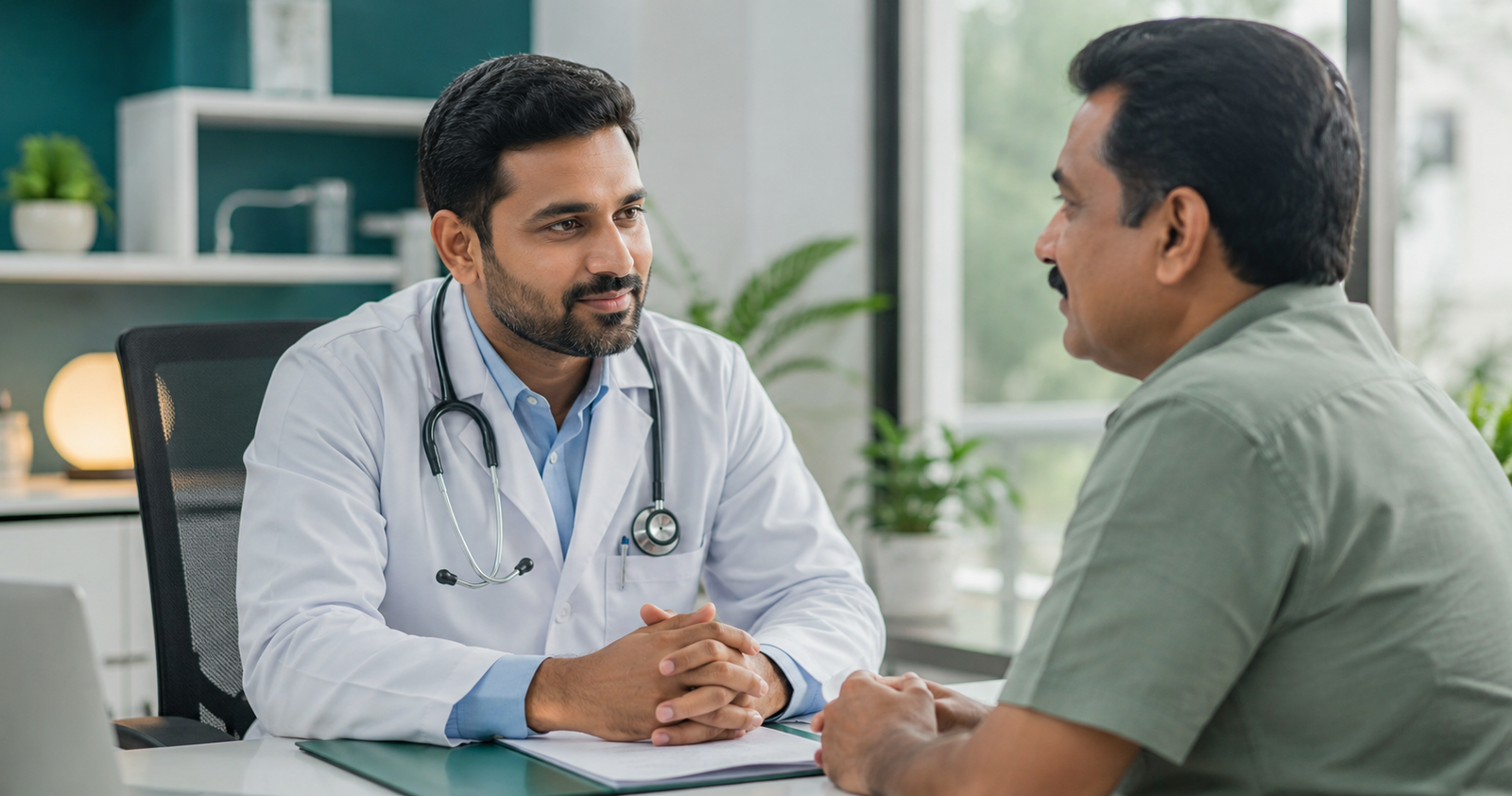
Piles, also called haemorrhoids, are swollen blood vessels in the anus and lower rectum. They are extremely common, cause bleeding, itching and discomfort, and are very treatable. This guide explains how to recognise piles, the four grades of severity, what you can do at home, when surgery becomes necessary, and exactly what laser piles surgery at Vivekananda Hospital, Begumpet costs and involves. It is reviewed by Dr. Deeraj Jaliwar, a senior laparoscopic and proctology surgeon.
At a Glance: Piles Care at Vivekananda Hospital, Hyderabad
- Laser surgery costRs.35,000 to Rs.65,000, all-inclusive
- SurgeonDr. Deeraj Jaliwar, MS (General Surgery), DMAS, 15+ years
- ProcedureLaser haemorrhoidoplasty, stitchless, 15 to 30 minutes
- DischargeSame day for most patients (day care)
- RecoveryBack to desk work in 1 to 3 days
- InsuranceCGHS, ESI, Arogya Bhadratha and all major insurers, cashless
- EMI0 percent through GMoney and Bajaj Finserv
- ConsultationRs. 750, OPD Monday to Saturday, 10 AM to 2 PM
- Call+91 7207904418
- What piles are
- Piles symptoms
- Internal vs external piles
- The 4 grades of piles
- What causes piles
- When to see a doctor
- How piles are diagnosed
- Piles vs fissure
- Home care and non-surgical treatment
- Laser piles surgery
- Cost in Hyderabad
- Insurance and EMI
- Recovery and diet
- Piles in pregnancy
- Why choose Vivekananda
- FAQs
What Are Piles (Haemorrhoids)?
Piles are cushions of blood vessels and tissue inside and around the anus that have become swollen and inflamed. Everyone has these cushions normally; they help control the passage of stool. They become a problem when repeated pressure, usually from straining, constipation or prolonged sitting, causes them to enlarge, bleed or slip down out of position. Piles are one of the most common reasons adults visit a surgeon, and the large majority are managed without any major operation.
Piles Symptoms: How to Recognise Them Early
The classic first symptom of piles is bright red blood on the toilet paper, in the pan, or coating the stool, usually without pain. Because it is painless, many people ignore it. Recognising the pattern early keeps treatment simple. See our full piles symptoms guide for every early sign. The common symptoms are:
- Bright red bleeding during or after passing stool, usually painless
- Itching, irritation or a burning feeling around the anus
- A soft lump you can feel near the anal opening (more typical of external piles)
- A feeling that the bowel has not emptied completely
- Mucus discharge and a sense of dampness around the anus
- Discomfort or aching while sitting, especially for long periods
Bleeding from the back passage should never simply be assumed to be piles. It is the commonest cause, but the same symptom can come from a fissure, an infection, or more serious conditions. Any bleeding that lasts more than a few days, or comes with a change in bowel habit or weight loss, deserves a proper examination.
Internal vs External Piles
Piles are grouped by where they sit, and the two behave differently.
Internal piles
Form inside the rectum, above the anal opening, where there are few pain nerves. They are usually painless and announce themselves mainly through bright red bleeding. Larger internal piles can prolapse, meaning they slip down through the anus during a bowel movement.
External piles
Form under the skin around the anus, an area rich in pain-sensitive nerves. They cause itching, swelling, discomfort and a lump you can feel. If a clot forms inside one, it becomes a thrombosed pile, which is suddenly and sharply painful.
Some patients have both internal and external piles at the same time. Laser treatment is effective for both types.
The Four Grades of Piles
Doctors grade internal piles from 1 to 4 by how far they prolapse. The grade decides the treatment, so it is the first thing the surgeon establishes.
| Grade | What happens | Usual treatment |
|---|---|---|
| Grade 1 | Small swellings inside the anal canal, not visible outside. May bleed. | Diet, fibre, stool softeners |
| Grade 2 | Prolapse during a bowel movement but slip back in on their own. | Diet plus banding or laser if persistent |
| Grade 3 | Prolapse and have to be pushed back in by hand. | Laser surgery usually advised |
| Grade 4 | Permanently prolapsed, cannot be pushed back, often painful and may thrombose. | Surgery required |
Laser treatment is well suited to grade 2, grade 3 and many grade 4 piles, and to both internal and external piles, with good cosmetic and functional results.
What Causes Piles?
Piles develop when the veins around the anus come under repeated pressure. The main triggers are chronic constipation and straining, a low-fibre diet, prolonged sitting including long hours at a desk or driving, pregnancy, being overweight, heavy lifting, and ageing, which weakens the supporting tissue. Many of these are modifiable, which is why lifestyle change is the foundation of both treatment and prevention.
When to See a Doctor
Most piles are not an emergency, but some situations need prompt attention. Book a consultation if bleeding is persistent or heavy, if a pile stays prolapsed, or if symptoms are not settling with diet and simple measures.
Seek same-day care if you have
- A sudden, hard, very painful lump at the anus (possible thrombosed pile), best treated within 48 to 72 hours
- Heavy or continuous rectal bleeding, or bleeding with dizziness
- Rectal bleeding with a change in bowel habit, unexplained weight loss, or bleeding after age 40 that has not been examined before
- Fever, severe anal pain, or discharge of pus, which can signal an abscess
Call +91 7207904418 for a same-day consultation at our Begumpet facility.
How Piles Are Diagnosed
Diagnosis is quick and done in the clinic. The surgeon takes your history and examines the area, usually with a short proctoscopy, a small lubricated instrument that lets the internal piles and their grade be seen directly. This takes only a few minutes. Where bleeding is unusual, recurrent, or you are older, the surgeon may advise a colonoscopy to be sure the bleeding is not coming from higher up. Getting the diagnosis right matters, because it separates simple piles from a fissure, a fistula or other causes that are treated differently.
Piles vs Fissure: How to Tell the Difference
Piles and anal fissures are often confused because both cause bleeding at the back passage, but they are different problems with different treatments. The quickest way to tell them apart is the pain. Piles bleeding is usually painless. A fissure is a small tear in the lining of the anus, and it causes sharp, burning pain during and for a while after a bowel movement, often described as passing broken glass.
| Feature | Piles (haemorrhoids) | Anal fissure |
|---|---|---|
| Main symptom | Painless bright red bleeding | Sharp, burning pain on passing stool |
| Pain level | Usually mild or none | Severe, can last hours afterwards |
| Lump | Soft lump or prolapse possible | No lump, a small skin tag may form |
| Underlying cause | Swollen anal blood vessels | A tear in the anal lining |
| Laser treatment | Laser haemorrhoidoplasty | Laser sphincterotomy for chronic cases |
Both conditions are treated at Vivekananda Hospital, and both respond well to laser surgery when conservative measures fail. If you are not sure which you have, an examination settles it in minutes. For fissure-specific detail, see our laser fissure surgery cost page.
Home Care and Non-Surgical Treatment
For grade 1 and many grade 2 piles, symptoms can be controlled without surgery. The measures that genuinely work are simple and consistent:
- Fibre and fluids: a diet rich in fruits, vegetables and whole grains, with 2 to 3 litres of water a day, keeps stool soft and cuts straining.
- Sitz baths: sitting in warm water for 10 to 15 minutes, two or three times a day, soothes irritation and swelling.
- Toilet habits: do not strain and do not sit on the toilet for long periods reading or on the phone.
- Activity: regular movement improves bowel function and reduces pressure on the anal veins.
- Topical relief and stool softeners: short courses can ease a flare-up under medical advice.
For piles that keep bleeding or prolapsing despite this, office procedures such as rubber band ligation can help grade 2 and some grade 3 piles. When these are not enough, or for grade 3 and grade 4 disease, laser surgery gives a permanent solution. Home remedies control symptoms in mild disease; they do not cure advanced piles.
Laser Piles Surgery: How It Works
Laser haemorrhoidoplasty is a minimally invasive, stitchless treatment. It is performed under local or spinal anaesthesia. A thin laser fibre is introduced into the haemorrhoidal tissue, and controlled laser energy shrinks the swollen blood vessels so they collapse and are gradually reabsorbed by the body. Because there is no cutting and no open wound, there is no post-operative wound to heal, far less pain, and a much lower risk of bleeding and infection than with conventional surgery. The procedure takes about 15 to 30 minutes and is done as day care, so you walk out the same day.
Laser vs Conventional Piles Surgery
| Factor | Laser surgery | Conventional surgery |
|---|---|---|
| Cutting and stitches | None | Yes, wound needs healing |
| Hospital stay | Same day / day care | 2 to 4 days |
| Recovery to normal activity | 1 to 3 days | 2 to 4 weeks |
| Pain level | Minimal, oral painkillers | Moderate to severe |
| Bleeding and infection risk | Low | Higher |
| Recurrence with lifestyle change | Low (about 1 to 5 percent) | Higher (about 5 to 15 percent) |
Laser Piles Surgery Cost in Hyderabad
At Vivekananda Hospital, Begumpet, laser piles surgery is offered as an all-inclusive package. The final cost depends on the grade of piles and the room category you choose. As a guide, treatment starts from Rs.35,000 for grade 2 to 3 piles in the general ward, and ranges up to Rs.65,000 for grade 4 or complex cases. You receive a written estimate before admission, so there are no surprises.
| Package | Cost (Rs.) | Best for |
|---|---|---|
| Day Care | Rs.35,000 to Rs.45,000 | Grade 2 to 3 piles, general ward, same-day discharge |
| Standard | Rs.45,000 to Rs.55,000 | Larger grade 3 piles, private room, one night if needed |
| Comprehensive | Rs.55,000 to Rs.65,000 | Grade 4 or complex cases, full workup, extended care |
Every package includes the surgeon fee, anaesthesia, OT charges, laser usage, room rent, nursing and routine post-operative medications. To get a package matched to your grade, call +91 7207904418.
Cost Across Hyderabad Hospitals
| Hospital | Approx. price range | Free consultation |
|---|---|---|
| Vivekananda Hospital Best value | Rs.35,000 to Rs.65,000 | Yes, on booking |
| Corporate hospital chains | Rs.50,000 to Rs.90,000 | Usually no |
| Single-specialty piles clinics | Rs.45,000 to Rs.85,000 | Varies |
Corporate and clinic ranges are approximate, based on publicly available information, and vary by room, surgeon and case complexity. Our package cap of Rs.65,000 sits below the upper range charged by larger chains for the same laser procedure.
Insurance, Cashless and EMI
Piles surgery is covered by most health insurance policies when it is medically indicated, generally grade 2 and above. Vivekananda Hospital offers cashless treatment through our in-house insurance desk, which handles pre-authorisation on your behalf.
| Option | Details |
|---|---|
| CGHS, ESI, Arogya Bhadratha | Empanelled, cashless, handled by the TPA desk |
| Private insurers (Star Health, HDFC Ergo, ICICI Lombard and others) | Cashless, pre-authorisation usually within 24 to 48 hours |
| Corporate TPAs | Accepted through the insurance desk |
| Self-pay | 0 percent EMI via GMoney and Bajaj Finserv, tenures 3 to 12 months |
Some policies apply a waiting period for pre-existing conditions, so confirm with your insurer. Bring your insurance card and photo ID on the day of admission.
Recovery and Diet After Laser Piles Surgery
| Time | What to expect | Diet and care |
|---|---|---|
| Day of surgery | Procedure done in 15 to 30 minutes, discharged the same day after a few hours. | Light meals, plenty of water |
| Days 1 to 3 | Mild discomfort, can sit and walk. Return to desk work for most. | High-fibre foods, stool softeners, warm sitz baths |
| Week 1 | Light activities resumed, discomfort fading. | Fruits, vegetables, whole grains, 2 to 3 litres water |
| Weeks 2 to 4 | Full recovery, all normal activities resumed. | Maintain fibre and hydration to prevent recurrence |
Avoid heavy lifting and prolonged sitting in the first week, and avoid spicy and fried foods for about two weeks. A high-fibre diet and good hydration are the single most important thing you can do to stop piles coming back.
Piles in Pregnancy
Piles are very common in pregnancy. The growing uterus presses on the pelvic veins, and pregnancy-related constipation adds to the strain, so haemorrhoids often appear or worsen, particularly in the third trimester and after delivery. Treatment in pregnancy is conservative: a high-fibre diet, plenty of water, sitz baths and pregnancy-safe measures advised by your doctor. Most pregnancy-related piles settle after delivery. Surgery is avoided during pregnancy unless there is a severe complication, and is considered later only if symptoms persist. If you are troubled by piles in pregnancy, speak to your obstetrician and our surgical team together so any treatment is safe for you and the baby.
Why Choose Vivekananda Hospital for Piles Treatment

Dr. Deeraj Jaliwar
MBBS, MS (General Surgery), DMAS (Diploma in Minimal Access Surgery)
Senior Consultant, General and Laparoscopic Surgery. Over 15 years of experience and more than 1,000 laser proctology procedures.
OPD: Monday to Saturday, 10:00 AM to 2:00 PM. Consultation Rs. 750.
- Experienced surgeon: Dr. Deeraj Jaliwar has performed over 1,000 laser proctology procedures.
- Stitchless and bloodless: advanced laser equipment, minimal pain, same-day discharge.
- Transparent pricing: all-inclusive packages with a written estimate and no hidden charges.
- NABH-accredited hospital: serving Begumpet and central Hyderabad since 1995.
- Central location: minutes from Ameerpet, Punjagutta, Somajiguda and Secunderabad.
Troubled by piles? Speak to our surgical team.
Free consultation with Dr. Deeraj Jaliwar when you book your surgery. Written estimate, cashless insurance, 0 percent EMI.
Frequently Asked Questions About Piles
What are the early symptoms of piles?
The most common early symptom of piles is bright red bleeding during or after a bowel movement, usually painless. Other early signs include itching around the anus, a feeling of fullness or incomplete emptying after passing stool, mucus discharge, and mild discomfort while sitting. External piles may show up as a soft lump near the anus. If you notice bleeding that continues beyond a few days, see a doctor to confirm the cause.
Can piles be cured permanently without surgery?
Grade 1 and many grade 2 piles can be controlled long term with a high-fibre diet, plenty of water, stool softeners and simple procedures like banding. However, grade 3 and grade 4 piles that keep prolapsing, bleeding or thrombosing usually return with medicines alone. For these, laser piles surgery offers a permanent, stitchless solution. The right choice depends on your grade, which the surgeon confirms during examination.
What is the cost of laser piles surgery in Hyderabad?
At Vivekananda Hospital, Begumpet, laser piles surgery starts from Rs.35,000 all-inclusive for grade 2 to 3 piles in the general ward, and ranges up to Rs.65,000 for grade 4 or complex cases. The package covers the surgeon fee, anaesthesia, OT charges, laser usage, room rent, nursing and routine medications. A written estimate is given before admission with no hidden charges. Call +91 7207904418 for a package based on your grade.
Is laser piles surgery painful?
Laser piles surgery causes significantly less pain than conventional surgery because there is no cutting and no open wound. It is performed under local or spinal anaesthesia, so you feel nothing during the procedure. Most patients report only mild discomfort afterwards, easily managed with oral painkillers, and are able to sit and walk the same day.
What are the grades of piles and which grade needs surgery?
Piles are graded 1 to 4 by severity. Grade 1 stays inside the anal canal and may only cause bleeding. Grade 2 comes out during a bowel movement and goes back on its own. Grade 3 comes out and must be pushed back by hand. Grade 4 stays permanently prolapsed and cannot be pushed back. Grades 1 and 2 are usually managed with diet, medicines or banding. Grades 3 and 4, and painful thrombosed piles, typically need surgery, for which laser treatment is well suited.
How do I stop piles bleeding at home?
To reduce piles bleeding, keep stools soft with a high-fibre diet and 2 to 3 litres of water daily, avoid straining and do not sit on the toilet for long periods. Warm sitz baths for 10 to 15 minutes a few times a day ease irritation. Over-the-counter creams may give short-term relief. These measures help mild cases, but bleeding that is heavy, keeps returning, or comes with a lump or severe pain needs a doctor. Persistent rectal bleeding should always be examined to rule out other causes.
What is a thrombosed pile and is it an emergency?
A thrombosed pile is an external haemorrhoid in which a blood clot has formed, causing a sudden, hard, painful lump near the anus. It is not usually life-threatening, but the pain can be severe. Seen within the first 48 to 72 hours, it can often be relieved quickly by a minor procedure. If you have a sudden painful anal lump, call +91 7207904418 for a same-day consultation rather than waiting for it to settle.
Do piles go away on their own?
Small grade 1 piles triggered by a bout of constipation or by pregnancy can settle on their own once the cause is corrected and the diet is improved. Larger grade 3 and grade 4 piles do not disappear on their own and tend to get worse over time, with more frequent bleeding and prolapse. Early treatment keeps the options simpler and the cost lower.
What home remedies help with piles?
The most effective home measures for piles are a high-fibre diet of fruits, vegetables and whole grains, drinking 2 to 3 litres of water a day, warm sitz baths, not straining or sitting long on the toilet, and staying physically active. These reduce symptoms and prevent flare-ups in mild cases. They do not shrink advanced grade 3 or grade 4 piles, which need medical treatment. Home remedies are a support to treatment, not a substitute for it in advanced disease.
Is laser piles surgery covered by insurance?
Yes. Most health insurance policies cover piles surgery when it is medically indicated, generally grade 2 and above. Vivekananda Hospital offers a cashless facility with CGHS, ESI, Arogya Bhadratha and all major private insurers, and our insurance desk handles pre-authorisation, usually within 24 to 48 hours. Some policies have a waiting period for pre-existing conditions, so check with your insurer. For self-paying patients, 0 percent EMI is available through GMoney and Bajaj Finserv.
How long is recovery after laser piles surgery?
Laser piles surgery is a day-care procedure, so you go home the same day. Most patients return to desk work and light activity within 1 to 3 days and resume all normal activity within 2 to 4 weeks. Recovery is much faster than conventional surgery because there is no wound to heal. A high-fibre diet and good hydration during recovery lower the chance of recurrence.
Are piles common in pregnancy and how are they treated?
Piles are very common in pregnancy because of the pressure of the growing uterus on the pelvic veins and the constipation that often comes with it. In pregnancy, treatment is conservative first: a high-fibre diet, plenty of water, sitz baths and pregnancy-safe measures advised by your doctor. Most pregnancy-related piles improve after delivery. Surgery is avoided during pregnancy unless there is a severe complication, and is considered later only if symptoms persist.
What is the difference between internal and external piles?
Internal piles form inside the rectum above the anal opening. They are usually painless and their main sign is bright red bleeding, though larger ones can prolapse. External piles form under the skin around the anus, where there are more pain-sensitive nerves, so they tend to cause itching, discomfort and a visible or palpable lump, and can become painful if a clot forms. Some patients have both. Laser treatment can address both types.
Can I get 0 percent EMI for piles surgery at Vivekananda Hospital?
Yes. Vivekananda Hospital offers 0 percent interest EMI through GMoney and Bajaj Finserv, with tenures of 3, 6, 9 and 12 months. Bring your Aadhaar card and PAN card to the billing desk and the plan is set up the same day, with no processing fee and no hidden interest. Call +91 7207904418 for details.
Who performs laser piles surgery at Vivekananda Hospital in Hyderabad?
Laser piles and proctology surgery at Vivekananda Hospital, Begumpet is performed by Dr. Deeraj Jaliwar, MBBS, MS (General Surgery), DMAS, Senior Consultant in General and Laparoscopic Surgery, with over 15 years of experience and more than 1,000 laser proctology procedures. His OPD is Monday to Saturday, 10:00 AM to 2:00 PM. Call +91 7207904418 to book a consultation.
Related pages
Laser Proctology Cost Guide (All Conditions) | Laser Fissure Surgery Cost | Laser Fistula Surgery Cost | Hernia Surgery Cost Guide
Medically reviewed by Dr. Deeraj Jaliwar, MS (General Surgery), DMAS, Vivekananda Hospital, Begumpet. Last updated July 2026. For educational purposes only. Always consult your doctor for personal medical advice. Not for medical emergencies; for urgent help call +91 7207904418.
If our content helps you, tell Google to show you more of it. Add vivekanandahospital.in as a preferred source.