
Typhoid Symptoms: Early Signs, Stages and Warning Signs
Typhoid symptoms build up gradually over one to two weeks, which sets it apart from dengue and viral fevers that start suddenly. The classic pattern is a step-ladder fever that climbs a little higher each day, with headache, weakness, loss of appetite and abdominal discomfort. By the second week the fever is high and sustained, sometimes with faint rose-coloured spots. Without treatment, the third week carries the highest risk of complications. Because it looks like other fevers early on, a blood test is needed to confirm. See a doctor if a fever lasts more than two to three days. Call +91 7207904418.
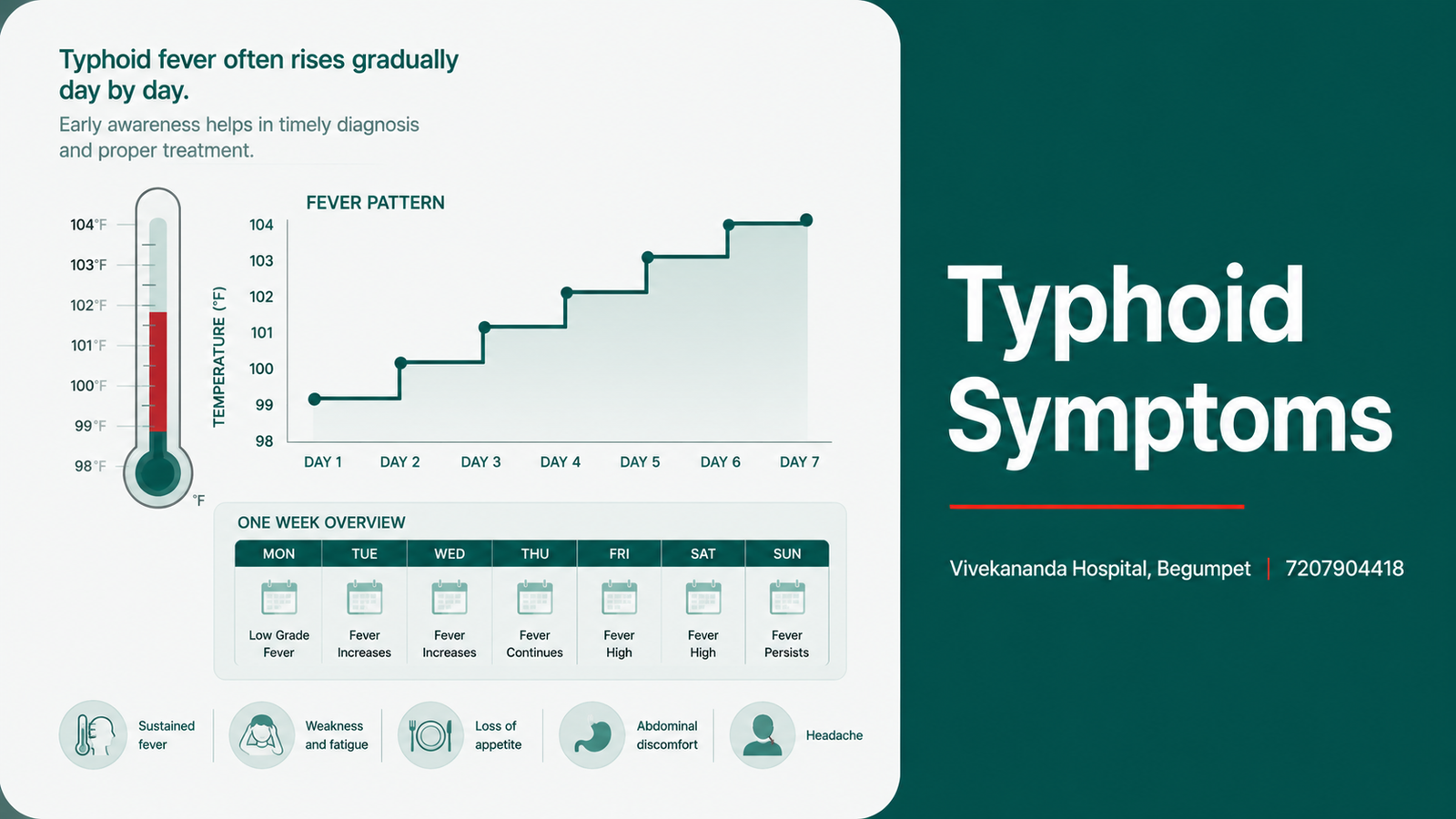
Early Symptoms of Typhoid
Typhoid usually begins one to two weeks after the bacteria are swallowed in contaminated food or water. Unlike a sudden viral fever, it creeps in. The early symptoms are easy to dismiss as an ordinary fever:
- A low fever that rises a little more each day
- Headache and a general feeling of being unwell
- Tiredness and weakness that worsen through the week
- Loss of appetite
- Vague abdominal discomfort
- Constipation in many adults, or loose motions, more often in children
How Typhoid Symptoms Progress Week by Week
Untreated, typhoid tends to follow a recognisable course. Treatment with the right antibiotic usually cuts this short, so most people improve well before the later weeks.
| Stage | What tends to happen |
|---|---|
| Week 1 | Fever rises step by step, headache, weakness, poor appetite, dry cough in some |
| Week 2 | High sustained fever, abdominal distension and discomfort, marked weakness, sometimes faint rose spots on the trunk |
| Week 3 | Highest risk of complications if untreated, such as intestinal bleeding; otherwise recovery begins |
| Week 4 | Gradual recovery of fever and strength in uncomplicated cases |
Typhoid Symptoms in Children Versus Adults
Typhoid does not look identical at every age. The core illness is the same, a gradual fever with weakness, but a few patterns differ enough to be worth knowing.
| Feature | Children | Adults |
|---|---|---|
| Bowel pattern | Loose motions and vomiting are more common | Constipation is more common |
| Onset | Can start more abruptly and be mistaken for a stomach infection | Usually the classic slow, step-ladder build-up |
| Main risk | Dehydration from vomiting and loose motions | Reaching the later weeks if treatment is delayed |
| How it shows | Irritability, poor feeding, drowsiness in young children | Headache, marked weakness, appetite loss |
In infants and very young children the illness can move faster, so a persistent fever with poor feeding, vomiting or drowsiness should be seen by a doctor promptly rather than watched at home.
Typhoid Versus Dengue and Viral Fever
Monsoon fevers overlap, but the pattern gives clues. Typhoid builds gradually with a slowly rising fever and stomach symptoms; dengue starts abruptly with pain behind the eyes and a falling platelet count; a common viral fever is usually milder with cough and cold. Only a test confirms which one, so use this as a guide, not a diagnosis. Our monsoon fever guide compares them side by side.
Warning Signs and Complications
Most typhoid is straightforward when treated early. The danger is in untreated illness reaching the third week, when serious complications can develop.
Seek care urgently if you have
- Severe abdominal pain or a swollen, tender abdomen
- Any bleeding, or black or bloody stools
- Persistent vomiting or inability to keep fluids down
- Confusion, extreme drowsiness, or a very toxic, unwell state
These can signal intestinal complications. Call +91 7207904418 or go to the emergency department.
When to See a Doctor
See a doctor if a fever lasts more than two to three days, particularly when it is slowly rising and comes with weakness, poor appetite and abdominal discomfort. Early assessment means the right test at the right time, a Widal test or blood culture, and antibiotics before complications can develop. Do not self-medicate a prolonged fever.
Fever building for days? Get assessed.
A slowly rising fever with weakness and stomach upset needs testing, not guesswork. Consult Dr. Ravi Sishir Reddy at Vivekananda Hospital, Begumpet, with in-house lab and 24/7 emergency care.
Frequently Asked Questions
What are the first signs of typhoid?
The first signs of typhoid usually appear gradually, one to two weeks after infection: a fever that rises a little more each day, headache, tiredness, loss of appetite and general weakness. Unlike dengue, which starts suddenly, typhoid builds up slowly, which is why it is easy to mistake for an ordinary fever early on.
How does typhoid fever progress week by week?
In the first week the fever rises step by step with headache and weakness. In the second week it is high and sustained, with abdominal discomfort, poor appetite and sometimes faint pink spots on the trunk. Without treatment, the third week carries the highest risk of complications. With the right antibiotic, most people improve well before that.
What is step-ladder fever?
Step-ladder fever describes how a typhoid fever classically rises: a little higher each day over the first week, like climbing steps, rather than spiking suddenly. It then stays high and steady. This gradual rising pattern is a clue that points toward typhoid, though a blood test is needed to confirm.
How is typhoid different from dengue?
Typhoid comes on gradually with a slowly rising fever, abdominal symptoms and weakness, and is bacterial and waterborne. Dengue starts suddenly with high fever, pain behind the eyes, body ache and a falling platelet count, and is viral and mosquito-borne. They can look similar early, so testing tells them apart.
When should I see a doctor for typhoid symptoms?
See a doctor if a fever lasts more than two to three days, especially with weakness, poor appetite and stomach discomfort. Seek care urgently for severe abdominal pain, any bleeding, persistent vomiting or confusion, which can signal complications and need immediate attention.
What are rose spots?
Rose spots are faint, salmon-pink flat spots that can appear on the chest and abdomen in the second week of typhoid, usually few in number and easy to miss. They are a recognised sign of typhoid but are not present in everyone, so their absence does not rule it out.
Reviewed by Dr. Ravi Sishir Reddy, MD (General Medicine), Vivekananda Hospital, Begumpet. Last updated 14 Aug 2026. For general information only and not a substitute for medical advice or diagnosis. A prolonged or rising fever should be assessed by a doctor. Not for medical emergencies; for urgent help call +91 7207904418.
If our content helps you, tell Google to show you more of it. Add vivekanandahospital.in as a preferred source.