
Piles in Women: Symptoms, Causes, and Treatment
Piles in women cause the same core symptoms as in men, bleeding when passing stool, a lump or swelling near the anus, itching, and discomfort. What differs is the triggers. Pregnancy, childbirth, hormonal change, and constipation make women more likely to get piles at certain life stages. Most early piles settle with diet, fibre, and simple treatment, and a stitchless day-care laser procedure is available for the ones that do not.
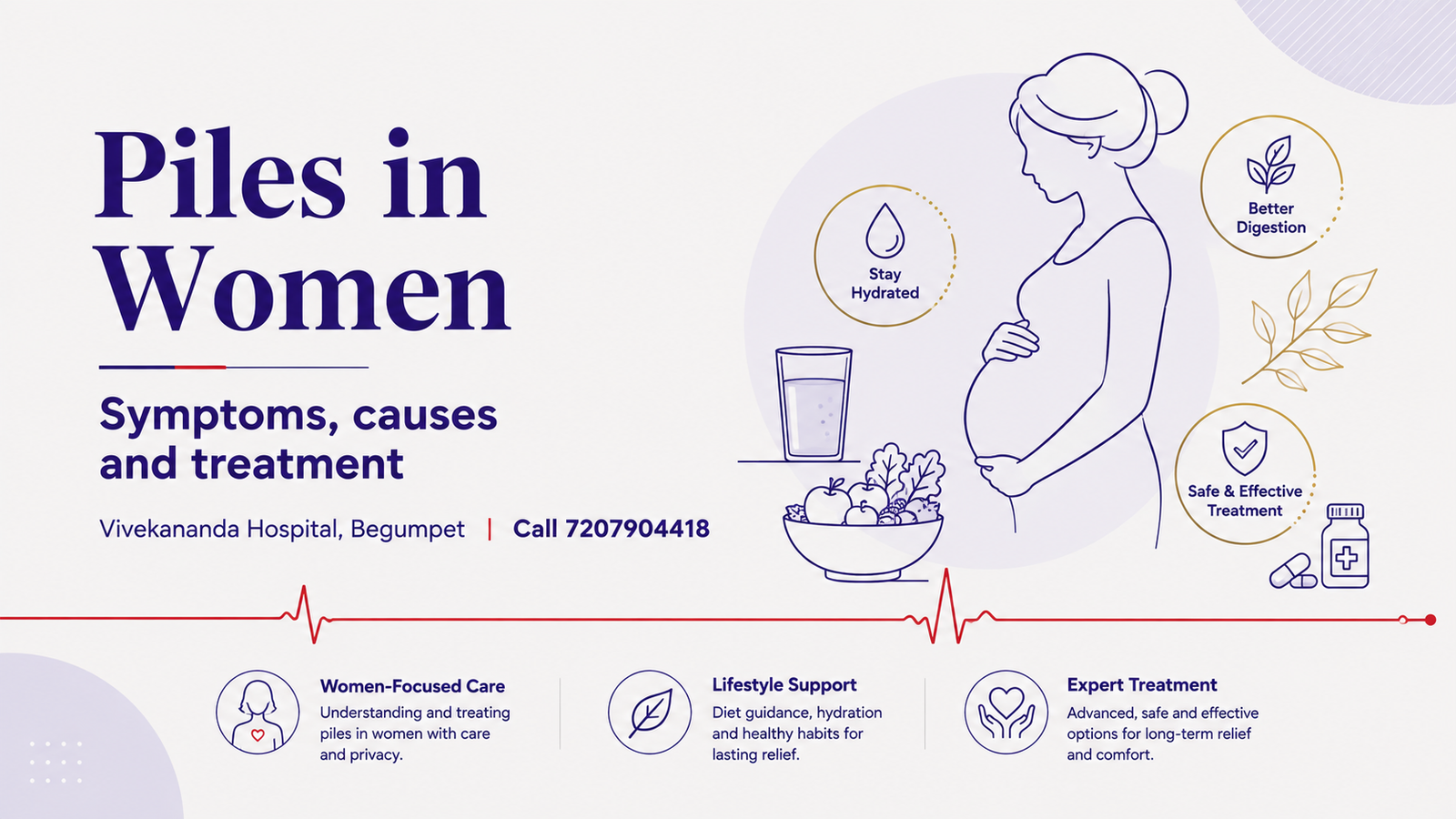
If you have noticed bleeding or a lump and you are worried, you are not alone, and you are not overreacting by getting it checked. Piles are very common in women, especially during and after pregnancy. This guide covers the symptoms of piles in female patients, why women get them, what is safe in pregnancy, and how to tell piles apart from other causes of bleeding that need a doctor.
Are Piles Different in Women?
The piles themselves are the same, swollen blood vessels in and around the anus. The symptoms and the way doctors grade and treat them do not change by gender. What changes is how often women get them and when. Pregnancy and childbirth are the two biggest reasons piles turn up in a woman's life, and hormonal shifts and constipation add to it. So the condition is the same, but the story around it is different.
Symptoms of Piles in Female Patients
The symptoms of piles in female patients are the same as the general signs of piles. If you have one or more of these, it is worth getting checked.
- Bright red blood in the toilet, on the paper, or on the stool
- A soft lump or swelling around the anus, which may be tender
- Itching, soreness, or a dull ache around the back passage
- A feeling of fullness or that the bowel has not emptied fully
- Mucus discharge, or a pile that slips out and needs to be pushed back
One pattern doctors see often in women is delay. A UK study of pregnant and postnatal women found that around 64 percent self-diagnosed and managed the condition without medical guidance. That matters, because the one symptom you should never self-diagnose is bleeding. It is usually piles, but not always, and a quick examination settles it.
What Causes Piles in Women
Piles form when the veins around the anus come under repeated pressure. In women, several everyday things add to that pressure.
- Pregnancy. The growing uterus presses on the pelvic veins, and pregnancy hormones relax vein walls and slow the bowel.
- Childbirth. The straining of a vaginal delivery can bring on piles or make existing ones worse, often in the first day or two after birth.
- Constipation. Straining on a hard stool is the single biggest everyday trigger, and constipation is common with low-fibre diets and low water intake.
- Hormonal change. Shifts through the menstrual cycle and in pregnancy can slow bowel movement and make constipation more likely.
- Prolonged sitting and heavy lifting. Both raise pressure in the lower rectal veins over time.
Piles in Pregnancy
Piles are one of the most common complaints of later pregnancy. Studies estimate that about 30 to 40 percent of pregnant women develop haemorrhoids, most often in the third trimester when the uterus is heaviest. The good news is that they often improve after delivery.
In pregnancy the first line is conservative and safe: more fibre, plenty of water, sitz baths, and not straining or sitting on the toilet for long. Do not start any oral tablet or cream in pregnancy without your obstetrician's approval, because not all are safe for the baby. If you are pregnant and troubled by piles, our Obstetrics and Gynaecology team, including Dr. Shalini B, works alongside the surgical team so your care stays safe for both of you. See our dedicated piles in pregnancy guide.
Piles After Delivery
Piles that appear around childbirth often settle on their own in the weeks after, especially with good bowel habits. Keep the stool soft with fibre and water so you are not straining while everything heals, and use only what your doctor approves if you are breastfeeding. If a pile stays prolapsed, keeps bleeding, or a sudden hard painful lump appears, that is a thrombosed pile and needs prompt care rather than waiting it out. See our thrombosed piles guide.
Is It Piles or Something Else?
This is the most important section on the page. Bleeding from the back passage is usually piles, but several other conditions cause it too, and they are only ruled out by an examination. Two points specific to women are worth stating plainly.
- Make sure the bleeding is from the anus, not the vagina. If you are unsure where blood is coming from, or it comes with your period, see a doctor to check both.
- New bleeding, a change in bowel habit, or unexplained weight loss, especially after age 40, always needs a doctor, not a cream.
None of this is meant to frighten you. In most women it is piles. The point is simply that bleeding is one symptom you confirm with a doctor rather than assume.
Treatment for Piles in Women
Treatment depends on the grade of the piles, not on gender, and outside pregnancy the options are the same as for anyone.
| Approach | What it involves | Usually suited to |
|---|---|---|
| Diet and lifestyle | Fibre, water, sitz baths, not straining | Early piles, pregnancy, postpartum |
| Medical management | Prescribed fibre, flavonoid tablets, soothing creams, on a doctor's advice | Grade 1 to 2, flare-ups |
| Laser haemorrhoidoplasty | A stitchless, minimally invasive day-care procedure | Grade 2 to 4, recurrent, or bleeding piles (outside pregnancy) |
In pregnancy, surgery is usually delayed until after childbirth unless there is an acute problem. Outside pregnancy, if medicine and diet are not enough, a laser day-care procedure gives lasting relief. See what each medicine does in our piles medicine guide, the natural side in our home remedies guide, and procedure options and cost in our piles treatment and laser surgery cost guide.
When to See a Doctor
See a doctor if
- Bleeding is heavy, or keeps returning despite diet and simple treatment
- A pile stays prolapsed, or a sudden hard painful lump appears
- You are unsure whether blood is from the anus or the vagina
- You are pregnant or recently delivered and troubled by piles
- There is a change in bowel habit, weight loss, or new bleeding after age 40
Which Doctor Treats Piles in Women?
Piles are treated by a general or laparoscopic surgeon, sometimes called a proctologist. At Vivekananda Hospital, Begumpet, Dr. Deeraj Jaliwar consults for piles, fissure, and fistula and grades your condition before advising treatment. If you are pregnant, your care is shared with our Obstetrics and Gynaecology team, including Dr. Shalini B, so it stays safe in pregnancy.
Many women prefer a female doctor for the examination, and that is a completely reasonable thing to ask for. Tell us when you book and we will guide you to a comfortable consultation option at the hospital.
Not sure if it is piles? Get it checked.
A short consultation gives you a clear answer and a plan matched to your grade. Consultation Rs. 750, OPD Monday to Saturday, 10 AM to 2 PM.
Frequently Asked Questions
What are the symptoms of piles in female patients?
The symptoms of piles in female patients are the same as in men: bright red blood when passing stool, a soft lump or swelling near the anus, itching, soreness, and a feeling that the bowel has not emptied fully. Some women also notice mucus or a pile that slips out. Symptoms often begin or worsen in pregnancy. Any bleeding should be examined by a doctor, because it is not always piles.
Are piles common in pregnancy?
Yes, very common. Studies estimate that about 30 to 40 percent of pregnant women develop piles, most often in the third trimester when the uterus is heaviest. Hormonal changes, the growing uterus, and constipation all add pressure on the anal veins. They often improve after delivery. In pregnancy, use only diet, water, and sitz baths first, and start no medicine or cream without your obstetrician's approval.
Do piles go away after delivery?
Often, yes. Piles that appear around childbirth usually settle in the weeks after delivery, especially with a high-fibre diet, plenty of water, and no straining while everything heals. If a pile stays prolapsed, keeps bleeding, or a sudden hard painful lump appears, see a doctor rather than waiting, as that can be a thrombosed pile that needs prompt treatment.
Can I use piles cream during pregnancy?
Not without your obstetrician's approval. Some creams and tablets are not considered safe in pregnancy, so the first line is always diet, water, and sitz baths. If those are not enough, your doctor will advise which specific product is safe for you and for how long. Do not pick a cream off the shelf and use it for weeks while pregnant.
How do I know if it is piles or period-related bleeding?
Piles bleeding is bright red and comes from the anus, usually seen on the paper or in the toilet when you pass stool. Menstrual blood comes from the vagina. If you cannot tell where the blood is coming from, or bleeding comes with your period or between periods, see a doctor to check both, rather than assuming. Confirming the source is exactly what the examination is for.
Which doctor should a woman see for piles?
Piles are treated by a general or laparoscopic surgeon (a proctologist). At Vivekananda Hospital, Begumpet, Dr. Deeraj Jaliwar consults for piles, fissure, and fistula. If you are pregnant, your care is shared with the Obstetrics and Gynaecology team so it stays safe. If you prefer a female doctor for the examination, tell us when you book and we will arrange a comfortable option.
Medically reviewed by Dr. Deeraj Jaliwar, MS (General Surgery), DMAS, Vivekananda Hospital, Begumpet, with the Obstetrics and Gynaecology team for pregnancy-related sections. Last updated 04 Aug 2026. Sources: Cleveland Clinic, Pregnancy Hemorrhoids; Boughton et al., Haemorrhoids and Anal Fissures in Pregnancy, Cureus 2024. For general information only and not a substitute for medical advice, diagnosis, or treatment. Always consult a qualified doctor about your condition. Not for medical emergencies; for urgent help call +91 7207904418.
If our content helps you, tell Google to show you more of it. Add vivekanandahospital.in as a preferred source.